Follow Us on Google Discover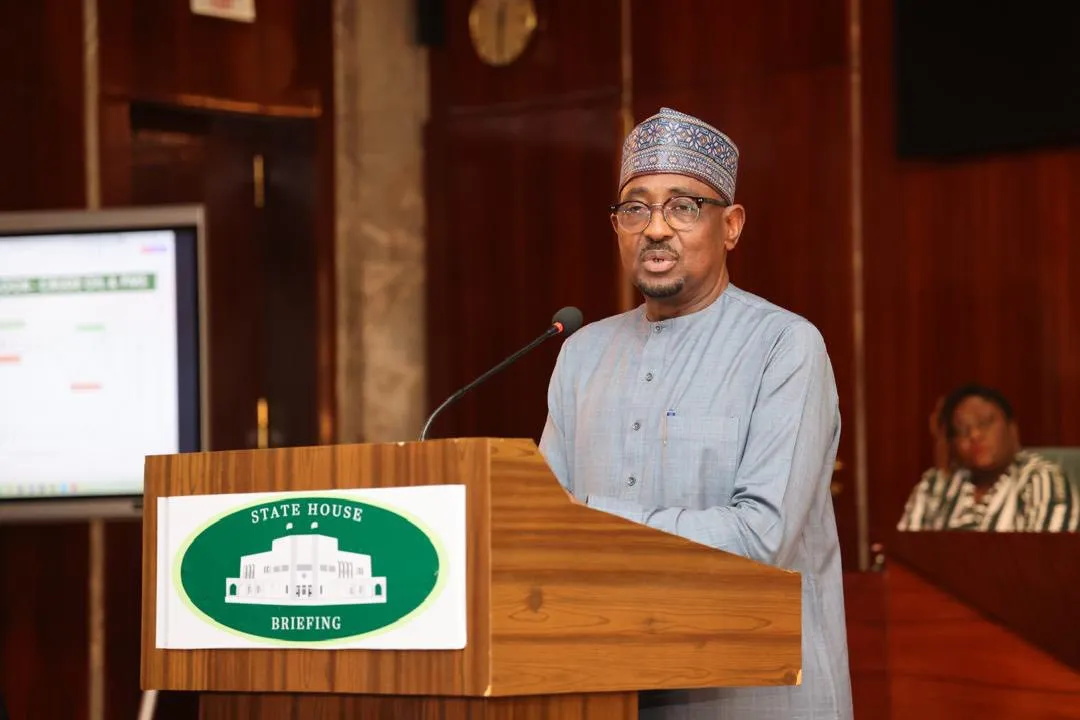
Lawyers have urged the Authority Chief Executive of the Nigerian Midstream and Downstream Petroleum Regulatory Authority (NMDPRA), Rabiu Abdullahi Umar, and his team to pursue amendments to the Petroleum Industry Act (PIA) and address issues relating to regulatory overlap and stakeholder engagement.
Oil and gas sector lawyers shared their views with Nairametrics on Monday while assessing Umar’s commitments to stakeholders at the NMDPRA General Counsel and Legal Advisers Forum 2026, attended by Nairametrics.
The development comes two months after President Bola Ahmed Tinubu approved the removal of Umar’s predecessor, Saidu Mohammed.
The Presidency said the leadership change was pursuant to the provisions of the Petroleum Industry Act 2021, aimed at strengthening oversight in the oil and gas sector and improving regulatory performance.
Also Read
What they are saying
Speaking at the forum, Umar said compliance remains a shared value between the Authority and the legal leadership of licensed operators.
According to him, the broader objective of compliance is to create an industry characterised by certainty, predictability, transparency, and confidence, thereby deepening a sector capable of supporting Nigeria’s broader economic aspirations.
- He said the Petroleum Industry Act 2021 fundamentally altered the legal and regulatory landscape of the industry by creating new institutions and establishing new market frameworks.
- “We will continue to strengthen regulatory clarity, encourage responsible investment, and foster the collaborative relationships that are essential to achieving the objectives of the PIA,” he said.
Also speaking, Dr. Joseph Tolorunse, Authority Secretary and Legal Adviser of the NMDPRA, said regulators should evolve from enforcement agencies into investment facilitators by leveraging artificial intelligence, data analytics, and continuous stakeholder engagement, among other strategies.
He also called on operators to ensure timely regulatory compliance, ethical business conduct, and accurate reporting.
Expert views
Abimbola Ademola, SAN, in an exclusive interview with Nairametrics on the Authority Chief Executive’s remarks, said the Petroleum Industry Act “needs serious amendments” because many of its provisions are impracticable and do not align with current realities and international best practices.
He stressed that there is a serious need to amend the PIA, especially because it contains “many ambiguities.”
Citing what he described as one of those ambiguities, he pointed to the Act’s description of the functions of the regulatory authorities.
- “There is an overlap in terms of the functions that should be performed by the NMDPRA and the NUPRC,” he said.
He advised that there should be a clear-cut definition of the roles of the regulatory authorities in the referenced legislation.
For his part, Barrister Akin Oladimeji said there should be greater synergy between the NMDPRA and the NUPRC in revenue administration and in carrying out their duties under the Petroleum Industry Act to eliminate regulatory overlap.
He said a major legal issue is the issuance of regulations without adequate consultation with stakeholders.
- “The outcome of these regulations sometimes does not reflect what the stakeholders proposed during stakeholder engagement, and it ultimately affects investors’ confidence in the Nigerian oil and gas sector,” he said.
He warned that when investors lose confidence due to legal uncertainty surrounding certain regulatory provisions, international oil companies (IOCs) may be compelled to pull out of Nigeria.
He urged the authorities to address the uncertain legal terrain created by some regulations and executive orders.
He added that the oil and gas industry is highly technical and requires substantial technical expertise as well as strong financial responsibility.
What you should know
In 2025, the House of Representatives disclosed that the enactment of the Petroleum Industry Act (PIA) 2021 yielded remarkable results, attracting more than $16 billion in investment commitments and significantly improving oil production.
Deputy Speaker Benjamin Kalu said that, based on available data at the time, Nigeria earned ₦50.88 trillion in revenue from crude oil and gas exports in 2024.