
 Follow Us on Google Discover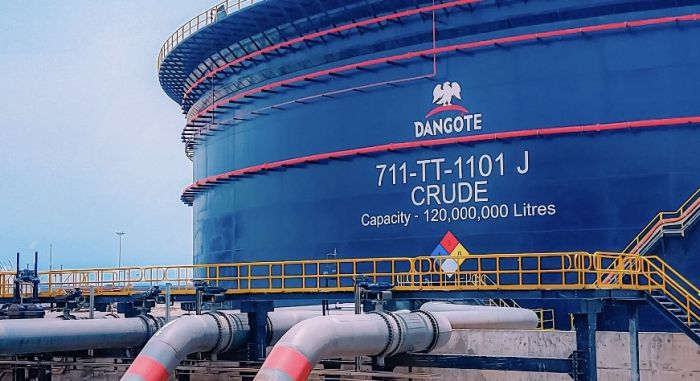
Dangote Petroleum Refinery has ended naira-denominated pricing for Premium Motor Spirit (PMS), commonly known as petrol, fixing its ex-depot price at $0.779 per litre under a new dollar-based pricing framework for refined petroleum products.
The development was disclosed in a notice issued by the refinery to petroleum marketers and customers, announcing the transition from naira to United States dollar transactions for the sale of petrol, diesel and aviation fuel.
At the prevailing official exchange rate of N1,380.50 to the US dollar, the new benchmark translates to approximately N1,075.61 per litre.
However, unlike the previous fixed naira pricing, the ex-depot price in naira will now fluctuate in line with movements in the foreign exchange market.
What they are saying
According to the notice signed by the refinery’s Group Commercial Operations, all previously issued naira-denominated Proforma Invoices (PFIs) and Deal Recaps for gantry and coastal transactions have become invalid.
The notice stated:
- “Following our email on the 9th of July, 2026, regarding the transition from Naira to United States Dollars, please note that all issued Naira Coastal and Gantry PFIs/Deal Recaps are now invalid, and no payments should be made against them.
- “The applicable USD prices for each product, effective today, July 13, 2026, are provided below.”
Under the new pricing schedule, petrol sold through the gantry will cost $0.779 per litre, Automotive Gas Oil (diesel) will sell for $1.087 per litre, while Aviation Turbine Kerosene (Jet A1) is priced at $0.942 per litre.
The refinery also fixed the price of coastal petrol deliveries at $1,044.62 per metric tonne.
It, however, clarified that the transition does not apply to Liquefied Petroleum Gas (LPG), noting that LPG transactions will continue under the existing arrangement.
More insights
The transition means that petroleum marketers purchasing products directly from the refinery will now transact in US dollars instead of naira.
- At the current official exchange rate of N1,380.50/$, the new ex-depot petrol price of $0.779 per litre is equivalent to about N1,075.61 per litre. However, because the benchmark is now denominated in dollars, the naira equivalent will no longer be fixed and will instead rise or fall depending on movements in the exchange rate.
- On July 2, 2026, the refinery reduced its ex-depot petrol price by N50 to N1,075 per litre, marking its fourth price reduction within one month. The latest announcement replaces that fixed naira pricing with a dollar-denominated benchmark, meaning the naira equivalent of its ex-depot prices will now move in line with the exchange rate.
The eventual retail pump price will also continue to depend on transportation costs, distribution margins, dealer margins, taxes and other operating expenses.
What you should know
The Federal Government introduced the naira for crude initiative on October 1, 2024, allowing local refiners to purchase crude oil in naira as part of efforts to strengthen domestic refining, reduce pressure on foreign exchange demand and support more stable fuel prices.
- Dangote Refinery subsequently adopted naira-denominated sales of refined petroleum products to domestic marketers under the arrangement.
- Earlier in March 2026, Dangote Refinery Chief Executive Officer, David Bird, explained that the facility purchases Nigerian crude at international benchmark prices despite the Federal Government’s crude for naira initiative.
- According to Bird, the refinery does not receive discounted crude and remains fully exposed to global market dynamics. He said the crude-for-naira arrangement does not imply preferential pricing, as Nigerian crude supplied to the refinery is still sold at prevailing international benchmark prices.
Bird added that international crude oil prices, freight rates, insurance and financing costs influence the refinery’s operating costs. He also noted that tanker freight charges had risen from about $800,000 to roughly $3.5 million per shipment during periods of heightened market volatility.

Why, why not make the naria a stronger currency