Follow Us on Google Discover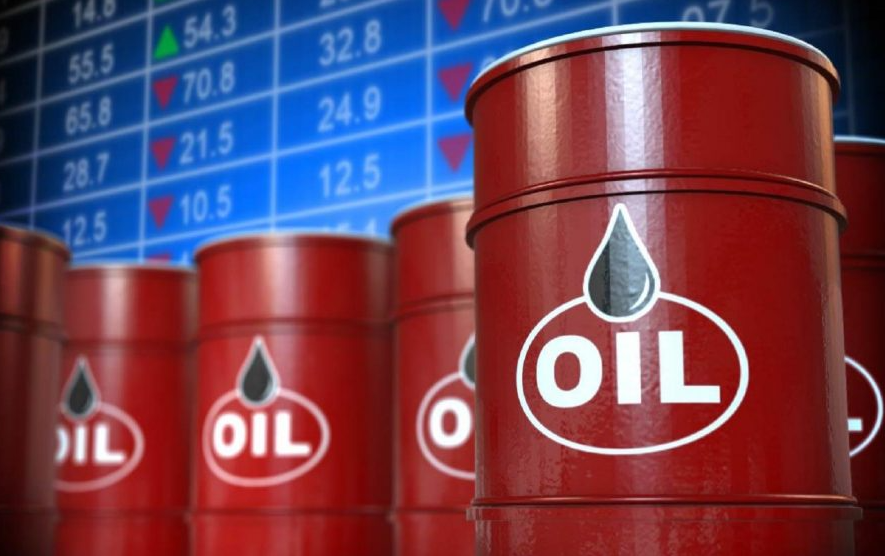
Global oil prices climbed more than 2% on Monday after fresh military strikes between the United States and Iran heightened concerns over the security of energy shipments through the Strait of Hormuz, a key global oil transit route.
Brent crude futures gained $1.67, or 2.2%, to trade at $77.68 per barrel as of 09:55 GMT, while U.S. West Texas Intermediate (WTI) crude rose $1.59, or 2.23%, to $73.00 a barrel.
The rally followed renewed hostilities over the weekend, with both countries launching military strikes that reignited fears of disruptions to global oil supplies.
What they are saying
Iran reportedly targeted U.S. facilities across the Gulf on Sunday and announced the closure of the Strait of Hormuz, one of the world’s most strategically important energy chokepoints.
- On Monday, Iran’s Revolutionary Guards said they had carried out attacks on U.S. military bases in Kuwait and Bahrain, further escalating tensions in the region.
- Before the conflict erupted in late February, the Strait of Hormuz handled roughly one-fifth of global daily oil and liquefied natural gas exports, making any disruption a major concern for energy markets.
- Ship-tracking data showed vessel traffic through the strait fell to a five-week low on Sunday. According to data from Kpler, only six vessels transited the waterway during the day.
The renewed hostilities have also cast uncertainty over the future of an interim agreement signed by Washington and Tehran last month. The deal had aimed to reopen the strait and pave the way for an end to the conflict following an additional 60 days of negotiations.
Trump says waterway remains open
Despite Iran’s announcement, U.S. President Donald Trump maintained that the Strait of Hormuz remains open to commercial traffic.
Speaking during an interview on Sunday, Trump said the waterway was operational despite earlier reports of restrictions following an incident involving a vessel that allegedly deviated from an approved route.
- “It’s open, and I don’t want to talk about it, because I want to honor the life of Lindsey Graham,” Trump told “Meet the Press” host Kristen Welker, later adding, “It’s open, we bombed the hell out of them last night, they’re very, very evil and sick people.
- “We had meetings with them… they agreed to a deal yesterday, a perfect deal for us. No nuclear, no this, no that, no nothing. They gave up everything and then after that they left the room and then within an hour they launched a drone at a ship.”
Analysts at Goldman Sachs said expanding pipeline infrastructure across the Middle East could significantly reduce the impact of future disruptions in the Strait of Hormuz.
According to the investment bank, more than 60% of Gulf oil exports could eventually bypass the strait if planned pipeline projects are completed.
Goldman Sachs projects that alternative pipeline capacity will increase by 3.8 million barrels per day by the end of 2027 and by a cumulative 7.3 million barrels per day by the end of 2028.
This would raise the region’s effective bypass capacity to more than 14 million barrels per day, providing greater resilience against geopolitical disruptions.
Iranian oil exports face market challenges
Meanwhile, Iranian crude supplies stored at sea have increased after Tehran boosted exports during the temporary peace arrangement with the United States.
However, demand for Iranian crude has reportedly softened as China’s independent refiners increasingly opt for cheaper supplies from Iraq, the United Arab Emirates, and Qatar.
Separately, the Abu Dhabi National Oil Company (ADNOC) set the August official selling price of its benchmark Murban crude at $80.01 per barrel, down sharply from $101.48 per barrel in the previous month.
What you should know
The latest rise in oil prices comes as Nigeria records its strongest crude production performance in six years.
- According to the Nigerian Upstream Petroleum Regulatory Commission (NUPRC), the country produced an average of 1.56 million barrels of crude oil per day in June 2026, the highest monthly output since April 2020.
- The production level exceeded Nigeria’s OPEC quota of 1.5 million barrels per day, representing 104% compliance with the target.
- Combined crude oil and condensate production also increased to 1.735 million barrels per day, providing a potential boost to government revenues at a time of elevated global oil prices.
With tensions in the Middle East showing little sign of easing, market participants will continue to monitor developments around the Strait of Hormuz, where any prolonged disruption could have significant implications for global energy supply and prices.