Follow Us on Google Discover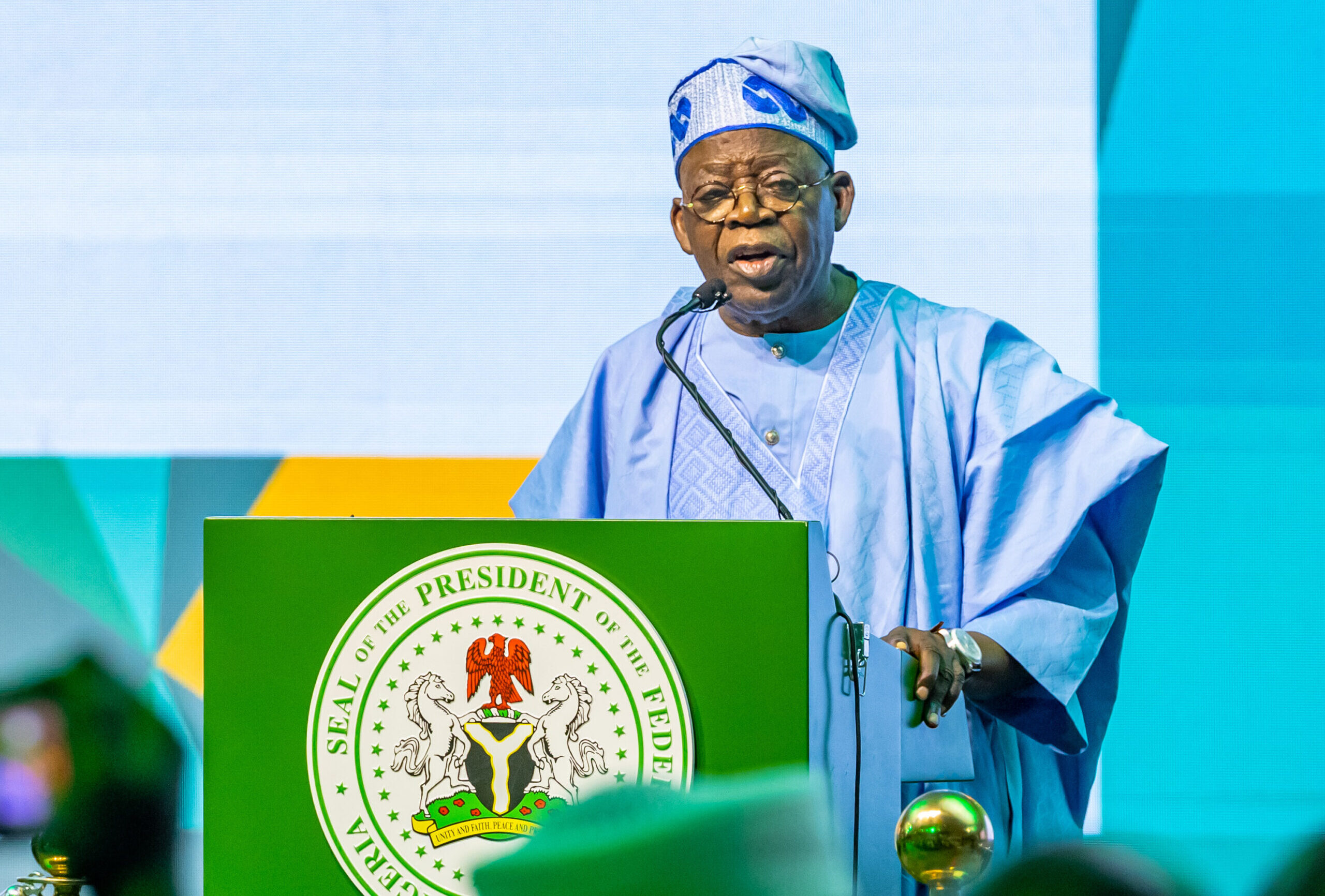
President Bola Tinubu has inaugurated the Presidential Working Group on the National Policing Bill to prepare the legal framework for the implementation of state police across Nigeria, appointing his Chief of Staff, Femi Gbajabiamila, as chairman of the committee.
The development was disclosed on Tuesday in a statement issued by the President’s Special Adviser on Information and Strategy, Bayo Onanuga.
The inauguration comes about two weeks after the Senate passed a bill seeking to amend the 1999 Constitution to establish state police services across the country as part of broader efforts to decentralise policing.
What they are saying
According to the Presidency, while the Constitution Amendment Bill lays the legal foundation for creating federal and state police services, a separate National Policing Bill is required to provide the detailed legal framework for how the new policing structure will operate.
Also Read
- “The Constitution Amendment Bill establishes the framework for dual policing, but it does not operationalise it. That work is left to the National Policing Bill.”
Tinubu explained that the proposed legislation would define the standards and conditions under which state police services would function, including operational requirements, oversight mechanisms, coordination between federal and state authorities, accountability measures, human rights protections and financial obligations.
- “The proposed National Policing Bill will include provisions on minimum policing standards, state readiness certification, federal-state coordination, accountability, human rights safeguards and fiscal conditions.”
The President said the committee had been established to ensure that a comprehensive and implementation-ready draft legislation is prepared immediately after the constitutional amendment process is completed.
- “The Working Group has been constituted to produce a technically robust, implementation-ready draft National Policing Bill for transmission to the National Assembly.”
He stressed that work on the bill should begin immediately rather than waiting for the constitutional amendment process to be concluded.
- “We must not wait until the constitutional process is concluded before beginning this important assignment.”
More insights
The committee will be chaired by Chief of Staff to the President, Femi Gbajabiamila. Other members include the Attorney-General of the Federation and Minister of Justice, the President of the Nigerian Bar Association (NBA), the Chairman of the Nigeria Governors’ Forum (NGF), the National Security Adviser, the Inspector-General of Police and the Chairman of the NGF Committee on State Police. A secretariat will provide administrative support to the panel.
Speaking on behalf of the Nigeria Governors’ Forum, Ogun State Governor Dapo Abiodun said the proposed legislation responds to longstanding demands for decentralised and community-based policing across the country.
- “This bill has answered the cries of Nigerians about cascading policing and removing it from the Exclusive Legislative List.”
Abiodun also argued that the establishment of state police would significantly strengthen Nigeria’s security architecture by increasing the number of security personnel available nationwide.
- “If each state deploys about 6,000 personnel, we will add nearly 200,000 officers to complement the existing federal police.”
He added that governors would work towards ensuring the speedy passage of the constitutional amendment by their respective state Houses of Assembly.
What you should know
Momentum for comprehensive policing reforms has gathered pace amid worsening insecurity across the country, including mass kidnappings, attacks on rural communities and violent crimes in several states.
- The debate intensified following the abduction of pupils and teachers in Oriire Local Government Area of Oyo State on May 15, 2026, an incident that renewed calls for more localised security structures capable of responding quickly to emerging threats.
- Supporters of state police argue that decentralising policing would complement the Nigeria Police Force, improve intelligence gathering and enable faster responses to security challenges unique to individual states.
- However, concerns remain over the potential misuse of state police by political officeholders.
- President of the Nigerian Bar Association (NBA), Afam Osigwe, warned that while the association supports state policing, the enabling law must contain strong safeguards to prevent governors from using the outfit as an instrument of political oppression or abuse of power.
Similarly, former Labour Party presidential candidate Peter Obi has cautioned that without adequate institutional checks, state police could be manipulated to influence political outcomes, including the 2027 general elections, underscoring the need for robust legal and constitutional protections.