Follow Us on Google Discover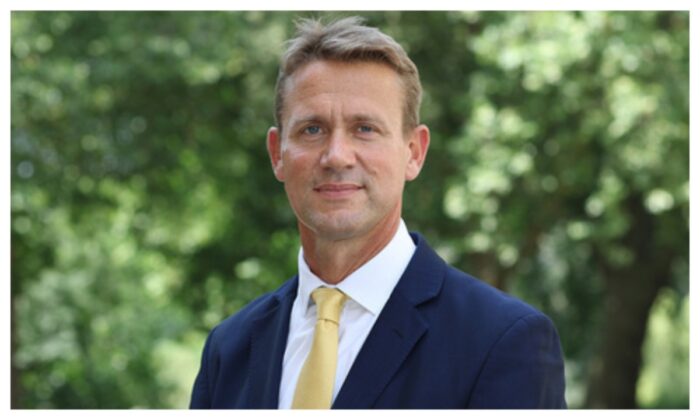
Peter Vowles, a former teacher who began his career in Zimbabwe’s education sector more than three decades ago, has been appointed as the new British High Commissioner to Nigeria, marking another milestone in a career that has taken him from the classroom to some of the United Kingdom’s most important diplomatic postings.
The appointment was announced on Monday, June 15, by the Foreign, Commonwealth & Development Office (FCDO), which disclosed that Vowles will succeed Dr Richard Montgomery as Britain’s top diplomat in Nigeria and assume office in September 2026.
Over the years, Vowles has built an extensive career spanning diplomacy, international development, governance and public health, serving in countries across Africa and Asia, including Zimbabwe, Kenya, the Democratic Republic of Congo, Afghanistan, Bangladesh, India and Myanmar.
His appointment comes at a crucial period in UK-Nigeria relations, with both countries expanding cooperation in trade, investment, security, migration and economic development.
Also Read
What the UK government is saying
In a brief statement announcing the appointment, the FCDO said Vowles had been named British High Commissioner to the Federal Republic of Nigeria in succession to Dr. Richard Montgomery.
- “Mr Peter Vowles has been appointed British High Commissioner to the Federal Republic of Nigeria,” the statement reads in part.
Although the statement offered few details beyond the appointment itself, Vowles arrives in Abuja with a reputation as one of Britain’s most experienced development diplomats, having worked across Africa, Asia, and some of the world’s most complex political environments.
Peter Vowles’ career experience
Vowles currently serves as British Ambassador to Zimbabwe, a position he has held since October 2023.
- Before taking up that role, he served as Transformation Director at the FCDO between 2022 and 2023, where he helped oversee institutional reforms within Britain’s diplomatic and development apparatus following the merger of the Foreign Office and the Department for International Development (DFID).
His diplomatic credentials were further strengthened in Myanmar, where he served as Chargé d’Affaires ad Interim at the British Embassy in Yangon between 2021 and 2022 during one of the country’s most turbulent political periods following the military takeover.
- Prior to that assignment, he was FCDO Director for Asia, the Caribbean and Overseas Territories from 2018 to 2021, overseeing Britain’s engagement across several strategically important regions.
However, much of Vowles’ professional identity has been shaped by a long career in international development, particularly across Africa and Asia.
Between 2016 and 2018, he served as DFID Country Director in Kenya, where he oversaw the UK’s development programmes in East Africa’s largest economy.
- Earlier, from 2010 to 2013, he worked in the Democratic Republic of Congo as Deputy DFID Country Director, contributing to development and governance programmes in one of Africa’s most challenging operating environments.
His experience also extends to Afghanistan, where he served as Governance and Security Team Leader, and India, where he led Global Partnerships, initiatives focused on development cooperation.
A career built across continents
Long before entering the diplomatic service, Vowles accumulated extensive experience in international development and public health.
He worked as a Health and Development Consultant at Mott MacDonald between 2005 and 2006 and previously served as Population and Health Programme Director in Bangladesh.
His development expertise was further sharpened during his time as a Health Adviser with the World Bank and through earlier roles with international non-governmental organisations.
One of the most distinctive aspects of his career is the breadth of countries in which he has worked.
From Zimbabwe and Bangladesh to Afghanistan, India, Kenya, Myanmar and the Democratic Republic of Congo, Vowles has spent much of his professional life operating in diverse political, economic and cultural environments.
His connection with Africa is particularly longstanding.
- As early as 1992, he worked as a teacher in Zimbabwe under the country’s Ministry of Education, Sports and Culture. He later returned to the country in development-focused roles before eventually becoming British Ambassador there more than three decades later.
That deep familiarity with African development challenges, governance issues and regional diplomacy is likely to prove valuable as he prepares to take on one of Britain’s most important diplomatic postings on the continent.
What you should know
Vowles arrives in Abuja at a time when the United Kingdom is seeking to significantly deepen its economic and strategic engagement with Nigeria, reinforcing the country’s position as one of Britain’s most important partners in Africa.
- In April 2026, British International Investment (BII), the UK’s development finance institution, unveiled a new five-year strategy aimed at mobilising £9 billion in fresh capital into African frontier markets, with Nigeria identified as one of the key destinations for investment.
The move reflects growing British interest in supporting private-sector growth, infrastructure development, financial inclusion, and job creation across the continent’s largest economies.
- That commitment was further underlined in June when the UK announced a £15 million Growth Programme for Nigeria designed to accelerate economic transformation, attract private investment, and support reform-driven growth across critical sectors of the economy.
- Beyond economics, diplomatic relations between both countries have also strengthened in recent months. In March, Nigeria and the United Kingdom signed three agreements covering migration, border security, and trade during President Bola Tinubu’s State Visit to the UK, signalling a renewed commitment to cooperation on issues of mutual interest.
Against this backdrop, Vowles will be tasked with overseeing a relationship that extends far beyond traditional diplomacy. His role will involve helping to advance trade and investment ties, supporting development partnerships, facilitating security cooperation, and strengthening people-to-people connections between both countries.