
Beneath every bank transfer, remote job, and online stream lies a quiet but critical layer of infrastructure that keeps the country online, an often overlooked foundation where the real power of Nigeria’s digital economy resides.
Over time, Nigeria has shifted from a voice-driven telecommunications market to a data-first economy.
From the era of cybercafés in the early 2000s, the country has evolved into one defined by fiber optics, expanding 4G coverage, and the early foundations of 5G.


According to the Nigerian Communications Commission (NCC), Nigeria’s internet subscriber base reached 148.2 million as of December 2025, translating to a 68.3% penetration rate.
This growth has reshaped how millions of Nigerians work, learn, transact, and consume content, with broadband now serving as a critical utility across homes, businesses, and institutions.
While mobile network operators like MTN and Airtel continue to dominate the market, accounting for roughly 86% of total internet subscriptions, Nigeria’s internet service space includes 313,713 active subscribers spread across 133 licensed providers, supported by a combined 2,568 Points of Presence (PoPs) nationwide.
They provide fixed broadband, enterprise connectivity, and last-mile solutions that power homes, offices, financial institutions, and government systems.
This article highlights the architects of Nigeria’s connectivity, the decision-makers expanding access to keep Nigerians connected.
The ranking of the largest ISPs is based on the number of active customers they serve as of Q2 2025, as published by the Nigerian Communications Commission (NCC).
Here are the top 10 CEOs of Nigeria’s Internet Service Providers by active subscribers.
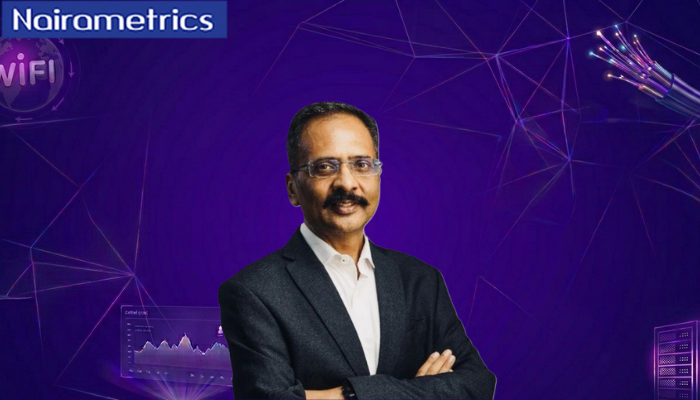
99,520 active subscribers
Amrish Singhal is the Chief Operating Officer of Spectranet Limited, one of Nigeria’s earliest and most established fixed broadband providers. The company noted that he has also been serving as CEO for nearly two years.
He assumed the COO role in 2024 and has since led a significant transformation of the company’s operations. Within eight months, he delivered a turnaround from negative EBITDA to positive performance, while achieving cash flow positivity within 14 months.
Under his leadership, Spectranet improved EBITDA from -5% to +11% through cost restructuring and capital discipline, while also increasing revenue collections by 20% to strengthen cash flow. He has also restructured the organisation into regional profit and loss units, improving accountability and execution, and led strategic partnerships generating multi-million-dollar revenue opportunities.
Before joining Spectranet, Singhal served as Group Chief Executive Officer at TUMIL Holdings Limited in Myanmar, where he oversaw a multi-million-dollar portfolio and led telecom asset acquisitions and integration. He also held senior leadership roles at Ooredoo Myanmar and Telenor.
Last month, Spectranet and Legend Internet Plc announced plans to merge their operations, following approvals from both companies’ boards and shareholders. The deal is expected to be finalised in the second quarter of 2026, subject to regulatory approval, and is projected to create one of Nigeria’s largest internet service providers with an estimated market capitalisation of about N80 billion.
The company secured a licence from the NCC in 2009 to expand broadband internet services across Nigeria. The company remains the largest ISP by active subscribers among its licensed operators, with a total of 99,520 customers. This includes 98,444 wireless subscribers and 1,076 wired subscribers, supported through 1 Point of Presence.