Follow Us on Google Discover
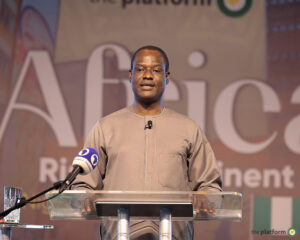
The Minister of Finance, Wale Edun, is ramping up the push for global support as Nigeria navigates the dual impact of rising oil revenues and mounting inflation pressures triggered by the ongoing Middle East conflict.
In a media brief released ahead of the IMF/World Bank Spring Meetings 2026 in Washington DC, the Federal Ministry of Finance outlined three core policy messages that will shape Nigeria’s engagement with global stakeholders, as the country seeks to balance macroeconomic stability with growth and social protection.
The Minister acknowledged that while higher crude oil prices present upside potential for foreign exchange earnings and fiscal revenues, the broader economic impact remains mixed, with rising fuel costs and inflation weighing on households and businesses.
What the Minister is saying
At the centre of Nigeria’s message is a call for increased global support during its economic transition, as the country faces external shocks alongside ongoing domestic reforms.
Also Read
Edun, who leads the Nigerian delegates to the meetings, noted that Nigeria will advocate for lower cost of capital, fairer global financial conditions, and additional support for developing economies grappling with similar challenges.
- According to the Minister, these measures are critical to reducing fiscal strain, attracting investments, and ensuring that ongoing reforms translate into tangible welfare improvements for Nigerians.
- He emphasised that the inflationary impact of the current geopolitical crisis remains a major concern, particularly as it affects household incomes and complicates efforts to lift millions out of poverty.
Nigeria is also seeking continued backing from institutions such as the World Bank and the International Monetary Fund, alongside private investors, as it navigates the current economic headwinds.
Edun is expected to engage global financial leaders, development institutions, and investors throughout the Spring Meetings, positioning Nigeria within broader conversations on development finance and economic resilience amid rising global uncertainty.
More insights
The government acknowledged that as an oil-producing nation, Nigeria stands to gain from sustained elevated crude prices, which could bolster fiscal revenues and improve external balances.
- However, the same price surge is already transmitting into the domestic economy through higher energy costs.
- Petrol prices have risen by more than 50%, climbing from about N890–N900 per litre to between N1,260 and N1,330, while diesel prices have jumped over 70% to around N1,550 per litre at peak levels.
- Beyond fuel costs, the crisis is also affecting capital flows and financial markets, as global investors shift towards safe-haven assets, potentially limiting inflows into emerging markets like Nigeria.
In addition, disruptions to global shipping routes are expected to push up freight and logistics costs, further increasing import prices and adding to domestic inflationary pressures.
Building resilience in a volatile environment
The government maintains that Nigeria is better positioned to withstand the current global shock, following a series of macroeconomic reforms implemented since 2023.
- These include subsidy removal to reduce fiscal vulnerabilities, the adoption of a market-reflective exchange rate system, a diversified financing strategy, and efforts to strengthen economic institutions.
- While acknowledging that Nigeria is not insulated from global volatility, Edun said the reform programme has enhanced the country’s resilience and improved its ability to manage external disruptions.
- The government said the next phase of its economic strategy will focus on transitioning from stabilisation to growth and investment.
Key priorities include scaling private sector investment, unlocking domestic capital markets, and driving job-rich growth across key sectors of the economy.
Nigeria also plans to leverage regional integration opportunities under the African Continental Free Trade Area to expand trade and investment flows.
What you should know
Ahead of the Spring meetings, the IMF has hinted at plans to downgrade its global growth projections as escalating tensions between the United States and Iran continue to disrupt economic activity and delay a return to pre-war price levels.
IMF Managing Director Kristalina Georgieva disclosed this on Sunday, noting that the global economy is facing asymmetric shocks from the conflict.
The IMF boss also warned that prices will not quickly return to levels seen before the outbreak of hostilities.