Follow Us on Google Discover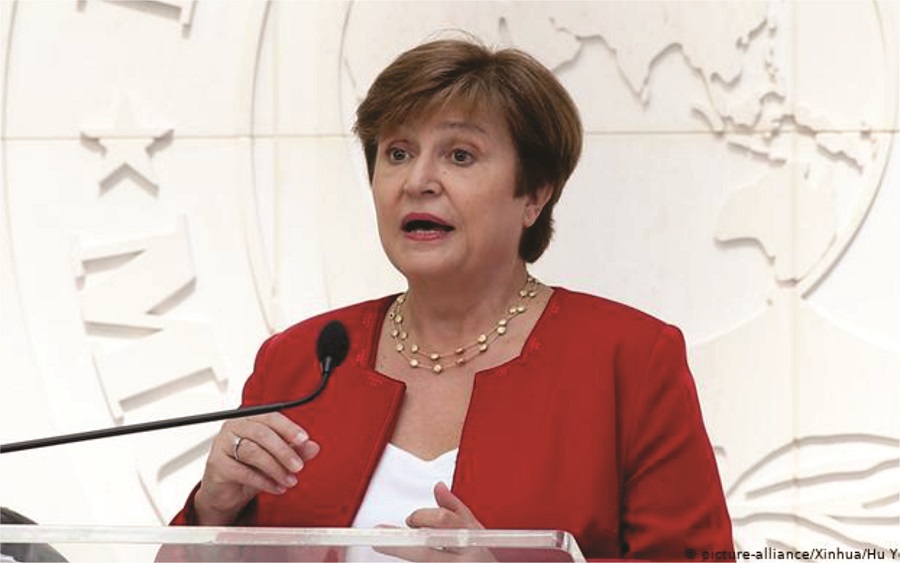
The International Monetary Fund (IMF) is set to downgrade its global growth projections as escalating tensions between the United States and Iran continue to disrupt economic activity and delay a return to pre-war price levels.
IMF Managing Director, Kristalina Georgieva, disclosed this on Sunday while speaking ahead of the IMF and World Bank Spring Meetings.
According to the IMF boss, the global economy is facing asymmetric shocks from the conflict, warning that prices will not quickly return to levels seen before the outbreak of hostilities.
What the IMF Managing Director is saying
Georgieva noted that even if a ceasefire between the U.S. and Iran holds, global prices, particularly in regions experiencing severe disruptions, will take time to stabilise.
Also Read
- “It will take some time, yes, and it will take more time for locations that are experiencing higher degree of disruption,” she said in remarks aired on CBS’ Face the Nation.
- “We are going to have a downgrade, and the size of this downgrade will depend on these two things, duration and speed with which everything can come back to the same level of production that we had before,” she said.
According to her, the uneven nature of the shock means some economies will recover faster than others, prolonging inflationary pressures in vulnerable regions and complicating policy responses for central banks.
This signals growing concern among global policymakers that the conflict could derail fragile economic recovery efforts, particularly in emerging markets already grappling with high costs and supply chain disruptions.
Get up to speed
Geopolitical risks intensified further on Sunday after U.S. President Donald Trump announced plans for a full naval blockade of the strategic Strait of Hormuz, a critical route for global oil shipments.
Trump also warned of retaliation if Iran resists the move, raising fresh concerns over energy supply disruptions and further volatility in global markets.
The announcement followed failed direct talks between the U.S. and Iran in Pakistan, casting doubt on the sustainability of the ceasefire declared last week and dimming prospects for a lasting resolution to the conflict.
Trump said the negotiations “went well” overall but ultimately failed on what he described as the most critical issue, Iran’s refusal to commit to abandoning its pursuit of nuclear weapons.
He then announced immediate military action, stating that the blockade was necessary to counter Iran’s actions in the strategic waterway.
- “Effective immediately, the United States Navy, the Finest in the World, will begin the process of BLOCKADING any and all Ships trying to enter, or leave, the Strait of Hormuz,” he said.
Trump added that while the U.S. prefers open access to the waterway, Iran’s conduct had made that impossible for now, suggesting that normal passage could resume under different conditions.
What you should know
Earlier, Nairametrics reported that the World Bank has lowered its growth forecast for Sub-Saharan Africa in 2026 by 0.3%, citing the economic fallout from the Iran war as a major factor slowing the region’s recovery.
This is according to the bank’s newly-released Africa Economic Update, formerly titled Africa’s Pulse.
The report, published on Wednesday, notes that rising fuel and fertilizer costs, combined with heavy debt burdens, are weighing on economic activity.
The Bank now expects the region to expand by 4.1% in 2026, unchanged from 2025 but down from the 4.4% forecast in October 2025.