Follow Us on Google Discover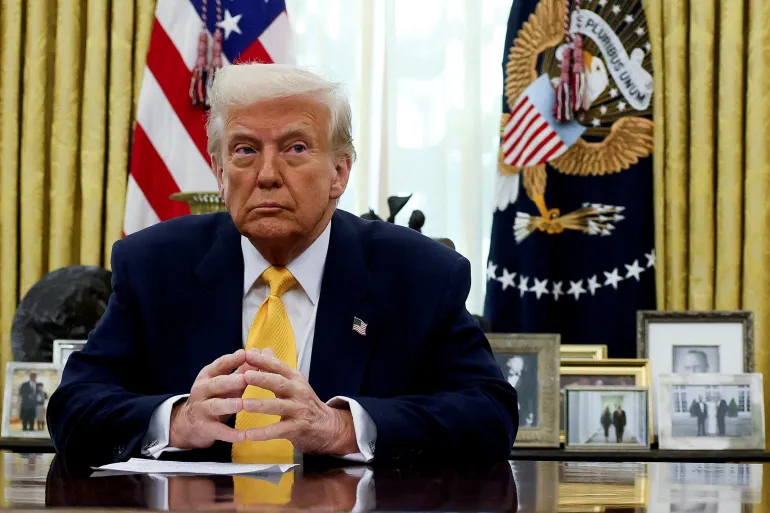
U.S. President Donald Trump has ordered the United States Navy to begin a blockade of all ships entering or leaving the Strait of Hormuz, escalating tensions in the Middle East.
Trump announced the directive in a statement posted on Sunday, April 12, via Truth Social, the platform he owns.
The order comes just hours after peace talks between the United States and Iran collapsed in Islamabad, according to a press briefing by U.S. Vice President JD Vance, who confirmed that both sides failed to reach an agreement on key issues.
What Trump is saying
Trump said the negotiations “went well” overall but ultimately failed on what he described as the most critical issue, Iran’s refusal to commit to abandoning its pursuit of nuclear weapons.
He then announced immediate military action, stating that the blockade was necessary to counter Iran’s actions in the strategic waterway.
- “Effective immediately, the United States Navy, the Finest in the World, will begin the process of BLOCKADING any and all Ships trying to enter, or leave, the Strait of Hormuz,” he said.
Trump added that while the U.S. prefers open access to the waterway, Iran’s conduct had made that impossible for now, suggesting that normal passage could resume under different conditions.
- “At some point, we will reach an ‘ALL BEING ALLOWED TO GO IN, ALL BEING ALLOWED TO GO OUT’ basis, but Iran has not allowed that to happen…”
He accused Iran of restricting access to the strait by allowing only “friendly” vessels to pass and imposing tolls on others, describing the situation as coercive.
- “THIS IS WORLD EXTORTION, and Leaders of Countries, especially the United States of America, will never be extorted. I have also instructed our Navy to seek and interdict every vessel in International Waters that has paid a toll to Iran. No one who pays an illegal toll will have safe passage on the high seas.”
More insights
Earlier, Vice President JD Vance disclosed that the United States and Iran failed to reach a breakthrough after 21 hours of negotiations in Islamabad.
- “But we need to see an affirmative commitment that they would not seek a nuclear weapon… That’s the core goal of the President of the United States,” Vance said during the briefing, explaining the collapse of the talks.
President Donald Trump, in his statement, said he had been fully briefed on the outcome of the meeting by top U.S. officials and envoys involved in the negotiations.
- “I have been fully debriefed by Vice President JD Vance, Special Envoy Steve Witkoff, and Jared Kushner, on the meeting that took place in Islamabad through the kind and very competent leadership of Field Marshal Asim Munir, and Prime Minister Shehbaz Sharif, of Pakistan,” he said.
Trump suggested that while several aspects of the talks yielded positive outcomes and could have been preferable to continued military engagement, those gains were ultimately overshadowed by the unresolved issue of Iran’s nuclear ambitions.
- “In many ways, the points that were agreed to are better than us continuing our military operations to conclusion, but all of those points don’t matter compared to allowing nuclear power to be in the hands of such volatile, difficult, unpredictable people.”
What you should know
When news of a ceasefire was first announced on April 8, global oil prices dropped sharply, with Brent crude and WTI falling by more than 15%, pushing Nigerian crude and major oil contracts below $95 per barrel.
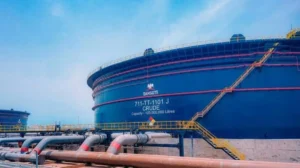
- However, since the conflict began on February 28, oil prices have surged, reaching as high as $120 per barrel, largely driven by disruptions around the Strait of Hormuz — a critical route through which about 20% of the world’s oil supply passes.
- The situation has been worsened by attacks on key oil infrastructure in the Middle East, forcing several refineries to scale down or halt operations.
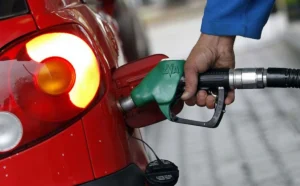
The impact has extended to economies like Nigeria, where petrol prices have risen sharply from around N799 per litre before the conflict to over N1,200.
The latest escalation raises fresh concerns about global oil supply, maritime security, and the broader economic fallout of the conflict.