Follow Us on Google Discover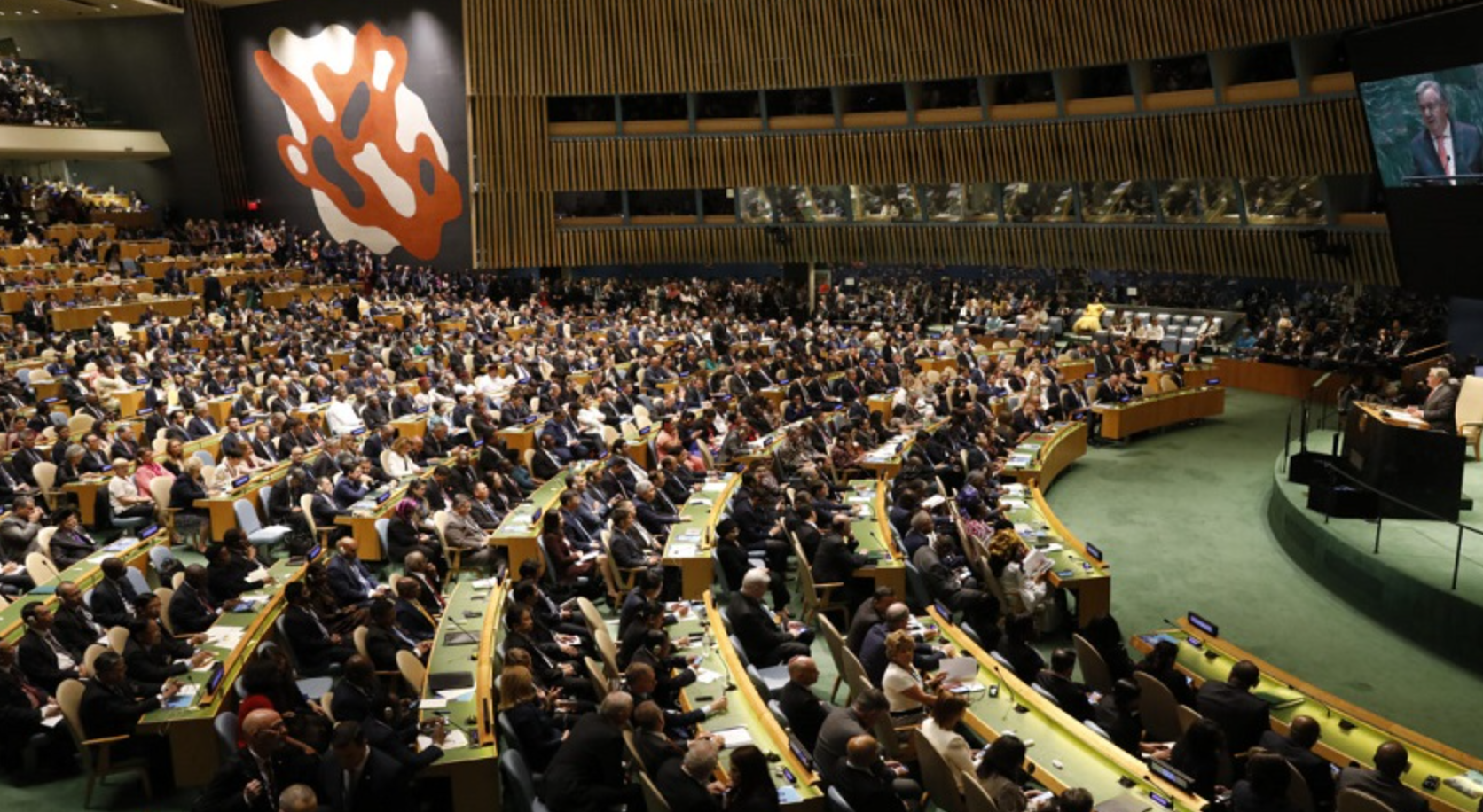
The United Nations General Assembly has adopted a landmark resolution declaring the enslavement of Africans as the gravest crime against humanity and calling for reparations for Africans and people of African descent.
This was announced following a vote held in the General Assembly on March 25, 2026, where 123 countries voted in favour of the resolution.
The decision marks a major step in global recognition of the historical injustice and long-term impact of slavery on Africa.
The resolution recorded 52 abstentions, while three countries, Argentina, Israel and the United States voted against it.
Also Read
What they are saying
The resolution was spearheaded by Ghana on behalf of the 54-member African Group, the largest regional bloc at the UN. Ghana’s President, John Dramani Mahama, described the move as a step toward justice and healing.
- “Today, we come together in solemn solidarity to affirm truth and pursue a route to healing and reparative justice,” Mahama said ahead of the vote.
The UN resolution recognises the trafficking and enslavement of Africans as a defining historical injustice.
- “The trafficking of enslaved Africans and racialised chattel enslavement of Africans as the gravest crime against humanity by reason of the definitive break in world history, scale, duration, systemic nature, brutality and enduring consequences that continue to structure the lives of all people through racialized regimes of labour, property and capital.”
The UN affirmed the importance of addressing historical wrongs affecting Africans and people of the diaspora in a manner that promotes justice, human rights, dignity and healing, while emphasising that claims for reparations represent a concrete step towards remedy.
Barbados’ First Poet Laureate, Esther Philips, delivered a reflective reading during the session, calling for justice and action.
- “There are spirits of the victims of slavery present in this room at this moment, and they are listening for one word only: justice,” she told delegates.
- “Because for them and for the world, there can be no peace without justice – reparatory justice – and that call is answered only when words are turned into action. The question is, what will you do?”
President of the General Assembly, Annalena Baerbock, “The slave trade and slavery stand among the gravest violations of human rights in human history”
Get up to speed
For over 400 years, millions of Africans were forcibly taken from the continent, transported across the Atlantic and subjected to inhumane conditions in plantations across America.
The UN noted Africans were denied their basic humanity and even their own names; they were forced to endure generations of exploitation with repercussions that reverberate today, including persistent anti-Black racism and discrimination
- Historical records show that between 12 million and 12.5 million Africans were shipped across the Atlantic from the 1500s to the 1800s, with only about 10.7 million surviving the brutal Middle Passage.
Opposition from the US
The United States opposed the resolution ahead of the vote, with its representative to the UN Economic and Social Council, Dan Negrea, describing the text as highly problematic in countless respects.
He argued that the United Nations should remain focused on its core mandate, stating that Washington “must once again remind this body that the United Nations exists to maintain international peace and security” and “was not founded to advance narrow specific interests and agendas, to establish niche International Days, or to create new costly meeting and reporting mandates.”
Negrea also reiterated the US position on reparations, noting that the country “does not recognise a legal right to reparations for historical wrongs that were not illegal under international law at the time they occurred.”
More insights
According to the UN, the practice led to widespread exploitation and long-term global inequalities, with its effects still visible today in forms of systemic racism and economic disparities.
UN Secretary-General António Guterres called for confronting slavery’s lasting legacies of inequality and racism.
“Now we must remove the persistent barriers that prevent people of African descent from exercising their rights and realising their potential,” he said.
He added that stronger global action is needed, including respect for Africa’s ownership of its natural resources and greater participation in global financial systems and the UN Security Council.
What you should know
According to the Trans-Atlantic Slave Trade Database, historians have documented about 34,948 slave voyages, representing an estimated 66 to 80 per cent of all transatlantic slaving expeditions.
These voyages, carried out over more than three centuries, transported millions of Africans across the Atlantic under brutal conditions known as the Middle Passage.