Follow Us on Google Discover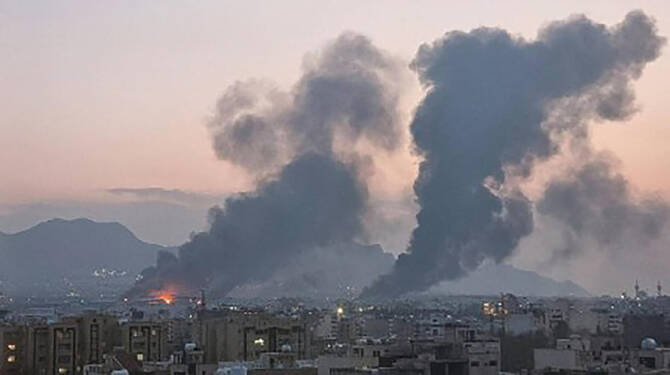
Qatar’s Minister of State for Energy Affairs and CEO of QatarEnergy, Saad al-Kaabi, has said that Iran’s attacks on Qatar’s energy infrastructure have wiped out an estimated $20 billion in annual revenue and knocked out a significant portion of the country’s liquefied natural gas (LNG) export capacity.
This was reported by Reuters, citing an exclusive interview with Saad al-Kaabi.
According to the report, Iran’s recent attacks have knocked out about 17% of Qatar’s LNG export capacity, with repairs expected to sideline 12.8 million tonnes per year of LNG output for between three and five years.
The scale of the disruption threatens supplies to major markets in Europe and Asia.
Also Read
What Saad al-Kaabi is saying
Al-Kaabi described the strikes as unprecedented, noting that two of Qatar’s 14 LNG trains and one of its two gas-to-liquids (GTL) facilities were damaged.
- “I never in my wildest dreams would have thought that Qatar would be Qatar and the region in such an attack, especially from a brotherly Muslim country in the month of Ramadan, attacking us in this way,” he said.
He further explained that the damage would force the company to suspend contractual obligations to several international buyers.
- In the oil and gas industry, a force majeure declaration allows a supplier to temporarily halt deliveries due to unforeseen events beyond its control, such as war or natural disasters, without facing legal penalties.
For importing countries, this means supply shortages, potential price spikes, and the need to seek alternative, often more expensive, energy sources.
- “I mean, these are long-term contracts that we have to declare force majeure. We already declared, but that was a shorter term. Now it’s whatever the period is,” al-Kaabi added.
He also noted that production cannot resume until hostilities cease, underscoring the broader security risks facing energy infrastructure in the Gulf.
The attacks have already forced a halt at key facilities, including the Ras Laffan production hub, and could set the region’s energy sector back by as much as 10 to 20 years.
The impact extends to global energy companies. ExxonMobil holds significant stakes in the affected LNG trains, while Shell is a partner in the damaged GTL facility, which may take up to a year to repair.
Backstory
The strikes on Qatar’s oil infrastructure come amid escalating tensions in the Gulf following attacks on Iran’s own energy assets.
On March 18, Nairametrics reported that Israel struck Iran’s South Pars gas field, the world’s largest natural gas deposit, marking a major escalation in the conflict.
While Qatar condemned the move as a dangerous development for global energy stability, Iran responded by warning that energy infrastructure linked to U.S. interests in the region had become legitimate targets.
- “These centres have become direct and legitimate targets and will be targeted in the coming hours. Therefore, all citizens, residents, and employees are requested to immediately leave these areas and move to a safe distance without any delay,” Iranian state media quoted officials as saying.
What you should know
The ongoing Middle East conflict is already having a far-reaching impact on the global economy, particularly through rising oil and gas prices that are increasing the cost of petrol and energy in countries including Nigeria.
Although U.S. President Donald Trump claimed that neither the United States nor Qatar had prior knowledge of Israel’s strike on South Pars, the crisis is increasingly taking the shape of a broader energy war.
- “NO MORE ATTACKS WILL BE MADE BY ISRAEL… unless Iran unwisely decides to attack a very innocent, in this case, Qatar — in which instance the United States… will massively blow up the entirety of the South Pars Gas Field,” Trump said in a post on Truth Social.
Beyond the destruction of oil facilities, the humanitarian implications are also severe.
- The World Food Programme has warned that about 10.4 million people in West and Central Africa could be pushed into acute food insecurity if the conflict persists.
Globally, as many as 45 million additional people could fall into acute hunger, adding to the 318 million people already facing food insecurity worldwide, particularly if elevated energy prices continue to drive up the cost of food production and distribution.