Follow Us on Google Discover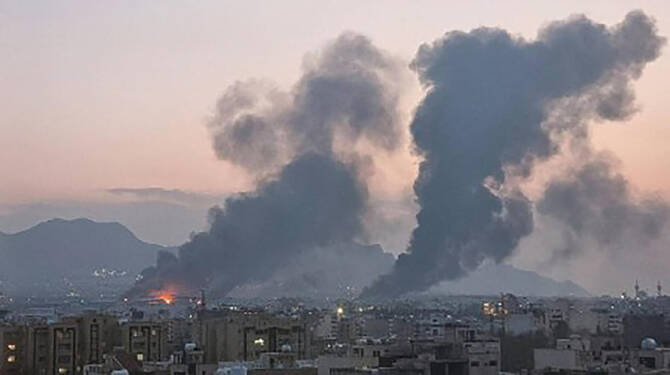
Israel has reportedly hit Iran’s South Pars gas field, the world’s largest natural gas deposit, marking a major escalation in the ongoing conflict in the Gulf.
According to Reuters, the attack occurred on Wednesday, with Iranian authorities confirming that parts of the facility, including gas tanks and sections of a refinery, were struck, forcing the evacuation of workers as emergency crews battled a fire.
Iran signalled swift retaliation, warning neighbouring Gulf countries that their energy infrastructure could be targeted in response to the attack.
What they are saying
Reports indicate that the strike was carried out by Israel with the consent of the United States, although the Israeli military has yet to officially comment. Meanwhile, Qatar condemned the development, describing it as a dangerous escalation with implications for global energy stability.
Iranian authorities also escalated tensions by issuing warnings to regional players, signalling a potential widening of the conflict beyond its current scope.
- “These centres have become direct and legitimate targets and will be targeted in the coming hours. Therefore, all citizens, residents, and employees are requested to immediately leave these areas and move to a safe distance without any delay,” Iranian state media quoted officials as saying.
More insights
The strike comes 10 days after Israeli forces targeted oil storage facilities in Tehran, marking the first reported attack on Iran’s oil infrastructure since the war between the two sides began.
- Targeting South Pars significantly raises the stakes, pushing the conflict between Iran and the combined forces of Israel and the United States into a new phase focused on critical energy infrastructure.
- South Pars gas field is the Iranian section of the world’s largest natural gas reserve, shared with Qatar (where it is known as the North Field). It is central to Iran’s economy, accounting for a substantial portion of its gas production and export potential.
The 3,700-square kilometre (sq.km) field, which is larger than the entire of Lagos state, plays a critical role in supplying energy domestically and across the region.
What you should know
18 days into the war, which began on February 28, both sides have intensified efforts to inflict economic and strategic damage on each other.
- Iran has moved to block the Strait of Hormuz, a critical global shipping route through which about 20% of the world’s oil supply passes, triggering spikes in global oil prices.
- Nairametrics reported that Saudi Arabia’s state oil giant was forced to halt operations at a major refinery in the country’s Eastern Province after a drone strike linked to Iran’s retaliatory attacks disrupted facilities capable of processing more than 500,000 barrels of crude per day.
- In Qatar, authorities temporarily shut down downstream production after energy infrastructure in Ras Laffan Industrial City and Mesaieed Industrial City came under attack. Similar disruptions have been recorded across the United Arab Emirates, Kuwait, Bahrain, and Oman, highlighting the widespread impact on Gulf energy systems.
The latest strike on South Pars suggests a potential shift in Israel’s strategy towards directly targeting Iran’s energy backbone. Until now, operations had largely focused on dismantling Iran’s leadership structure, with reports indicating that Esmaeil Khatib was killed in a targeted strike in Tehran earlier on Wednesday.