Follow Us on Google Discover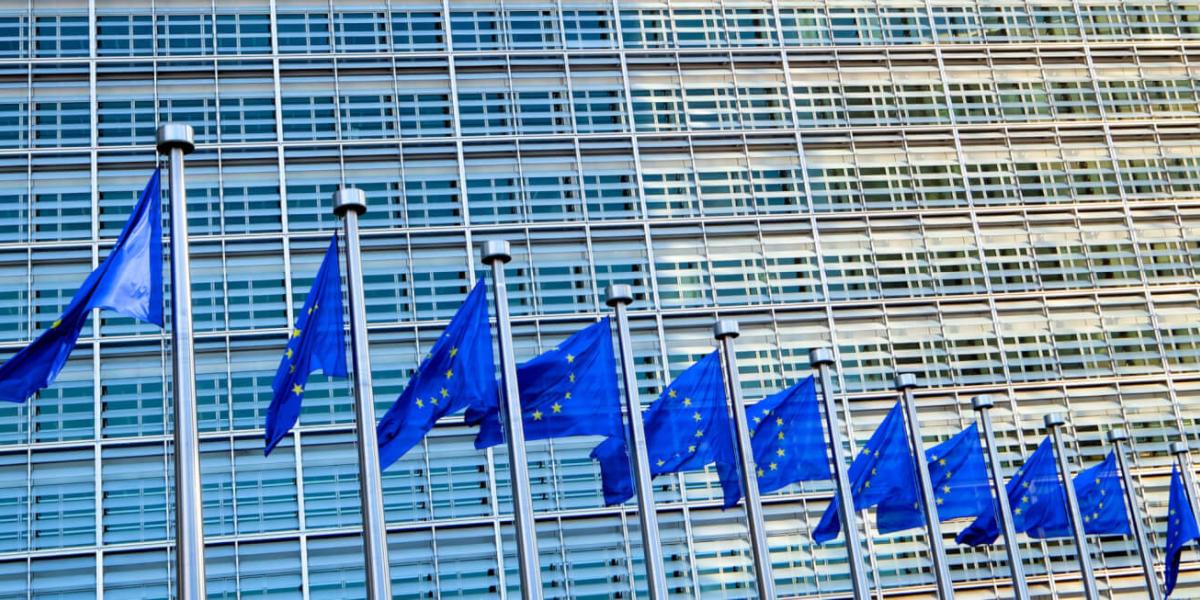
The Council of the European Union on Monday imposed fresh sanctions on Iranian individuals and entities over what it described as serious human rights violations.
The sanctions targeted officials and organisations allegedly linked to the suppression of protests earlier this year.
The sanctions come amid escalating Middle East tensions resulting from the United States–Israeli war against Iran.
What they are saying
In a statement on its website, the European Union said the Council had added 16 individuals and three entities to its sanctions list for their alleged roles in the violent crackdown on street protests in Iran in January 2026.
Also Read
- “The Council decided today to impose restrictive measures on an additional 16 persons and three entities responsible for serious human rights violations in Iran,” the statement said.
- “The new listings target a variety of individuals and entities that played a key role in the suppression of street protests in January 2026, which has led to thousands of civilian casualties,” the Council said.
Among those sanctioned is Iran’s Deputy Minister of the Interior for Security and Law Enforcement Affairs, as well as several commanders from local branches of the Islamic Revolutionary Guard Corps (IRGC), who were allegedly directly involved in the crackdown on protesters.
The EU also sanctioned the Mohammad Rasulullah Corps, responsible for coordinating IRGC and Basij forces in Tehran, and the Imam Reza Islamic Revolutionary Guard Corps, the IRGC’s local branch in Khorasan Razavi Province, where authorities reportedly carried out particularly severe repression.
More insights
In addition, members of Iran’s judiciary were included in the new sanctions package.
The EU said the officials had been involved in prosecuting peaceful protesters, civil and social activists, journalists, and political figures critical of the authorities.
- “Some of the listed individuals are responsible for extorting forced confessions, for violating fair trial guarantees, and for issuing severe sentences against peaceful activists,” the statement said.
The sanctions also target the head of the Organization for Prisons and Security and Educational Measures of the Islamic Republic of Iran, under whose tenure authorities reportedly documented widespread abuses in Iranian prisons.
Additionally, sanctions were imposed on Naji Research and Development Company (NRDC), an Iranian IT services and consultancy firm that developed the Nazer mobile application used by law enforcement as a surveillance tool to monitor citizens.
What the sanctions mean
Those listed face asset freezes, travel bans within EU territories, and restrictions preventing EU citizens and companies from providing them with funds or economic resources.
The bloc also maintains a ban on exporting equipment to Iran that could be used for internal repression or telecommunications monitoring.
- “Those listed are subject to an asset freeze, and EU citizens and companies are forbidden from making funds, financial assets or economic resources available to them,” the statement said.
The legal acts formalising the sanctions have been published in the Official Journal of the European Union.
What you should know
Nairametrics reported earlier in March that the EU announced sanctions on Iranian individuals in the wake of the war that broke out in the region around that time.
- Antonio Costa, President of the European Council, issued a joint statement, saying the developments in Iran were deeply concerning, but the Council remained in close contact with partners in the region.
- Costa highlighted that ensuring nuclear safety and preventing actions that could further escalate tensions or undermine the global non-proliferation regime was of critical importance.
- The EU first introduced sanctions targeting alleged serious human rights abuses in Iran in 2011.
The measures have been renewed annually and are currently extended until April 13, 2026, with additional packages adopted since 2022 amid growing international concerns.
With the latest measures, EU sanctions related to human rights violations in Iran now apply to 263 individuals and 53 entities.