Follow Us on Google Discover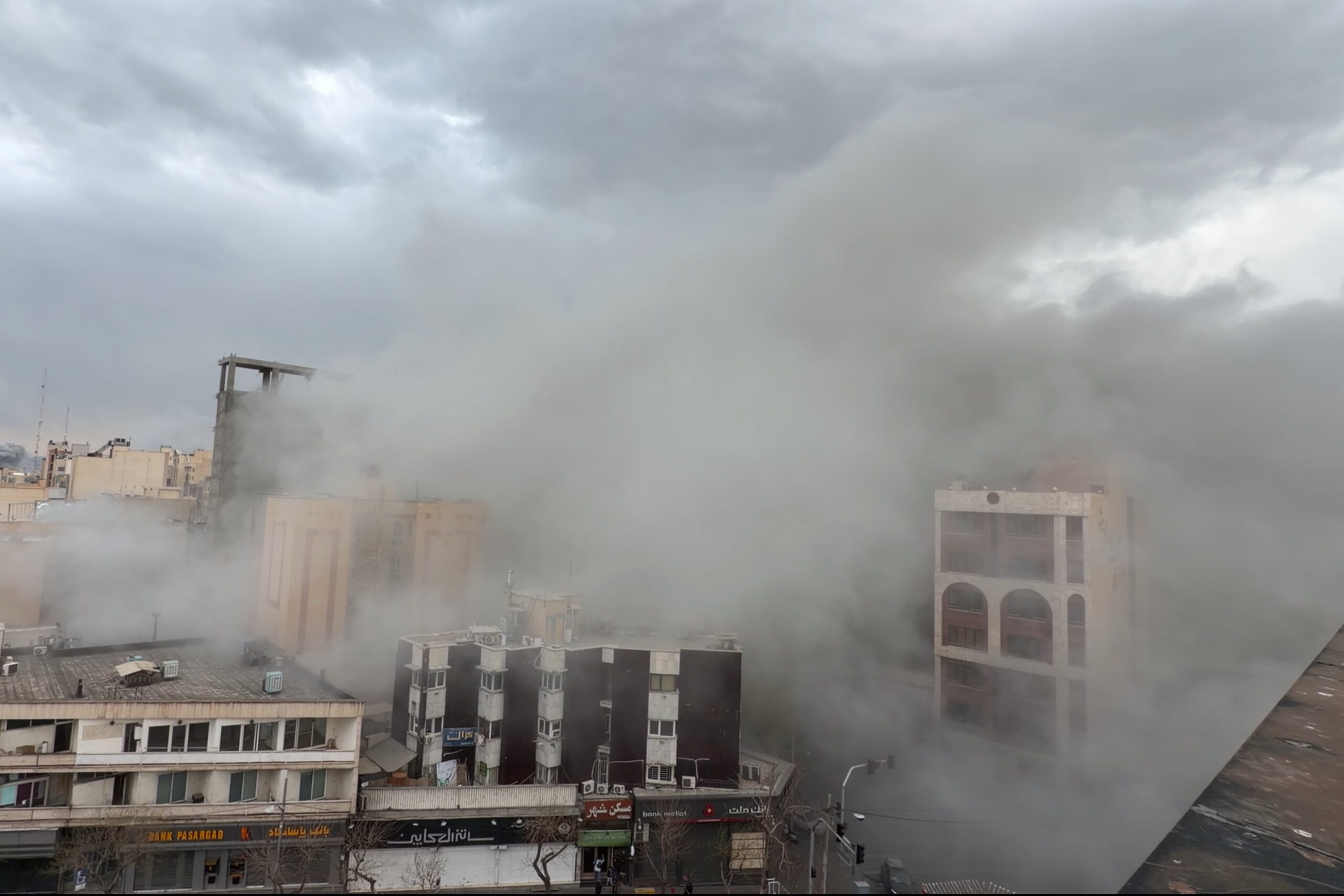
Iran has targeted the U.S. Embassy in Riyadh with drones on Tuesday, intensifying hostilities across the Middle East.
This is as the United States and Israel continue sustained airstrikes on Iranian territory.
The conflict, which began on Saturday, has already resulted in the deaths of senior Iranian leaders and shows little sign of easing.
U.S. President Donald Trump described the campaign as potentially lasting more than a month.
Also Read
What they are saying
Saudi Arabia’s Defence Ministry confirmed that two drones struck the U.S. Embassy compound in Riyadh, causing a limited fire and minor structural damage.
- “All Americans should avoid the compound,” the embassy said.
The incident followed a separate attack on the U.S. Embassy in Kuwait, which has since been closed until further notice.
In response to the escalating threats, the United States Department of State ordered the evacuation of non-essential personnel and families from Kuwait, Bahrain, Iraq, Qatar, Jordan and the United Arab Emirates as a precautionary measure.
Get up to speed
Hundreds of people have reportedly been killed since the conflict erupted, with most casualties occurring in Iran.
- Explosions were heard across Tehran overnight into Tuesday, though the specific targets were not immediately identified.
The International Atomic Energy Agency said Iran’s Natanz nuclear enrichment facility sustained recent damage but noted that no radiological consequences were expected. Natanz was also targeted during last year’s 12-day Iran-Israel conflict.
More insights
Iran has expanded its retaliatory strikes beyond military installations. U.S. technology firm Amazon confirmed that two of its data centres in the United Arab Emirates were hit, while a drone impact near another facility in Bahrain caused damage.
- Iran has also reportedly struck energy infrastructure in Qatar and Saudi Arabia and targeted vessels in the Strait of Hormuz — a vital maritime route that handles roughly one-fifth of globally traded oil. The attacks have triggered sharp increases in oil and natural gas prices.
- Iranian Brig. Gen. Ebrahim Jabbari, an adviser to the Revolutionary Guard, declared the strait closed and warned ships against entering the region.
- Meanwhile, the State Department has advised U.S. citizens to leave more than a dozen Middle Eastern countries due to security risks. However, widespread airspace closures have left many travellers stranded.
President Trump said military operations could last four to five weeks, but indicated readiness for a longer campaign, citing what he described as a “virtually unlimited supply” of munitions.
What you should know
On Monday, three U.S. fighter jets were shot down over Kuwait in what the United States Central Command described as an apparent friendly fire incident during ongoing operations linked to the conflict.
All crew members were rescued, and investigations into the incident are ongoing.