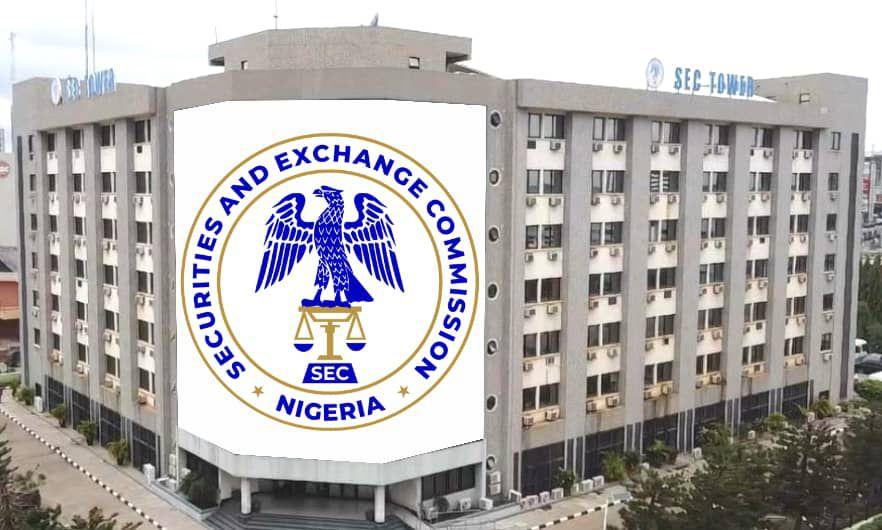
Nigeria’s Securities and Exchange Commission (SEC) has revoked the operating licence of Kensington Agro Trading Limited, effectively stripping the firm of its status as a registered capital market operator.
The Commission disclosed this in a public notice issued on Saturday, directing the investing public and all exchanges to immediately discontinue market-related dealings with the company.
The decision takes immediate effect and further underscores the regulator’s tightening oversight of Nigeria’s capital market.


The enforcement action removes Kensington Agro Trading Limited from the list of authorised intermediaries and bars it from participating in regulated capital market activities. It also directs all commodity exchanges, traders, and other capital market stakeholders to cease engagements with the firm without delay.
What the Commission is saying
Although the SEC did not cite any specific infraction leading to the sanction, it said the decision was taken pursuant to its statutory authority. The regulator referenced Section 61(6) of the Investments and Securities Act, 2025, as well as Rule 34(1) of the SEC Rules and Regulations 2013, as amended.
- “The Commission hereby notifies the public that it has revoked the registration of Kensington Agro Trading Limited with immediate effect pursuant to Section 61(6) of the Investments and Securities Act, 2025, and Rule 34(1) of the SEC Rules and Regulations 2013 (as amended).”
- “Accordingly, Kensington Agro Trading Limited is no longer authorised to operate in any capacity in the Nigerian capital market as a registered capital market operator.”
- “All capital market operators, commodity exchanges, investors, and the general public are hereby directed to cease and desist from any dealings with Kensington Agro Trading Limited in respect of capital market activities.”
These provisions empower the Commission to revoke registrations where operators fail to comply with regulatory standards or engage in conduct considered inconsistent with investor protection and orderly market functioning.
More Insights
The Commission’s advisory to discontinue all capital market-related dealings with Kensington Agro Trading signals an urgent compliance requirement for counterparties, custodians, and exchanges. Market participants currently engaged in transactions with the firm may now need to terminate such business relationships and review their exposures.
- Counterparties are expected to immediately unwind or suspend existing engagements with the firm in line with the directive.
- Exchanges and custodians may need to review internal records to ensure no further trades or asset movements are processed on behalf of the company.
- Investors are advised to verify the licensing status of market intermediaries before entering into transactions.
The revocation effectively removes the firm from the ecosystem of licensed commodity brokers, dealers, and collateral managers, invalidating its authority to operate within regulated capital market structures.
What you should know
The enforcement action comes amid intensified regulatory efforts to strengthen transparency and market discipline within Nigeria’s capital market. Regulators have recently stepped up oversight following concerns over irregular market activities and the upsurge in investment-related infractions.
- Only last week, the Nigerian Exchange Group, which is also regulated by the SEC, imposed regulatory action on Zichis Agro Allied Plc.
- Equities market dealers were directed to suspend trading in the shares of the company pending the outcome of a probe into the extraordinary price increase in its share price.
- The suspension was positioned as a measure to protect investors and ensure orderly market operations.
By issuing a public notice and mandating immediate disengagement with Kensington Agro Trading Limited, the SEC is reinforcing its posture of proactive oversight and signalling that compliance breaches will attract decisive sanctions. The move is also expected to prompt broader due diligence among operators as stakeholders reassess counterparty risk within the capital market ecosystem.