Follow Us on Google Discover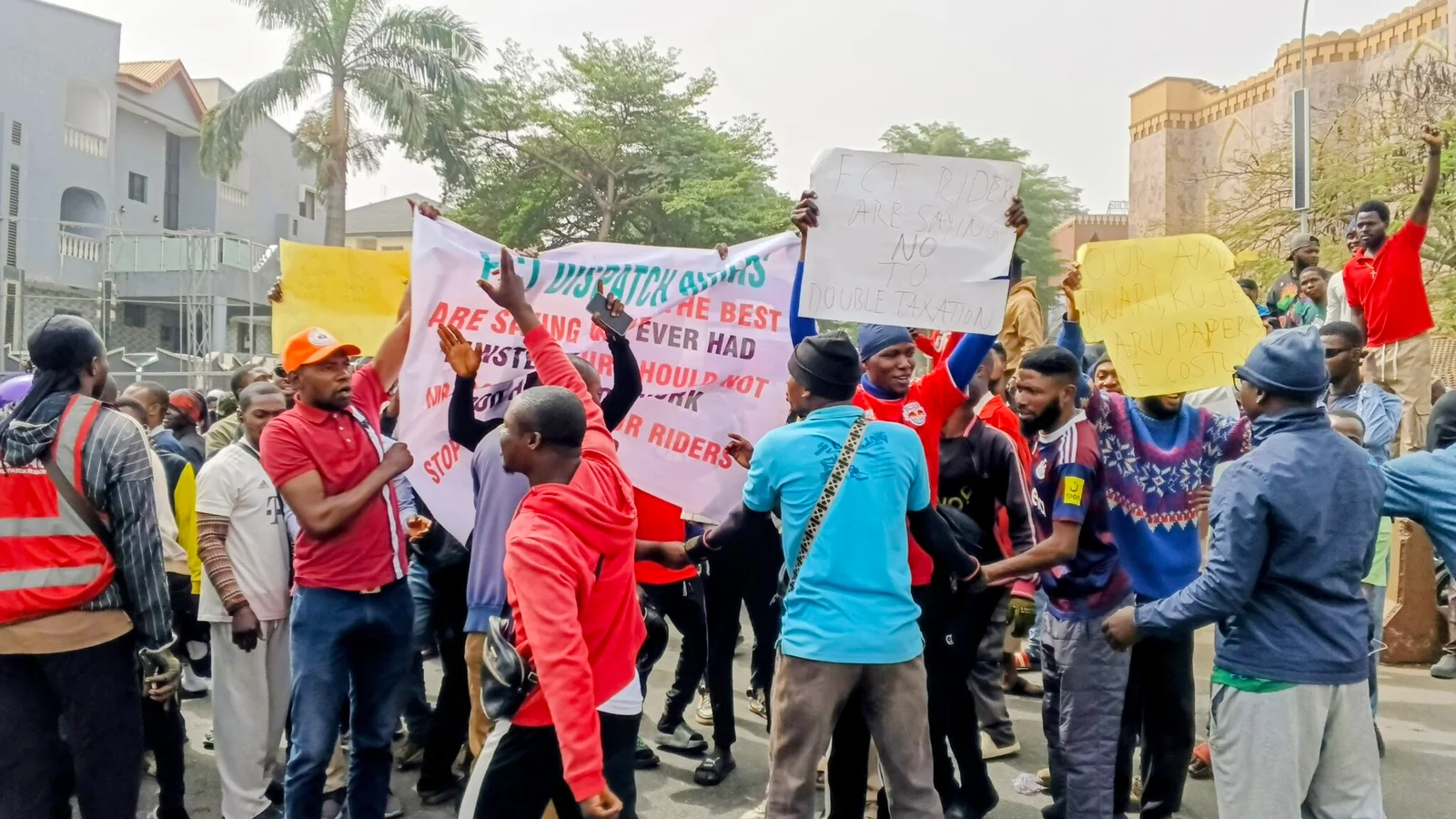
Dispatch riders in Abuja on Thursday protested alleged multiple taxation, rejecting a new N25,000 fee imposed by the Federal Capital Territory Administration.
The development was reported by the News Agency of Nigeria (NAN) on Thursday.
The riders said the new levy was introduced in addition to existing taxes paid to area councils, pushing their total financial obligations to what they described as an unsustainable level.
What they are saying
The riders gathered en masse at the FCT Administration Secretariat to appeal to FCT Minister Nyesom Wike to intervene and halt what they described as unlawful extortion. They insisted that while they recognise their statutory duty to pay taxes, the newly introduced N25,000 levy amounts to double taxation.
Also Read
- “Dispatch Riders in the Federal Capital Territory (FCT) on Thursday, stormed the FCT Administration Secretariat, Abuja, protesting what they described as ‘multiple taxation,’” the NAN report read in part.
- It further quoted Ilesanmi as saying, “The N25,000 is way higher than what we pay the area councils. We are, therefore, kicking against the multiple taxation that is affecting us directly in Abuja.”
- “We riders, we know that it’s our statutory obligation to pay tax and we have been complying year in year out, paying to AMAC, paying to Bwari and to Gwagwalada area councils.”
Ilesanmi added that several motorcycles were impounded, with owners compelled to pay the new fee before their bikes were released, while riders also continue to pay N300 each time they enter markets, a charge that accumulates for those making multiple trips daily.
NAN reported that the riders suspended the protest following intervention by officials of the FCT Transportation Secretariat, who met with the leaders of the dispatch riders.
More insights
A 2025 Nairametrics investigation showed that dispatch riders in Lagos can earn over N25,000 daily, highlighting the income potential within Nigeria’s fast-growing food delivery ecosystem. However, earnings vary significantly depending on operational costs and regulatory burdens.
- Riders in Lagos can average 12 to 13 deliveries daily, sometimes covering as much as 90 kilometres, with payouts largely tied to distance and number of completed trips.
- Some platforms offer performance-based incentives, including bonuses for meeting weekly distance or delivery targets, while many riders switch between multiple apps to stabilise income.
- Operational costs such as fuel, bike maintenance, and mobile data subscriptions reduce net earnings, alongside informal levies and road-related challenges.
These cost pressures provide context for the Abuja riders’ resistance to additional taxation, as new levies could significantly erode take-home income despite seemingly strong gross earnings.
What you should know
Dispatch riders have become central to Nigeria’s on-demand economy, particularly in major urban centres where food delivery and logistics services continue to expand. The role involves receiving orders via mobile applications, picking up items from vendors, and delivering them to customers using motorcycles or bicycles.
- Income depends on order volume, travel distance, incentive structures, and individual strategy, with some riders prioritising longer trips for higher payouts.
- Several platforms operating in the sector have introduced structured onboarding processes, safety protocols, insurance coverage, loyalty programmes, and performance-based bonuses.
Despite the flexibility, riders face persistent challenges, including traffic congestion, enforcement issues, rising fuel costs, and physical strain, particularly for those using bicycles.