Follow Us on Google Discover
- Nigerian SMEs lose over 600 hours annually managing fragmented bill payments, costing an estimated N180 billion in productivity.
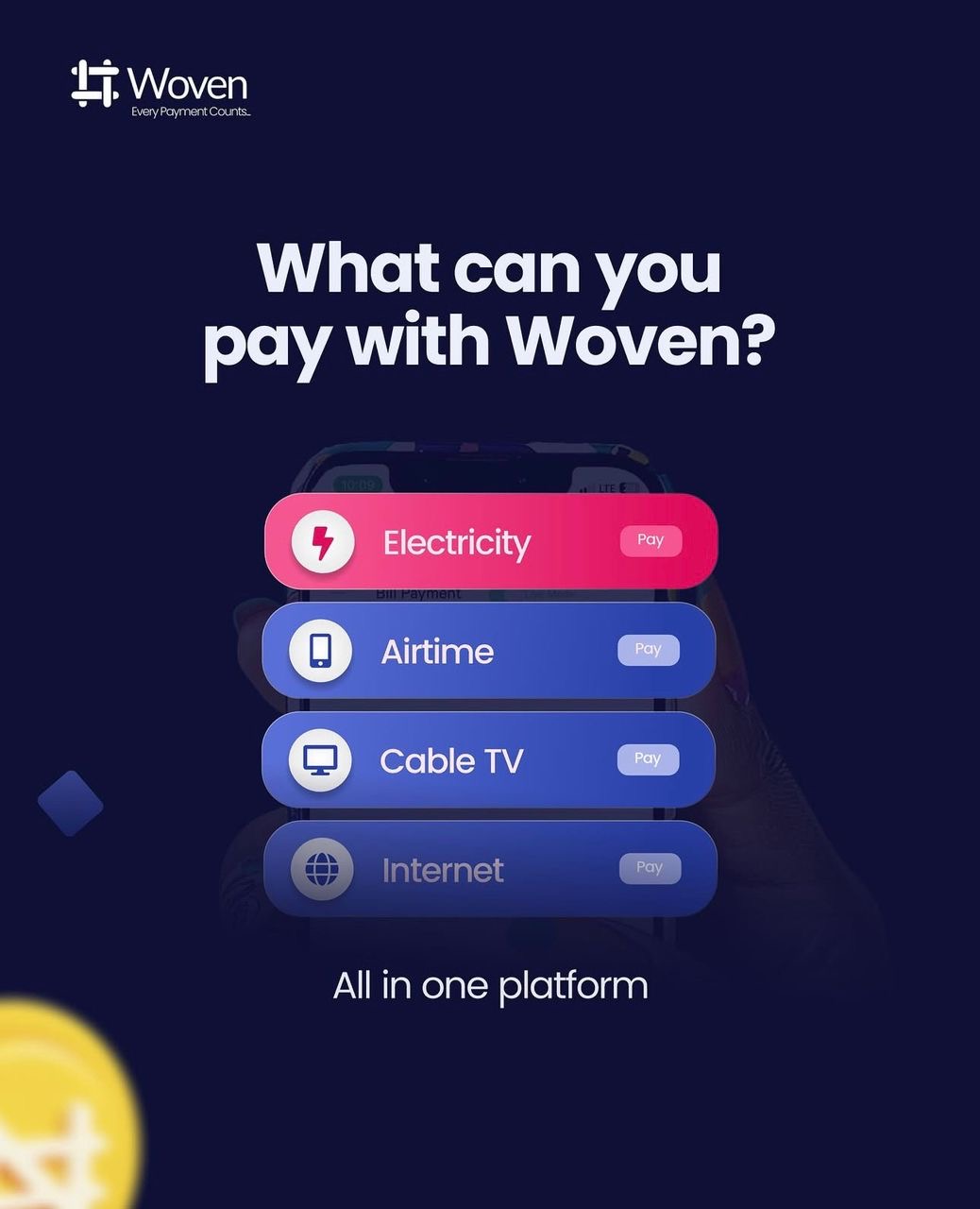
- Woven Finance’s new feature consolidates electricity, airtime, data, and cable payments into one dashboard for businesses.
- Beta users reported saving 8–10 hours weekly and reducing reconciliation time by 75%, with failed transactions down 60%.
Nigerian businesses are haemorrhaging time and money on a problem most don’t even measure: fragmented bill management.
New analysis from Woven Finance reveals that the average SME loses 12 hours weekly, over 600 hours annually, simply managing electricity tokens, airtime distribution, data top-ups, and cable subscriptions across multiple platforms.
At scale, these administrative overhead costs Nigerian businesses an estimated N180 billion per year in lost productivity.
Also Read
Today, Woven Finance is addressing that drain with an integrated bill payments infrastructure that consolidates all business utilities into the same dashboard that companies already use for collections, payouts, and financial operations.
“You plan for growth, and then spend your day solving the basics,” said Collins Obafemi, CEO of Woven Finance.
“We tracked how our own operations team spent their time, then surveyed our customers. The pattern was undeniable: hours lost daily to tasks that create zero value. We built bill payments into Woven because staying connected isn’t a nice-to-have; it’s infrastructure. And infrastructure should be invisible.”
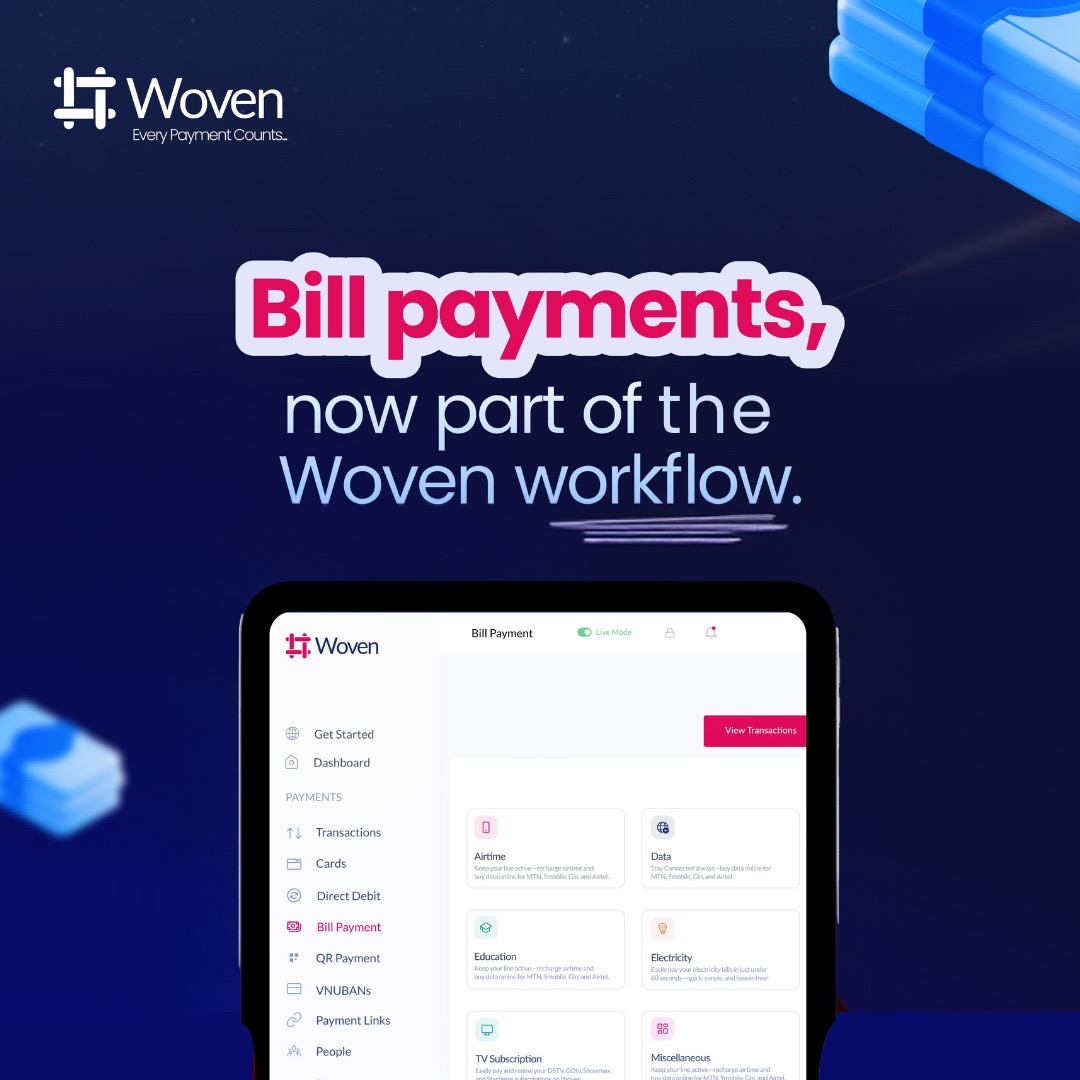
The feature, live today, allows businesses to:
- Send bulk airtime or data to hundreds of team members in a single action
- Purchase electricity with instant token delivery across major providers
- Manage internet and cable renewals without leaving their workspace
More importantly, it eliminates the hidden tax on productivity: app-switching, manual reconciliation, petty cash management, and the constant friction of keeping teams operational.
In private beta testing for over 90 days, businesses using Woven’s integrated bill payments reported measurable operational improvements:
- Average time saved: 8-10 hours weekly per business
- Reconciliation time reduced: 75% decrease in manual processing
- Failed transaction rate: Down 60% compared to the multi-app approach
“We were spending 2-3 hours daily managing airtime distribution and electricity tokens for our 40-person team,” said a beta customer who serves as Operations Manager at a Lagos-based logistics company. “Woven collapsed that to under 10 minutes. We calculated the savings: N1.2 million annually just in reduced admin overhead. But the real win is focus, our ops team finally does operations, not procurement.”
By embedding high-frequency services, such as electricity and airtime, directly into its platform, Woven is positioning itself beyond traditional payment infrastructure, and the bill payments integration creates a daily usage loop that deepens platform stickiness, while businesses might process payroll biweekly or vendor payments weekly, electricity and airtime are daily essentials.
“The fintech market is consolidating,” Obafemi noted. “Winners won’t be determined by who moves money fastest, but by who integrates money movement so completely into operations that businesses can’t function without them. That’s the game we’re playing.”
“We want businesses to experience the time savings immediately,” Obafemi said. “Once you’ve reclaimed 10 hours in your week, you won’t go back to the old way.”
The feature is live now via Woven’s web dashboard, and businesses can calculate their potential time savings using Woven’s Business Continuity Calculator at woven.finance/calculator.
About Woven Finance
Woven Finance builds financial infrastructure for African businesses, powering collections, payouts, QR payments, direct debits, and bill payments for thousands of companies across Nigeria. The platform is certified for ISO 27001, NDPR, and PCI-DSS compliance.
The company’s mission is to eliminate operational friction so businesses can focus on growth, not survival. Learn more at www.woven.finance.