In March 2021, a digital artwork titled “Everydays; the first 5000 days” by artist Mike Winkelmann aka Beepie sold at Christie’s, the auction house in New York for a record $60.25m. Ordinarily, this is not news. In 2017, Christie’s in New York sold the painting “Salvatore Mundi” by Leonardo da Vinci for $450,312,500 a record.
So, what is the fuss with the art by Beepie?
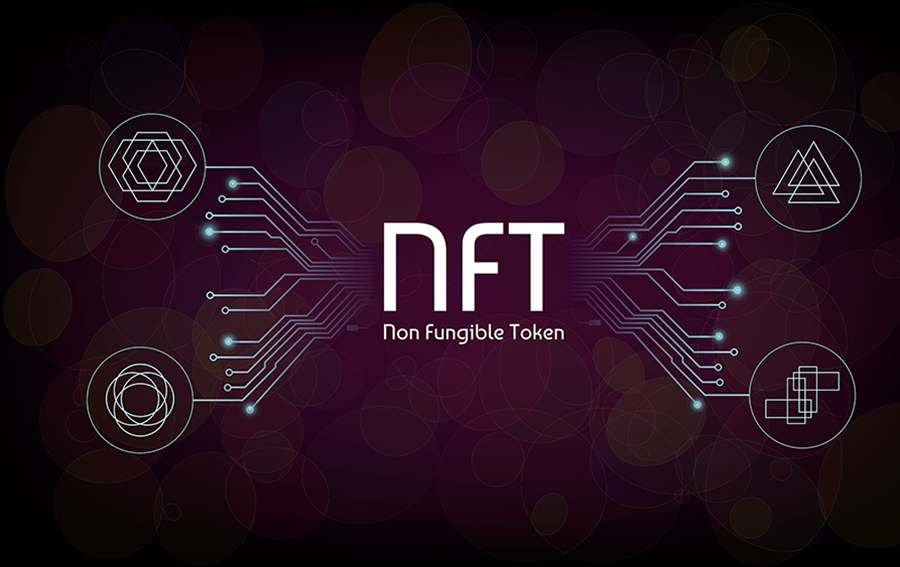
Well, Beepie’s art is a Non-Fungible Token, which means that the painting was issued with a digital certificate of authenticity that runs on blockchain technology.


Yes, welcome to the future.
READ: XRP stands firm, investors wait on Ripple’s legal outcome
What is an NFT exactly?
An NTF is a Non-Fungible Token. It simply means any contract, document, or art, that is non-duplicable and assigns the ownership. Think of it this way, there are billions of N100 in circulation, what if the Central Bank of Nigeria issued an N100 NFT, then Naira will not be unique – it can never be reprinted, or copied. The CBN will then reissue a certificate, secured by a digital code, permanently published into a token, on a blockchain like Ethereum. In essence that N100 becomes valuable not because it’s a N100 note but because it’s unique, and there can be no other one like it again.
Just like diamonds, the value of that N100 is not in its utility or exchange value but its scarcity or exclusivity. That N100 NFT could sell for N100,000.00. Therefore, a painting by Beepie can sell for $69m because it’s exclusive, it’s non-fungible. An N100 note is fungible. The CBN can print lots of N100 bills, every N100 bill printed is worth the next N100 printed, but the N100 NFT is not worth N100. Its worth is determined by the price set by demand and supply. If more people think a N100 NFT is working more, the price will rise.
READ: Bitcoin produces 4 billionaires worth at least $3 billion each
What NFT does is create a meaningful specific out of a wandering generality. Anything can become an NFT. I can for instance partner with Austin Jay Jay Okocha and create a digital GIF of him dribbling with a soccer ball. I will go to say Ethereum or Polkadot where NFT is created. That Okocha NFT will carry a digital signature that authenticates that token on any server.
I can then sell that on NFT platforms like Open Sea or Variable. Collectors can then buy that GIF of Okocha dribbling. Note that the actual GIF can be seen anywhere. If I own the token, I cannot hide it, but I can sell that token by transferring it with that authentication certificate.
Yes, again welcome to the future.
READ: Chiliz, football-based crypto on a hat trick, surges by 380% in a week
What really is happening here?
To my mind, NFT, SPACS, even Cryptocurrencies are a product of the excess liquidity in the global system, there is simply too much money floating around, issued by the various central banks. Take the US for example, she has authorized close to $4.4 trillion, roughly about 27% of GDP in Coronavirus stimulus measure to reflate and boost an economy still experiencing layoffs. That’s a lot of cash being paid to business, individuals, Counties and States and that cash eventually will trickle to the stock and bond markets.
That liquidity is also driving a boom in traditional assets and creating a market for alternative assets like NFTs. Cash is becoming a commodity. Interest rates in most of the world including Europe and Japan are negative. America remains the number one destination for Foreign Direct Investments in the world. The Trump Tax cuts allowed record amounts of cash to be repatriated back to the United States and companies like Apple took advantage of that.
READ: You can now buy Bitcoin, Ethereum, Uniswap through Apple Pay
This has led to rising-falling bond prices and fears of inflation in America, thus a lot of investors are now seeking to hedge against a falling US Dollar by diversifying into new asset classes like Cryptocurrencies and NFTs. NFTs really have no intrinsic value. They will go up in price and make a huge return for the holders because of demand, but they generate nothing in terms of return. They are simply based on the “Greater Fool” theory and will continue to post a health return to the holders if there is a buyer ready to buy from the holder, and there will be lots of buyers.
That said, If I had the choice to buy and hold a N100 note or a N100 NFT, I will fall over myself to hold the N100 NFT. Why? because its “scarcity” protects it from inflation. In effect, NFTs are a hedge on inflation.
The issue really is inflation and the risk of holding cash.
Advise to you? Hedge.