
 Follow Us on Google Discover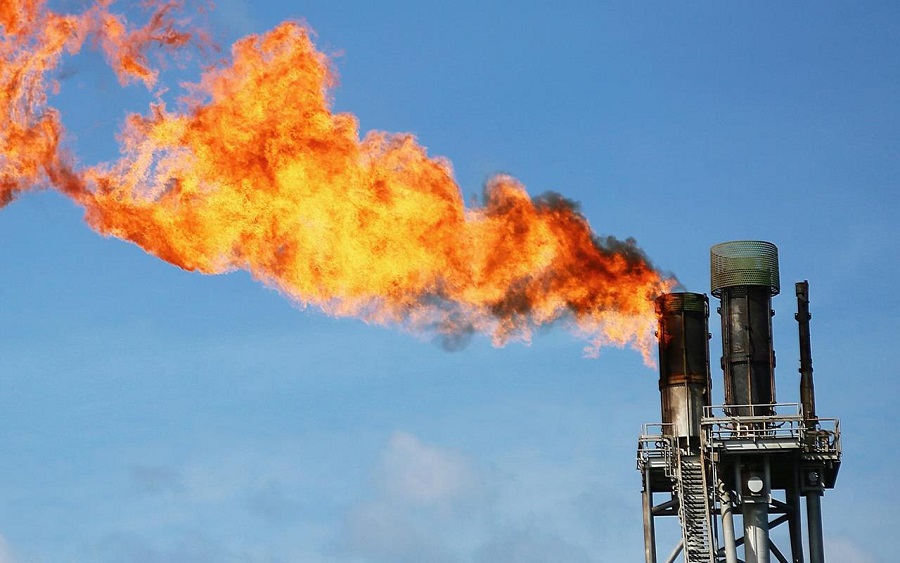
Visiting the website of the reputed Imperial College London last week revealed the institution has suspended its Petroleum Geoscience Masters programme and intends to do the same with its Petroleum Engineering Masters programme at the end of the 2021/ 2022 academic year.
For a programme that has been around for longer than Nigeria’s Petroleum Act, the news created a stir in many quarters, but no doubt signaled the end of an era, because if even schools do not teach a thing, then with the absence of scholarship in that area, a dearth of it looms.
This ebbing from oil is not new. Over the course of 2020, major oil companies openly declared net zero targets, indicating how they were taking active steps to reduce their carbon emissions. In March 2020, the French oil company, Total, declared its net zero ambitions and did not mince words about its commitment to the energy transition.
In April of the same year, British-Dutch oil major, Royal Dutch Shell announced its net-zero target for 2050 as well. Only a couple of hours ago, the company again announced that what it is committing to do is not just reduce emissions from its production, but also reduce emissions from the oil and gas produced by others that the company markets through its trading arm.
English oil company, BP had already made a similar commitment in February 2020, setting its net zero targets for 2050 or earlier and outlining ten aims to help itself and the world reach net zero by 2050. Repsol and Equinor, Spanish and Norwegian oil majors respectively have also announced net zero targets by 2050.
While, one cannot speak with absolute certainty about the commitment of all of these majors to their targets, by publicising these targets, they have alerted the market and their shareholders to the trajectory of their business to encourage renewables and expand their focus to the electricity industry.
No doubt, the World Bank’s mandate not to extend any new financing for fossil fuel upstream projects from 2019 as well as the increasing leaning by investors and development finance institutions towards businesses guided by Environmental, Governance, and Social (ESG) norms, have compelled these non-State actors to get in the race to net zero.
In the same vein, 190 countries- including Nigeria- by ratifying the Paris Agreement committed to the ideals of the Agreement and the bid to combat climate change and its effects by reducing emissions and particularly making the transition in the energy sector. In fact, countries like Sweden, Germany, Spain, Australia, Italy, and the UK have adopted a hard-line approach in the transition and the race towards net zero, aiming to keep emissions as low as possible.
In Africa too, we have seen countries like South Africa, Kenya, Ethiopia and Morocco invested in this race. Yet Nigeria remains stuck in the oil. Worse still, it is in the process of passing a bill that is both over two decades old and has oil as its key component, with only a negligible reference to renewable energy. A recent report by the Natural Resource Governance Institute (NGRI) has shown that the Nigerian National Petroleum Company (NNPC) is poised to take heavy losses, particularly with Big Oil lowering their long-term price estimates for oil and intensifying its race for net zero.
Nigeria does not have the relevant legal and policy framework for a transition and not nearly for thriving renewable energy industry. With bits and pieces of dated aspirational documents here and there, populated with missed targets, the country is clearly not in the race for net-zero.
For a country with commitments to reduce its emissions under the Paris Agreement, Nigeria has continued to seek out new fossil fuel projects, even in the dirtiest of energy forms- coal. A 1000MW coal plant was a major highlight of the Abdullahi Sule-led government in Nassarawa State. Nigeria is also mulling plans to construct another 6 coal power plants by 2037.
While Big Oil races for net-zero, Nigeria races for a carbon future, not minding that its population is one of the most vulnerable to the effects of climate change and environmental pollution. The Okobo and Itobe communities in Kogi State present a clear example of a community ravaged by the effects of coal mining- from air pollution to loss of clean water and livelihood.
Nigeria is running on a different track or at best, it is running backward- into the past. The paradox of the country’s fossil fuel dependency is that it is producing more poor people than rich, with corruption as the order of the day. Yet can we avoid the race to net zero for much longer, especially with financing and major stakeholders facing the future of energy?

Nigeria always waits to act after it’s too late. Plus our leaders are so fixated on oil and the wealth they think they can acquire long term from it. We are busy building refineries when counties are abandoning oil all together. We have such misplaced priorities.
Hydrocarbons will remain a significant part of the global energy mix for the foreseeable future. Even environmentally-notable nations like Norway and Canada each issued their largest ever number of hydrocarbon exploration licenses in 2020, while there’s an ongoing Superpower struggle over the Artic’s hydrocarbon resources.
The biggest hydrocarbon project being presently built in the world is a $43 billion project in Alaska, in addition to other huge hydrocarbon projects in the US (at Elk Point, Yuma, Pascagoula, Wood River, etc.), Canada, Asia, and in Europe. Meanwhile (since you mentioned academic research), a pioneering new microbial technology is being tried in the UK North Sea to try to add decades to the basin’s lifespan by enabling the recovery of more “trapped” oil.
Frankly, it is bemusing to listen to pontification that the world’s poorest people in Africa should stop utilizing its full slate of scarce energy resources, while the wealthiest nations primarily responsible for Global Warming, and who should thus carry the heaviest burden, continue to accelerate their own utilization of hydrocarbons, obfuscated by the occasional electric car.