• Login
  • Register
Nairametrics
  • Home
  • Exclusives
    • Recapitalization
      • Access Holdings Offer
      • Fidelity Bank Offer
      • GTCO Offer
      • Zenith Bank Offer
    • Financial Analysis
    • Corporate Stories
    • Interviews
    • Investigations
    • Metrics
    • Nairalytics
  • Economy
    • Business News
    • Budget
    • Public Debt
    • Tax
  • Markets
    • Currencies
    • Cryptos
    • Commodities
    • Equities
      • Company Results
      • Dividends
      • Public Offer & Right Issues
      • Stock Market News
    • Fixed Income
    • Funds Management
    • Securities
  • Sectors
    • Agriculture
    • Aviation
    • Company News
    • Consumer Goods
    • Corporate Updates
    • Corporate deals
    • Corporate Press Releases
    • Energy
    • Entertainment
    • Financial Services
    • Health
    • Hospitality & Travel
    • Manufacturing
    • Real Estate and Construction
    • Renewables & Sustainability
    • Tech News
  • Financial Literacy
    • Career tips
    • Personal Finance
  • Lifestyle
    • Billionaire Watch
    • Profiles
  • Opinions
    • Blurb
    • Market Views
    • Op-Eds
    • Research Analysis
  • Home
  • Exclusives
    • Recapitalization
      • Access Holdings Offer
      • Fidelity Bank Offer
      • GTCO Offer
      • Zenith Bank Offer
    • Financial Analysis
    • Corporate Stories
    • Interviews
    • Investigations
    • Metrics
    • Nairalytics
  • Economy
    • Business News
    • Budget
    • Public Debt
    • Tax
  • Markets
    • Currencies
    • Cryptos
    • Commodities
    • Equities
      • Company Results
      • Dividends
      • Public Offer & Right Issues
      • Stock Market News
    • Fixed Income
    • Funds Management
    • Securities
  • Sectors
    • Agriculture
    • Aviation
    • Company News
    • Consumer Goods
    • Corporate Updates
    • Corporate deals
    • Corporate Press Releases
    • Energy
    • Entertainment
    • Financial Services
    • Health
    • Hospitality & Travel
    • Manufacturing
    • Real Estate and Construction
    • Renewables & Sustainability
    • Tech News
  • Financial Literacy
    • Career tips
    • Personal Finance
  • Lifestyle
    • Billionaire Watch
    • Profiles
  • Opinions
    • Blurb
    • Market Views
    • Op-Eds
    • Research Analysis
Nairametrics
Home Business News

IMF reveals CBN is ‘taking steps’ to float the Naira

Research Team by Research Team
April 28, 2020
in Business News, Politics, Spotlight
diaspora remittances, Total credit to the economy rose to N19.54trillion – CBN Governor, CRR debits, P-AADS, #EndSARS: CBN says funds in frozen accounts may be linked to terrorist activities, Covid-19: Court closures impacted revenue generation for courts - Emefiele, P&ID dispute: UK Court orders $200 million guarantee to FG, Leaked letter by Poultry Farmers Association triggered CBN emergency approval to import maize, nImplications of CBN's latest devaluation and FX unification, current account deficit, IMF, COVID-19, CBN OMO ban could give stocks a much-needed boost , CBN’s N132.56 billion T-bills auction records oversubscription by 327% , Nigeria pays $1.09 billion to service external debt in 9 months , Implications of the new CBN stance on treasury bill sale to individuals, Digital technology and blockchain altering conventional banking models - Emefiele  , Increasing food prices might erase chances of CBN cutting interest rate   , Customer complaint against excess/unauthorized charges hits 1, 612 - CBN , CBN moves to reduce cassava derivatives import worth $600 million  , Invest in infrastructural development - CBN Governor admonishes investors , Credit to government declines, as Credit to private sector hits N25.8 trillion, CBN sets N10 billion minimum capital for Mortgage firms, CBN sets N10 billion minimum capital for Mortgage firms , Why you should be worried about the latest drop in external reserves, CBN, Alert: CBN issues N847.4 billion treasury bills for Q1 2020 , PMI: Nigeria’s manufacturing sector gains momentum in November, CBN warns high foreign credits could collapse Nigeria’s economy, predicts high poverty, MPC Member, BVN, Fitch, Foreign excchange (Forex), Overnight rates crash after CBN’s N1.4 trillion deduction, Nigeria’s foreign reserves hit $36.57 billion; Emefiele keeps his word on defending the naira, CBN to support maize farmers, projects 12.5 million metric tons in 18 months, BREAKING: CBN Upscales Greenwich Trust Limited, grants it's operational license for merchant banking, AGSMEIS: CBN expand beneficiaries to 14,638., CBN expands access to mortgage financing

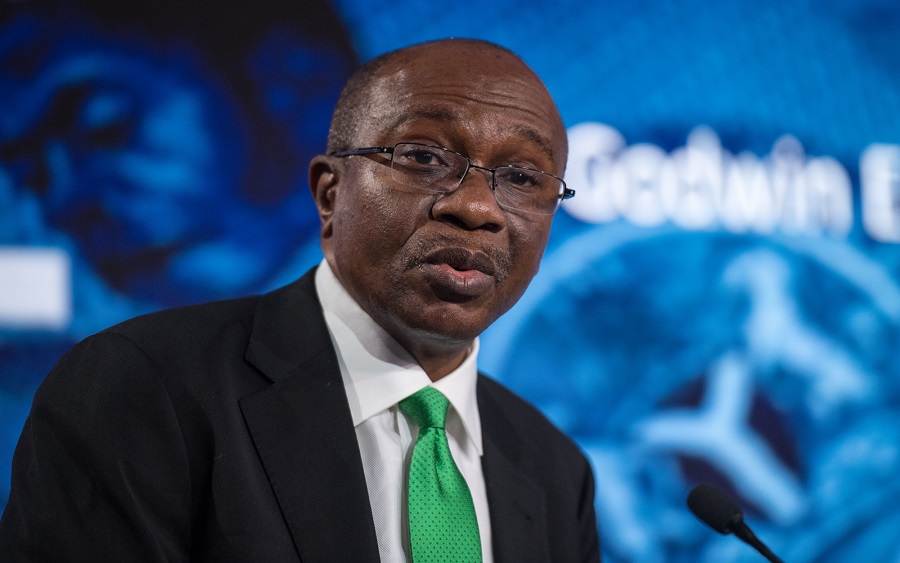
CBN Governor, Godwin Emefiele

Share on FacebookShare on TwitterShare on Linkedin

The International Monetary Fund (IMF) announced it has approved Nigeria’s request for “emergency financial assistance” of $3.4 billion under its Rapid Financing Instrument (RFI). This is the first time in history that Nigeria will be obtaining a loan from the IMF.

Nigeria had approached the IMF over a month ago seeking financial assistance to help the current meet its balance of payment needs. The IMF also recently approved a loan of $ 1billion for Ghana to help fight the Covid-19 virus.

Economic Recession

The Nigerian Economy faces a double whammy from the falling crude oil prices and the Covid-19 pandemic. As a result, most analysts have predicted a slip back into recession and one that could top the 2016 recession that lasted for almost a year. This time, the fall in oil prices has had an immediate impact on government revenues while the COVID-19 pandemic has hit hard on the private sector due to the lockdowns.

MoreStories

Power: Nigeria seeks $2 billion China loan for new super grid 

Power Minister Adelabu reportedly set to resign over Oyo governorship ambition   

April 22, 2026
Federal Competition and Consumer Protection Commission (FCCPC) Logo

FCCPC cautions companies over non-compliance with merger and acquisition regulations 

April 22, 2026

The IMF recognizes this risk and has made it clear in some of its recent pronouncements. Earlier in the month, it projected that Nigeria was heading to a recession, its worst recession in three decades, as it expects the nation’s economy to recede by 3.4% in 2020. This realization has led to the approval of the $3.4 billion loans.

In a press release issued by the IMF, it explained that “the near-term economic impact of COVID-19 is expected to be severe, while already high downside risks have increased.  Even before the COVID-19 outbreak, Nigeria’s economy was facing headwinds from rising external vulnerabilities and falling per capita GDP levels. The pandemic—along with the sharp fall in oil prices—has magnified the vulnerabilities, leading to a historic decline in growth and large financing needs” buttressing the urgent need for a loan for Nigeria.

The Deputy Managing Director and Acting Chair of the IMF, Mr. Mitsuhiro Furusawa, also issued the following statement:

“The COVID-19 outbreak—magnified by the sharp fall in international oil prices and reduced global demand for oil products—is severely impacting economic activity in Nigeria. These shocks have created large external and financing needs for 2020. Additional declines in oil prices and more protracted containment measures would seriously affect the real and financial sectors and strain the country’s financing.” 

Financial Assitance with strings

However, what we found more interesting in the comment made by Mr. Farusawa was the inference that Nigeria was taking steps towards floating the currency (flexible exchange rate as they call it) and unifying the exchange rate.

“The authorities’ immediate actions to respond to the crisis are welcome. The short-term focus on fiscal accommodation would allow for higher health spending and help alleviate the impact of the crisis on households and businesses. Steps taken toward a more unified and flexible exchange rate are also important and unification of the exchange rate should be expedited.

This statement appears to confirm that there are moves by the central bank to float the naira and unify the exchange rate across all markets. This move is not a surprise considering that IMF loans typically attract strings such as hard policy reforms such as devaluation, floating currency, and removal of subsidies.

This is perhaps why Nigeria hasn’t obtained loans from the IMF in years allowing multiple governments to continue with economic policies that require less accountability and scrutiny but big on subsidies and capital controls. The institution is known for asking for strings when it comes to the aid of ailing countries.

Nairametrics research understands that the current IMF loan may not have come with strings considering the speed at which it was approved amidst the Covid-19 situation. However, Nigeria may need more than $3.4 billion from the IMF and bond buyers making it inevitable that the currency will be floated.

End of fixed exchange rate?

Recall, the CBN in March devalued (adjusted) the naira from N305/$1 to N360/$1 in the official market where the government converts forex from crude in exchange for Naira from the CBN.

It then moved the rate at which it sells forex in the Bureau De Change to N380/$1 from N360/$1. Since then, transaction volumes have crashed in the IFEX market where forex is traded as investors react to the Covid-19 lock-down.

The black market where the exchange rate is also sold crashed to as high as N460/$1 this week as dollar scarcity persisted in the market.


Add Nairametrics on Google News
Follow us for Breaking News and Market Intelligence.
Tags: Bureau De Change (BDC)Business NewsCBNExchange RateFlexible exchange rateFloating NairaIMFNigerian Business News
Research Team

Research Team

The Research Team at Nairametrics meticulously monitors, gathers, curates, and administers an extensive repository of both macroeconomic and microeconomic data originating from Nigeria and across Africa. Utilizing a variety of presentation formats—including documents, tables, and charts—our analysts disseminate key findings through the Nairametrics platform. Additionally, we regularly release insightful, research-driven articles that offer in-depth analyses of economic trends and indicators.

Next Post
Seven early lessons on personal finance from the Covid-19 pandemic 

Seven early lessons on personal finance from the Covid-19 pandemic 

Leave a Reply Cancel reply

Your email address will not be published. Required fields are marked *

Luis Figo

rabafast

nairametrics


DUNS

Follow us on social media:

  • HOME
  • ABOUT NAIRAMETRICS
  • CONTACT US
  • DISCLAIMER
  • ADs DISCLAIMER
  • COPYRIGHT INFRINGEMENT

© 2026 Nairametrics

Welcome Back!

Login to your account below

Forgotten Password? Sign Up

Create New Account!

Fill the forms below to register

All fields are required. Log In

Retrieve your password

Please enter your username or email address to reset your password.

Log In
Social Media Auto Publish Powered By : XYZScripts.com
No Result
View All Result
  • Home
  • Exclusives
    • Recapitalization
      • Access Holdings Offer
      • Fidelity Bank Offer
      • GTCO Offer
      • Zenith Bank Offer
    • Financial Analysis
    • Corporate Stories
    • Interviews
    • Investigations
    • Metrics
    • Nairalytics
  • Economy
    • Business News
    • Budget
    • Public Debt
    • Tax
  • Markets
    • Currencies
    • Cryptos
    • Commodities
    • Equities
      • Company Results
      • Dividends
      • Public Offer & Right Issues
      • Stock Market News
    • Fixed Income
    • Funds Management
    • Securities
  • Sectors
    • Agriculture
    • Aviation
    • Company News
    • Consumer Goods
    • Corporate Updates
    • Corporate deals
    • Corporate Press Releases
    • Energy
    • Entertainment
    • Financial Services
    • Health
    • Hospitality & Travel
    • Manufacturing
    • Real Estate and Construction
    • Renewables & Sustainability
    • Tech News
  • Financial Literacy
    • Career tips
    • Personal Finance
  • Lifestyle
    • Billionaire Watch
    • Profiles
  • Opinions
    • Blurb
    • Market Views
    • Op-Eds
    • Research Analysis
  • Login
  • Sign Up

© 2026 Nairametrics