• Login
  • Register
Nairametrics
  • Home
  • Exclusives
    • Recapitalization
      • Access Holdings Offer
      • Fidelity Bank Offer
      • GTCO Offer
      • Zenith Bank Offer
    • Financial Analysis
    • Corporate Stories
    • Interviews
    • Investigations
    • Metrics
    • Nairalytics
  • Economy
    • Business News
    • Budget
    • Public Debt
    • Tax
  • Markets
    • Currencies
    • Cryptos
    • Commodities
    • Equities
      • Company Results
      • Dividends
      • Public Offer & Right Issues
      • Stock Market News
    • Fixed Income
    • Funds Management
    • Securities
  • Sectors
    • Agriculture
    • Aviation
    • Company News
    • Consumer Goods
    • Corporate Updates
    • Corporate deals
    • Corporate Press Releases
    • Energy
    • Entertainment
    • Financial Services
    • Health
    • Hospitality & Travel
    • Manufacturing
    • Real Estate and Construction
    • Renewables & Sustainability
    • Tech News
  • Financial Literacy
    • Career tips
    • Personal Finance
  • Lifestyle
    • Billionaire Watch
    • Profiles
  • Opinions
    • Blurb
    • Market Views
    • Op-Eds
    • Research Analysis
  • Home
  • Exclusives
    • Recapitalization
      • Access Holdings Offer
      • Fidelity Bank Offer
      • GTCO Offer
      • Zenith Bank Offer
    • Financial Analysis
    • Corporate Stories
    • Interviews
    • Investigations
    • Metrics
    • Nairalytics
  • Economy
    • Business News
    • Budget
    • Public Debt
    • Tax
  • Markets
    • Currencies
    • Cryptos
    • Commodities
    • Equities
      • Company Results
      • Dividends
      • Public Offer & Right Issues
      • Stock Market News
    • Fixed Income
    • Funds Management
    • Securities
  • Sectors
    • Agriculture
    • Aviation
    • Company News
    • Consumer Goods
    • Corporate Updates
    • Corporate deals
    • Corporate Press Releases
    • Energy
    • Entertainment
    • Financial Services
    • Health
    • Hospitality & Travel
    • Manufacturing
    • Real Estate and Construction
    • Renewables & Sustainability
    • Tech News
  • Financial Literacy
    • Career tips
    • Personal Finance
  • Lifestyle
    • Billionaire Watch
    • Profiles
  • Opinions
    • Blurb
    • Market Views
    • Op-Eds
    • Research Analysis
Nairametrics
Home Opinions Blurb

Oil price crash, Coronavirus: The trouble that lies ahead for Nigeria

Blurb Team @Nairametrics by Blurb Team @Nairametrics
March 16, 2020
in Blurb
Why Nigeria is experiencing its worst inflation in 21 years

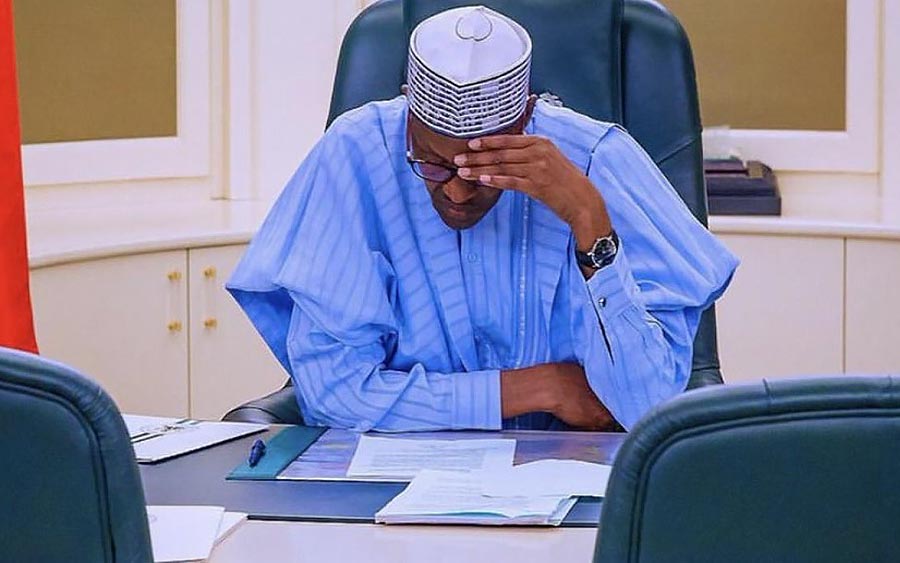
President Muhammadu Buhari

Share on FacebookShare on TwitterShare on Linkedin

Close your eyes for one minute and picture a scene full of chaos. Everyone is locked in at home, stores are empty, ATMs are not working, and hospitals are overwhelmed. This could be the stories we would hear in some parts of the world if the escalating threat of Coronavirus is not contained in the coming days.

For now, most of the crisis has been in Western Europe and the United States, which is why we are getting so much media coverage. In Africa, and to be more specific, Nigeria, Coronavirus possesses a different kind of imminent threat which could cost economies even more. We face an economic threat of mega proportions, and this could be worse than anything we have ever seen.


MoreStories

Cadbury Nigeria shareholders to get N751.28 million dividend

Cadbury Nigeria 2025 results: A recovery with room to grow 

February 4, 2026
UAC Nigeria

UACN’s 2025 CHI Limited Acquisition: The gamechanger in the 2025 results  

February 2, 2026

In a week that has now been adjudged to be one of the worst in financial market history, the global economy woke up to an oil price war declared by Saudi Arabia and Russia. Talks to cut oil production between both countries fell through, leading to an all-out price war that sent oil prices tumbling by over 30% within 24 hours.

As expected, markets reacted negatively with investors pondering what the effect on the global economy would be. And then, Coronavirus took another turn for the worse.
When Elephants fight, the grass, they say, suffers. As the markets roiled in confusion, Nigerians woke to an emerging new reality – a possibility of an exchange rate crisis. You can accuse Nigerians of not being economically savvy, but not when it comes to the exchange rate.

[READ MORE: BLOODY WEEKS: Coronavirus costs investors N1 trillion, triggers devaluation fears)

Everyone knows that when oil prices fall as they did on Black Monday, it is only a matter of time before the exchange rate also suffers. The exchange fell to N370/$1 during the week before rallying back after the CBN read the riot act to speculating BDC operators. But trouble still lies ahead.

The Nigerian Government relies mainly on oil for its dollar earnings. In 2019, crude oil exports accounted for $41 billion out of the $46.6 billion reported in the third quarter of the year. Thus, if oil price crashes, Nigeria’s dollar earnings go with it.

As at the third quarter of 2019, when crude prices were above $60, Nigeria still had a current account deficit of $9.1 billion, meaning that we had more dollar outflows than inflows. The Federal Government also reported far less revenues than projected in the 2019 budget, raising alarm over the government’s ability to finance important infrastructure development, as well as pay workers’ salary. This was all when oil was $60 plus. The situation would surely be dire now that oil prices are falling.

In recent past, whenever Nigeria faces a decision to devalue, the CBN typically pulls its levers. But the situation is now different. Nigeria’s external reserves are at about $36 billion and the CBN has about $11 billion in non-deliverable forwards, a term for future dollar sales which the CBN is committed to supplying to foreign investors.


[READ ALSO: Two oil giants fight, break Nigeria’s heart)

Nigeria’s foreign debt has also risen from about $2 billion in 2015 to about $8.7 billion in 2019. The reserves, though strong, are fragile, especially if pushed further. Nigeria’s excess crude account, which was an account dedicated to periods like this, is down to $325 million compared to over $ 2billion in 2015.

Foreign Investments in Nigeria have also risen from $20.7 billion in December 2014 to $23 billion as at December 2019. The difference, however, is that while only $4.8 billion accounted for foreign debts in 2014, $19.5 billion accounted for loans in 2019. There is little wiggle room for the economy.

The stacks are obviously not in our favour and as things get worse for the oil markets, so will they be for the economy. The Federal Government will struggle to fund its statutory capital and recurrent expenditures, state governments will struggle to pay salaries, and oil companies could default on their loans, thereby piling pressure on commercial banks.

Small businesses, which rely heavily on foreign imports to augment their value chains, will suffer from supply shortages while looming job cuts will intensify. The aviation sector could suffer, as businesses will cut down on travel plans. The struggling service sector will feel most of the heat, as the manufacturers will cut back budget to survive.

The planned increase in electricity tariffs may be put on hold, further worsening the situation in the power sector. As things get worse, the CBN may have no choice but to embark on a massive devaluation.

The depiction above is not meant to scare anyone, but it’s a plausible outcome if oil prices continue to crash. Nigeria doesn’t have a way out of this, especially when you consider that we can’t produce more than 2.2 million barrels per day, and even when we do, we have unsold stockpiles as confirmed by the NNPC Group GMD, Mele Kyari at the CBN town hall last week. He also confirmed that Nigeria’s average cost of crude production is $30, thus with Saudi selling at under $30, we are stuck.


[READ FURTHER: What to do now that the economy is “crashing”)

When countries face situations like these, the IMF is often the last resort. It is unlikely that foreign investors will pile into any euro bond Nigeria sells, especially as they are still spooked by the Coronavirus and the global uncertainty.

Nigeria’s worsening debt service to revenue ratio is also worrisome for the more conservative investors. For now, one can hope that this is just an awful prolonged dream.



Add Nairametrics on Google News
Follow us for Breaking News and Market Intelligence.
Tags: CoronavirusExchange RateFinancial MarketForeign Investments into NigeriaGlobal economyMele KyariNigeria's External ReservesNigeria’s excess crude accountNigeria’s foreign debtOil price crash
Blurb Team @Nairametrics

Blurb Team @Nairametrics

The "Blurb Team" is the official conveyer of the opinions of the Nairametrics Research & Analysis Board on matters of financial reports, macroeconomic data, and economic policies.

Next Post
Recession, 2020 revised budget, spending inefficiencies, and a looming debt hole  , President Muhammadu Buhari, loans, Oil price, FG, Solar vehicles, P&ID firm, Nigeria's GDP, Debt Servicing: Nigeria pays $1.12 billion to World Bank, others in 10-month , How the latest Fitch report affects you in 2020 , Nigeria’s credit rating faces downgrade by Fitch, Nigeria’s fiscal crisis looms, oil hits $32, S&P downgrades Nigeria to junk rating, as India cuts interest rates

Nigeria’s fiscal crisis looms, oil hits $32

Leave a Reply Cancel reply

Your email address will not be published. Required fields are marked *

rabafast

nairametrics


DUNS

Follow us on social media:

  • HOME
  • ABOUT NAIRAMETRICS
  • CONTACT US
  • DISCLAIMER
  • ADs DISCLAIMER
  • COPYRIGHT INFRINGEMENT

© 2026 Nairametrics

Welcome Back!

Login to your account below

Forgotten Password? Sign Up

Create New Account!

Fill the forms below to register

All fields are required. Log In

Retrieve your password

Please enter your username or email address to reset your password.

Log In
Social Media Auto Publish Powered By : XYZScripts.com
No Result
View All Result
  • Home
  • Exclusives
    • Recapitalization
      • Access Holdings Offer
      • Fidelity Bank Offer
      • GTCO Offer
      • Zenith Bank Offer
    • Financial Analysis
    • Corporate Stories
    • Interviews
    • Investigations
    • Metrics
    • Nairalytics
  • Economy
    • Business News
    • Budget
    • Public Debt
    • Tax
  • Markets
    • Currencies
    • Cryptos
    • Commodities
    • Equities
      • Company Results
      • Dividends
      • Public Offer & Right Issues
      • Stock Market News
    • Fixed Income
    • Funds Management
    • Securities
  • Sectors
    • Agriculture
    • Aviation
    • Company News
    • Consumer Goods
    • Corporate Updates
    • Corporate deals
    • Corporate Press Releases
    • Energy
    • Entertainment
    • Financial Services
    • Health
    • Hospitality & Travel
    • Manufacturing
    • Real Estate and Construction
    • Renewables & Sustainability
    • Tech News
  • Financial Literacy
    • Career tips
    • Personal Finance
  • Lifestyle
    • Billionaire Watch
    • Profiles
  • Opinions
    • Blurb
    • Market Views
    • Op-Eds
    • Research Analysis
  • Login
  • Sign Up

© 2026 Nairametrics