Follow Us on Google Discover
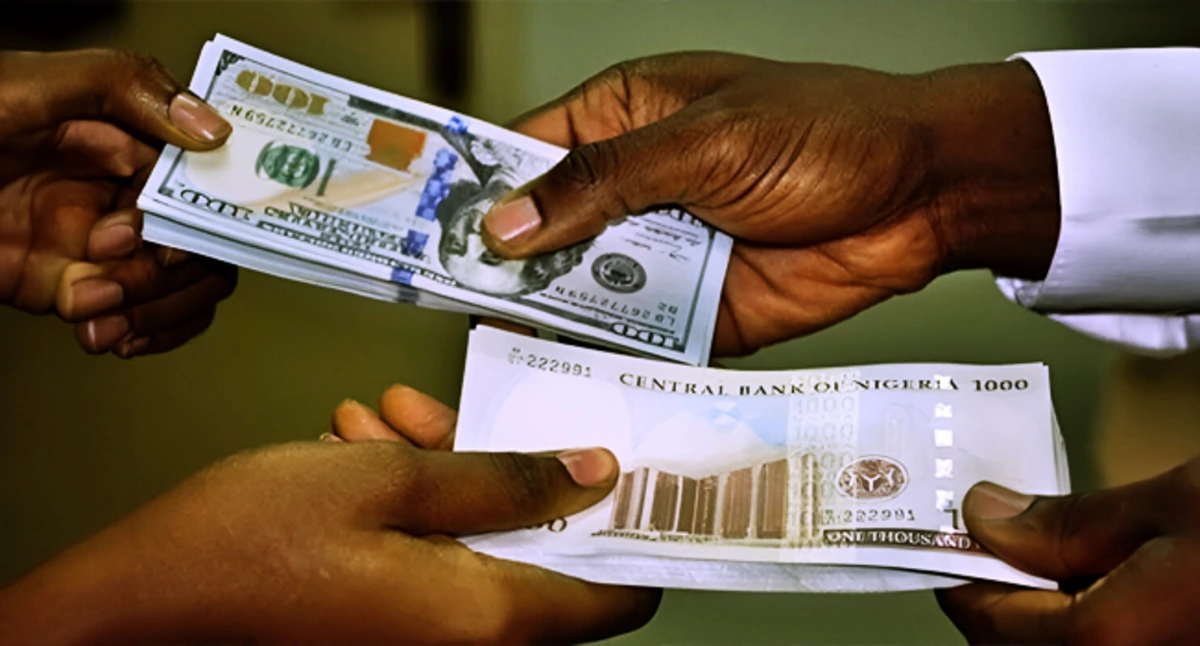
The naira weakened further on Thursday, November 19, 2026, closing at N1,388/$, its weakest closing rate since March 5, when it settled at the same level.
The day’s highest rate touched N1,397, bidding fair to depreciate to N1,400/$.
This is according to the Central Bank of Nigeria’s (CBN) trading data published at the close of business on Thursday.
Foreign exchange trading data showed that the official Nigerian Foreign Exchange Market (NFEM) rate depreciated to N1,376.58/$ from N1,363.23/$ on Wednesday, representing a loss of N13.35 or approximately 0.98%.
Also Read
The decline came as interbank foreign exchange turnover surged above $800 million, reflecting increased trading activity amid continued pressure on the currency.
It is important to note that the closing rate shows the exchange rate at which the market ended trading for the day, while NFEM rate represents the day’s official exchange rate, calculated using the volume-weighted average of transactions during the trading session.
In simple terms, the NFEM rate indicates the day’s average market price, while the closing rate simply shows how much a dollar was worth at the end of trading.
Interbank FX turnover hits $800 million:
Interbank foreign exchange turnover increased sharply on Thursday, reaching $800.31 million across 184 transactions.
This represents a 59.14% increase from the $502.88 million recorded across 148 deals on Wednesday, even as the naira continued to weaken.
The official NFEM rate depreciated by N19.39, or approximately 1.43%, from N1,357.19/$ on Monday to N1,376.58/$ on Thursday.
- The closing rate weakened by N28, or 2.06%, from N1,360/$ on Monday to N1,388/$ on Thursday.
- Thursday’s trading range stood between N1,370/$ and N1,397/$, with a simple average of N1,382.87/$.
- The closing rate declined by N8.01, or approximately 0.58%, from Wednesday’s N1,379.99/$.
Interbank turnover has increased more than elevenfold since Monday, when trading stood at $68.66 million across 79 transactions.
The increase represents approximately 1,065% growth in interbank trading volume over the period.
Meanwhile, NFEM turnover for Wednesday stood at $1.183 billion across 350 transactions.
The Central Bank of Nigeria had yet to disclose Thursday’s separate NFEM turnover and transaction count.
The figures show that increased interbank trading activity has not translated into a stronger naira, with the closing rate weakening faster than the official NFEM reference rate.
Experts see N1,400 Dollar risk:
Head of Research at IRON Capital Partners, Abiodun Ogunniyi, warned that the naira could depreciate further if the factors driving its current weakness persist.
He identified monetary conditions in advanced economies, pre-election uncertainty and rising demand for imported goods as factors affecting the currency’s outlook.
- “If there is no material change in the factors driving the current depreciation, including tighter monetary conditions in advanced economies, pre-election uncertainty and increased demand for imported goods, the outlook for the Naira towards the end of the year remains unfavourable.”
- “Consequently, there is a possibility that the exchange rate could depreciate towards N1,400 per dollar, considering how close it is already.”
- “I am not ruling out the possibility of CBN intervention in the foreign exchange market before the end of the year, possibly before the end of November or, at the latest, in December.”
- “According to the IMF, a parallel market premium exceeding 5 per cent is significant because it indicates substantial distortions in the foreign exchange market.”
Ogunniyi also noted that the gap between official and parallel market rates had widened to between N80 and N90, compared with approximately N21 to N24 a month earlier.
Meanwhile, analysts at Coronation Merchant Bank’s Research Department attributed the currency’s vulnerability to a mismatch between dollar availability and liquidity reaching the market.
In their fourth-quarter thematic report, “Reserves Up, Liquidity Down – Is Naira Volatility Back?”, the analysts warned that relatively modest foreign exchange orders could produce significant price movements when market liquidity is thin.
They described the naira as fundamentally undervalued but tactically vulnerable, highlighting the risk of increased exchange-rate volatility.
External Reserves face renewed pressure:
Nigeria’s external reserves have recently declined, adding to concerns about foreign exchange liquidity and the naira’s near-term outlook.
- Nairametrics previously reported that gross external reserves fell by $390.94 million over 16 days to $54.87 billion as of November 12, representing the largest decline in six months.
- On November 12, the naira weakened to N1,445/$ in the parallel market from N1,430/$ in the previous session, widening the gap with the official rate to N86.50.
- Centre for the Promotion of Private Enterprise CEO Muda Yusuf warned that electioneering activities could increase dollar demand in the parallel market.
- The Central Bank of Nigeria’s Monetary Policy Committee is scheduled to meet on November 23 and 24.
- The recent decline in reserves comes amid concerns about dollar supply, exchange-rate volatility and possible central bank intervention.
The forthcoming Monetary Policy Committee meeting will take place against a backdrop of weakening exchange rates and increased foreign exchange trading activity.
Market attention will also remain on whether the CBN intervenes to address liquidity pressures before the end of November or December.
For investors and businesses, the key developments to monitor are the availability of foreign exchange, movements in the official and parallel market rates, and the central bank’s response to the recent depreciation.