Follow Us on Google Discover
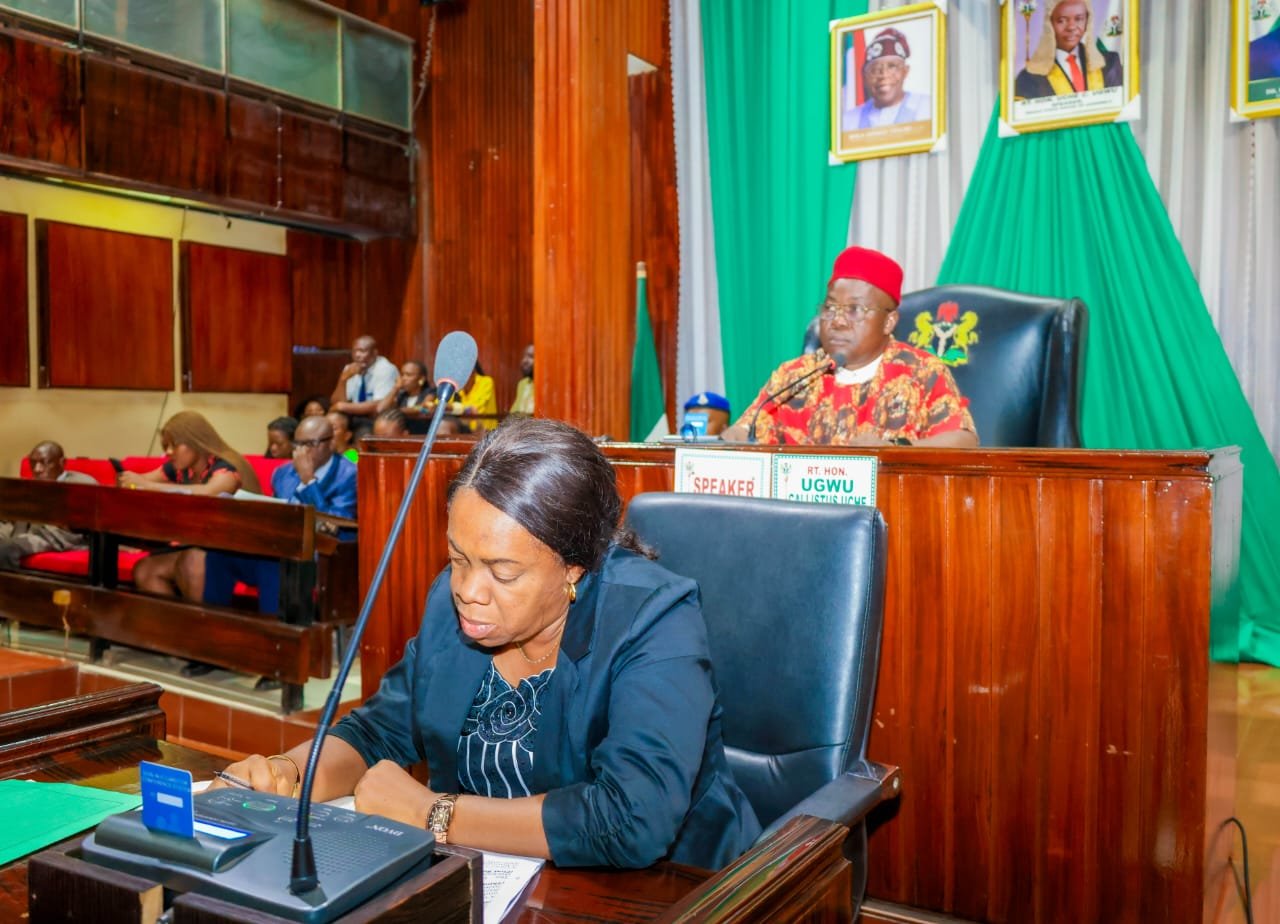
The Enugu State House of Assembly has passed a bill seeking to limit landlords to a maximum rent increase of 2% every four years, subject to specified exceptions.
This is contained in a statement issued by Dan Nwomeh, Senior Special Assistant on Media to Enugu State Governor, Peter Mbah.
The bill also seeks to regulate agency, legal and caution fees to reduce accommodation costs and protect tenants from exploitative practices.
Enugu caps rent increases at 2%
Under the proposed legislation, landlords can review rents only after four years, with increases capped at 2% of the prevailing rent. However, landlords undertaking reasonable renovations may increase rent by up to 10%, subject to conditions in the bill.
Also Read
- “The Enugu State House of Assembly has passed a bill seeking to regulate rent increases and check exploitative practices in the state’s housing sector. The House restricted landlords to a maximum rent increment of two per cent in not less than four years, subject to specified exceptions,” the statement read in part.
Sponsored by Hon. Okey Mbah, representing Nkanu East Constituency, the bill seeks to address rising rents, arbitrary increases and exploitative practices by landlords and estate agents.
Presenting the special committee’s report, Mbah said its recommendations followed consultations with relevant stakeholders. He described the bill as an intervention to protect tenants and reduce the cost of securing accommodation.
Mbah said the proposed legislation would also ease the financial burden of renting accommodation.
- “This bill will subsidise over 60% of what residents used to pay while trying to secure accommodation,” he said.
The proposed restrictions are expected to reduce rental costs and provide tenants with greater protection against arbitrary increases.
Enugu limits agency and legal fees
The bill also proposes caps on additional charges imposed on prospective tenants.
Agency fees would be limited to 5% of annual rent, while legal and caution fees would each be capped at 10%. Caution fees would also be refundable.
- Mbah cited instances of excessive charges, including properties advertised at N300,000 annually that attract total payments of N950,000, and apartments with annual rents of N500,000 requiring up to N1.4 million in overall charges.
- To protect tenants, the bill provides for a bond account under the custody of the State Attorney-General, where caution fees would be safeguarded for eventual refunds.
Refunds would be subject to an assessment of the property’s fittings and fixtures to establish whether any damage had occurred.
Mbah said the provision would address cases where tenants lose their caution deposits after vacating apartments, regardless of the property’s condition.
Enugu rent bill awaits governor’s assent
The bill, titled A Bill for a Law to Amend the Landlord and Tenant Second Amendment Bill, Cap. 101, Revised Laws of Enugu State 2024, House Bill No. 3, 2025, passed its second reading on March 11, 2026, and underwent a public hearing on March 26, 2026.
- Its passage followed the adoption of recommendations by a special committee comprising members of the House Committees on Housing and Investment, Public Petition, Ethics and Privileges, and Judiciary.
- Governor Peter Mbah had earlier promised to engage the Assembly to expedite legislation addressing the rent crisis during an interactive television programme, Enugu Kwenu, hosted by Afia TV.
- After the passage, Speaker Hon. Uche Ugwu said the bill would provide tenants with legal safeguards against arbitrary rent increases and other exploitative practices.
The bill now awaits Governor Mbah’s assent before it can become law. Its proposed rent restrictions and fee limits are therefore not yet in force.
Why rents keep rising in Nigeria
The proposed restrictions come amid rising housing costs driven by inflation, expensive building materials, currency depreciation and limited housing supply.
- In a May 2026 report, Nairametrics examined rising rents in Lagos, with property owners and managers attributing increases to higher living and construction costs, as well as strong demand for accommodation.
- Some landlords, particularly those living abroad, also cited naira depreciation as a factor eroding the foreign-currency value of their rental returns.
- An October 2026 Nairametrics report found that Lagos developers continued to favour the build-to-sell model despite strong rental demand, partly because of high financing costs and the need to recover investments quickly.
The report noted that rental developments could take between eight and 15 years to recover their investment, compared with lenders and investors expecting repayment within 12 to 36 months after project completion.
This preference for outright sales, alongside rising construction costs and limited housing supply, continues to put pressure on a rental market serving a large proportion of residents.