Follow Us on Google Discover
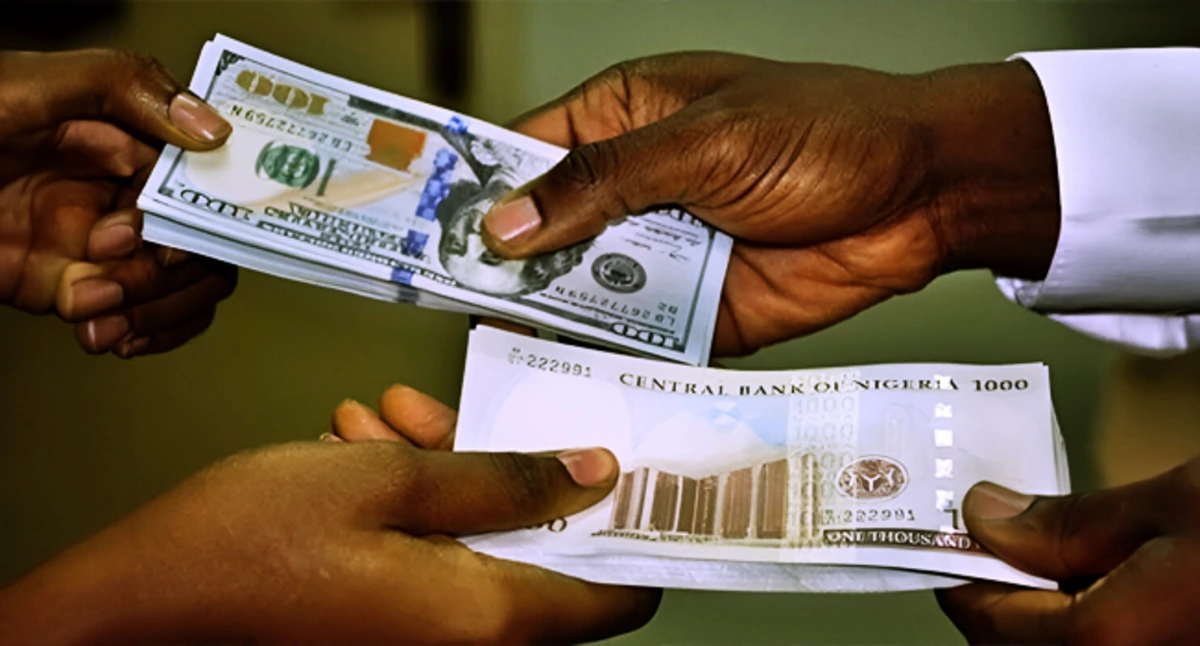
The naira depreciated by 2.50% against the United States dollar on Friday, November 20, 2026, touching N1,400/$ despite CBN’s sale of $1.30 billion to meet interbank foreign exchange demand that increased nearly twelvefold during the week.
Nairametrics review of Central Bank of Nigeria’s (CBN) foreign exchange trading data showed the local currency’s closing rate weakened from N1,360/$ on Monday, November 16, to close at N1,394/$ on Friday, representing a depreciation of N34 per dollar.
Naira hits N1,400 as turnover surges:
The naira traded between N1,387.10/$ and N1,400/$ on Friday before closing at N1,394/$, extending its depreciation to five consecutive trading sessions.
Friday’s simple average exchange rate stood at N1,391.0375/$, while interbank turnover increased to $815.57 million across 179 transactions.
Also Read
- On Monday, November 16, the naira closed at N1,360/$, before weakening to N1,363/$ on Tuesday.
- Wednesday recorded the largest daily depreciation of the week, with the closing rate falling by N16.99 to N1,379.99/$.
- The currency weakened further to N1,388/$ on Thursday before closing at N1,394/$ on Friday.
- Interbank turnover increased from $68.66 million on Monday to $815.57 million on Friday, representing approximately 1,088% growth.
- Friday’s turnover was 1.91% higher than Thursday’s $800.31 million, although the number of transactions declined from 184 to 179.
Across the five sessions, interbank turnover totalled approximately $2.55 billion across 732 transactions, based on Nairametrics’ calculations.
The number of interbank transactions increased by 126.6% between Monday and Friday, from 79 to 179.
However, the trading figures do not indicate the direction of transactions, meaning higher turnover does not necessarily represent an increase in dollar supply.
Analysts expect sustained FX pressure:
Foreign exchange demand remained elevated during the week, with pressure extending beyond the official market to parallel and forward exchange rates.
The naira depreciated by 2.33% week-on-week in the parallel market to N1,458/$, largely reflecting increased demand ahead of the festive season.
- In the forwards market, the currency weakened across all tenors, with the one-month rate declining by 2.7% to N1,414.99/$ and the three-month rate falling by 2.7% to N1,451.81/$.
- The six-month and one-year forward rates also weakened by 2.1% and 2.0% to N1,495.98/$ and N1,597.57/$, respectively.
- According to Cordros Securities, sustained demand from foreign portfolio investors outweighed the CBN’s $1.30 billion intervention during the period.
- Analysts at Cordros Securities expect the pressure to continue through the remainder of the year.
- “We expect FX demand pressures to persist through the remainder of the year, reflecting relatively weaker net foreign inflows amid tight global monetary conditions and heightened investor caution ahead of Nigeria’s 2027 general elections.”
- “Seasonal import demand ahead of the festive period could further intensify demand-side pressures. Nonetheless, we believe the CBN’s external reserve buffers remain sufficient to support sustained intervention in the FX market, helping to bridge supply gaps, contain excessive volatility and limit the extent of naira depreciation.”
- Analysts at Cowry Asset Management also expect continued pressure on the currency, although they believe improved liquidity could moderate further losses.
- “We expect the naira to remain under pressure amid sustained FX demand ahead of the festive season, although improved FX liquidity could moderate further depreciation.”
The analysts’ assessments suggest that dollar demand and foreign exchange liquidity will remain important factors influencing the naira’s performance through the end of 2026.
External Reserves face renewed pressure:
The naira’s weekly depreciation follows several sessions of weakening exchange rates and increased interbank foreign exchange activity.
Nairametrics previously reported that the currency closed at N1,388/$ on Thursday, November 19, its weakest closing rate since March 5, with interbank turnover reaching $800.31 million across 184 transactions.
- On Wednesday, November 18, the naira closed at N1,379.99/$ as interbank turnover increased to $502.88 million.
- The currency subsequently weakened to N1,388/$ on Thursday before closing at N1,394/$ on Friday.
- Nigeria’s gross external reserves had earlier declined by $390.94 million over 16 calendar days to $54.87 billion as of November 12.
- The CBN’s Monetary Policy Committee is scheduled to meet on November 23 and 24, amid continued foreign exchange market pressure.
- Friday’s intraday rate of N1,400/$ marked the first time the currency traded at that level during the five sessions reviewed.
Although external reserves have declined recently, Cordros Securities maintains that the CBN has sufficient reserve buffers to continue intervening in the foreign exchange market.
Attention will now turn to the forthcoming Monetary Policy Committee meeting and whether the central bank increases dollar supply to moderate exchange-rate volatility ahead of the festive season.