 Follow Us on Google Discover
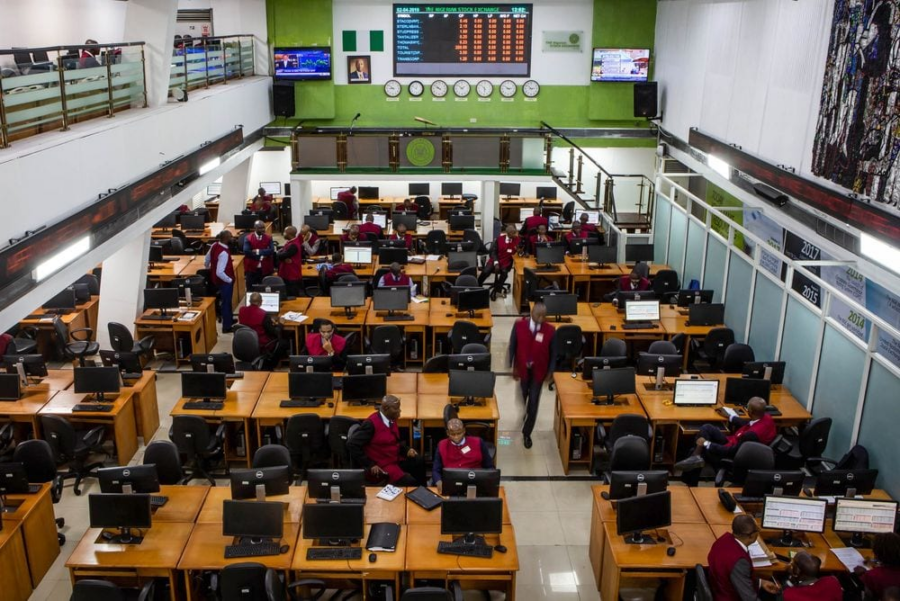
The Nigerian Exchange (NGX) is entering a historic period, supported by record market capitalization, strong liquidity, and substantial capital inflows ahead of the anticipated public listing of the Dangote Petroleum Refinery.
The All-Share Index is approaching record levels, trading near its previous historical peak of approximately 255K points.
The Dangote Refinery, whose public listing remains scheduled following an extension of its subscription period, has set a record.
Applications for its shares have reportedly reached an estimated N5.85 trillion ($4.1 billion), nearly three times the initial subscription target.
Also Read
Total market capitalization is likely to reach new highs, potentially exceeding N230 trillion, following the NGX’s announcement that the company’s shares will be listed on its boards, with a December listing anticipated.
The listing is expected to significantly alter the weightings of the NGX All-Share Index (ASI). The oversubscribed offering, which has attracted interest from institutional investors, domestic pension funds, and international frontier-market funds including South Africa’s Public Investment Corporation, suggests that substantial buying pressure may emerge on the first day of trading.
Investors will influence supply immediately after the listing. Nigerian equities are expected to end bullish through the year-end, supported by increased investor liquidity and major listing milestones in the industrial sector, with the NGX serving as the principal market.
Robust nine-month reporting from key sectors has shown that corporate earnings can withstand agitations such as rising prices and interest rates. MTN Nigeria’s double-digit profit growth helped justify its current price.
GTCO, UBA, Zenith Bank and industrial brands Presco, Dangote Cement, MTN Nigeria still look good to institutional and retail investors seeking a haven in liquid, high-yield blue-chip names.
These heavily capitalized players drive most of the index’s change, meaning rallies in cement, telecoms, or banking stocks would significantly sway market capitalization.
Although the ASI continues to post elevated valuations, supported by robust corporate earnings and macroeconomic stabilization, technical indicators suggest that the market is currently overbought. Continued institutional accumulation provides support at current levels.
Market observers have noted potential near-term disadvantages and obstacles to an upside following Dangote Cement’s decision to reverse its plans for a secondary listing and instead anchor its multitrillion-naira market capitalization entirely on the NGX.
The original rationale for a London listing was to connect African capital pools with global institutional investors and establish a broader, more diversified international shareholder base for the company.
The blue-chip company is valued at about N25 trillion. Its decision to keep its multitrillion-naira market capitalization on the domestic exchange is intended to prevent capital from flowing into offshore markets and to ensure that local institutional and retail investors retain direct access to its substantial earnings potential.
Nigeria’s Strong Macros Support the Equity Market
However, strong external reserves, near multi-year highs, and a stable foreign-exchange market are reducing the impact of currency-translation shocks on multinational and import-oriented listed companies.
A stable naira reassures foreign portfolio investors (FPIs) by mitigating the previously elevated risk of devaluation for listed equities.
Persistently high international oil prices are strengthening external buffers and increasing the Federal government’s revenue capacity. Higher oil revenues generally support banking-sector liquidity through trade-finance activity in the oil and gas sectors, as well as the broader economy.
The NGX bullish valuation is often indicative of this cycle, with the oil and gas indices substantially outperforming and outperforming the broader market indices in a high-price cycle environment.
Upstream producers, downstream marketers and large industrials such as Seplat, Aradel Energy draw capital flows, appreciating inflation protection as well as attractive dividend yields compared to their foreign peers.