Follow Us on Google Discover

Synafare, a renewable energy supply-chain and financing company, is targeting 100 solar merchants with financing support of up to ₦100 million each as it seeks to help businesses overcome procurement constraints and expand across Nigeria’s solar market.
The initiative, unveiled at the company’s Solar Roundtable 2.0 in Lagos on Saturday, combines access to credit with negotiated product prices and supply-chain support designed to help solar businesses improve their margins and take on larger projects.
Tobi Esho, CEO and co-founder of Synafare, said the company was established about two years ago to address financing challenges confronting solar installers and other businesses operating in the renewable energy sector.
He said Synafare had since expanded its model beyond credit provision to installers, building connections between manufacturers, authorised distributors, installers and developers to improve access to authentic equipment and more competitive pricing.
Also Read
- SanlamAllianz, Ckrowd TourStack Launch Three-City Campus Tour Advancing Insurance Education and Entertainment Technology
- TotalEnergies sells 10% stake in Renaissance oil licences for $800 million
- Passport Legacy Hosts Evening Cocktail with Grenada IMA CEO to Explore Investment Migration and Generational Legacy
“Credit doesn’t go to businesses just because they exist. Financial institutions want to see predictability, structure and business activity,” Esho said.
The model reflects a wider challenge in Nigeria’s solar market: businesses need financing to acquire equipment and execute projects, but lenders also require evidence of predictable cash flow, organised operations and the capacity to repay.
Synafare is positioning its supply-chain and financing services to help businesses address both sides of that challenge.
₦170 Million Disbursed to Two Merchants During Event
Esho disclosed that two merchants received financing totalling ₦170 million during the event.
The company is targeting 100 merchants through the initiative, with individual financing limits of up to ₦100 million, depending on business turnover. The typical minimum financing amount is about ₦10 million.
To improve affordability, Synafare negotiated special prices with participating distributors, asking them to offer their lowest product prices for the year. It also reduced its monthly financing rate from the usual four to five per cent to 3.5 per cent for the event.
The company said it works with more than 2,000 businesses across the renewable energy sector, supporting equipment procurement and project delivery through its supply-chain network.
Its product categories include inverters, batteries, solar appliances, energy-efficient appliances, electric bikes and tricycles. The company also provides logistics and buy-now-pay-later financing to installers, end customers and distributors purchasing products in bulk.
Synafare Encourages Installers to Enter Retail, Distribution
According to Esho, the Solar Roundtable has evolved to address the changing needs of solar businesses.
While the first edition focused on marketing, business positioning and preparing installers to qualify for financing, the second edition placed greater emphasis on supplier access, product pricing and opportunities to move into distribution and retail.
Esho encouraged installers to consider expanding beyond installation services, noting that bulk procurement could reduce equipment costs and improve profit margins.
He also urged businesses seeking corporate and government contracts to strengthen their workforce, operational structures and professional capabilities to meet the demands of larger projects.
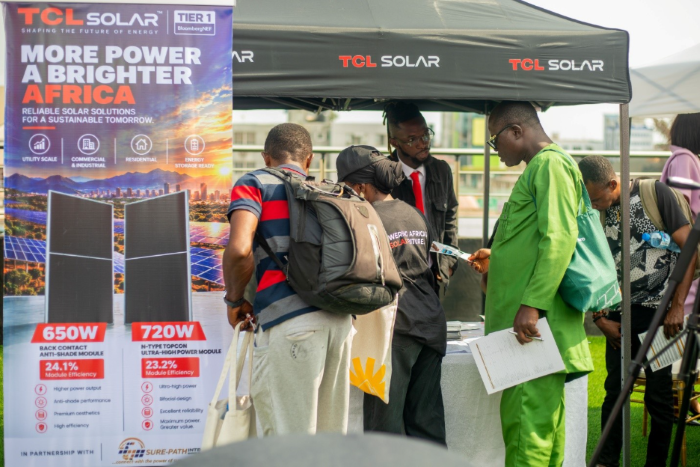
The roundtable brought together installers, distributors, manufacturers and other stakeholders to explore partnerships and commercial opportunities across Nigeria’s solar value chain.

The central proposition was that access to credit alone may not be sufficient to scale a solar business if equipment remains expensive, suppliers are unreliable or the business lacks the personnel and systems required to deliver projects.
Training, Technical Standards Critical to Solar Growth
During a panel session themed “The Future of Solar Trade in Nigeria,” industry stakeholders discussed the technical, operational and workforce requirements for building scalable solar businesses.
Babafemi Isaac, founder and CEO of Kommercial Solar Limited, described his company’s progression from residential installations to serving larger customers.
He identified functionality, safety and aesthetics as essential considerations in solar installation, adding that business expansion required increasing workforce capacity and training roofers and other artisans to meet project demands without compromising quality.
Chinwe Udo Davies, founder and CEO of Instoller, highlighted workforce development and digital tools as important enablers of expansion across different locations.
“The cost of not training your people means your business can go down,” she said, stressing that business owners must invest in staff development instead of attempting to manage every operational function themselves.
Tega Ishaya, a COREN-registered electrical engineer and commercial development associate at Elektron Energy Development Strategies Limited, pointed to Nigeria’s electricity access deficit as a significant opportunity for solar companies.
She distinguished between underserved consumers, who receive unreliable electricity, and unserved communities that lack access altogether. She urged businesses to identify how their solutions could reach both categories of consumers.
Financing Must Be Matched with Business Capacity
The discussions highlighted the commercial opportunities available to solar businesses as households, enterprises and communities seek alternatives to unreliable electricity supply.
However, participants’ contributions also pointed to the capabilities required to turn demand into sustainable business growth: technical competence, trained personnel, dependable suppliers, quality assurance and the capacity to execute larger contracts.
For Synafare, the financing offer and marketplace model are intended to bring these elements closer together, enabling businesses to source equipment, manage procurement costs and pursue opportunities beyond their existing operations.
The scale of the initiative will ultimately depend on how effectively participating merchants use the financing, manage repayment obligations and convert access to equipment into sustainable revenue.
For Nigeria’s solar market, the broader challenge remains building businesses capable not only of installing systems but also of operating professionally, maintaining quality and serving customers at scale.