Follow Us on Google Discover
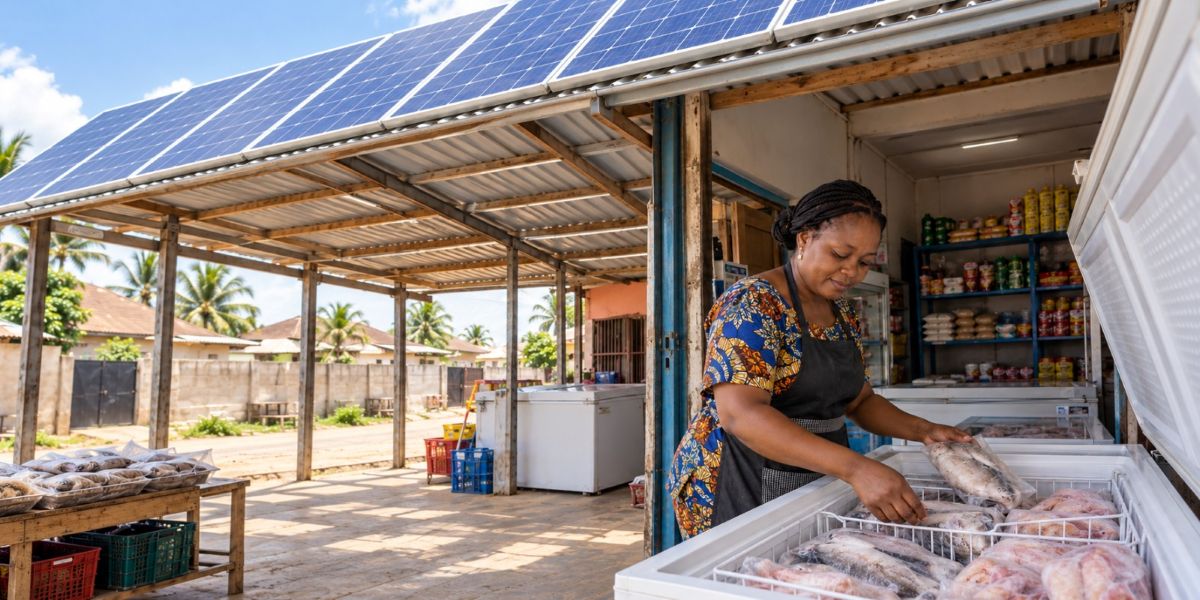
A food seller has to choose between buying fuel for her generator and restocking her freezer with fish and chicken. If she buys fuel, she has less to restock with. If she restocks, a power cut can spoil what she bought. For a business operating on a small margin, unreliable electricity can turn an ordinary working day into a loss.
Expanding clean electricity access can ease this pressure, but the projects need large upfront investment, and private capital will come only on the right terms. Nigeria needs financing arrangements that deal with three problems: late or missed payments, a mismatch between naira revenues and foreign-currency debt, and a shortage of long-term lending.
Where public money is used to reduce these risks, society should get something clear in return. That return is reliable, affordable electricity for households and businesses that would otherwise stay underserved.
Nigeria is not starting from ground zero. The Nigeria Electrification Project, launched in 2018, supported mini-grids and solar home systems. In December 2023, the World Bank approved the $750 million Distributed Access through Renewable Energy Scale-up (DARES) programme to build on that work. It targets new or improved electricity access for over 17.5 million Nigerians.
Also Read
The next step is to strengthen platforms already in place, notably NSIA’s Nigeria Distributed Renewable Energy Fund and the Green Finance and Investment Facility, so that public support, commercial lending and equity investment work together. The timing is helpful. On 12 October 2026, Finance Minister Taiwo Oyedele and CBN Governor Olayemi Cardoso discussed wider use of World Bank guarantees with its president, Ajay Banga, to draw in private infrastructure investment. Renewable energy should be a priority for that support.
Each tool should address the risk keeping investors away. Start with payment risk. Sovereign guarantees can back specified government obligations, and multilateral partial risk guarantees can protect lenders if the government breaches commitments the guarantee covers. A guarantee is not a payment plan, though. Moving a payment risk from one party to another does not fix the failure to pay. Guarantees therefore need credible payment arrangements behind them, and public authorities must disclose and manage the debts and other obligations they take on.
Currency is the second risk. Guarantees that help developers secure loans in naira can reduce the mismatch between local revenues and foreign-currency debt, although imported equipment still carries exchange-rate exposure.
For lending portfolios, loan-loss reserves can absorb an agreed share of defaults, which gives private lenders a reason to take part. Support of this kind belongs with viable projects that face a specific, identifiable financing barrier. Lenders and developers must keep enough of the risk themselves to judge projects soundly.
These risk-sharing tools could also draw in domestic pension capital. PenCom reported pension assets of ₦31.8 trillion in August 2026. Reaching a share of that would require investments that meet pension funds’ risk, return and regulatory requirements, and that protect contributors’ retirement savings.
Institutional investors generally prefer larger holdings than individual solar or mini-grid loans, so smaller loans could be brought together. Once projects build a record of repayment, lenders could pool suitable loans and sell them, which frees money for new lending. Securitisation goes a step further, with investors buying securities backed by the pooled repayments. Green banks elsewhere have used both approaches to bring institutional capital into clean energy. Nigeria would need consistent lending standards, enforceable contracts and reliable data on project performance.
The conditions attached to public support matter as much as the amount raised. Programmes should set targets for reaching underserved communities, and developers should show that connection charges are affordable and that service can be sustained financially. Where customers cannot pay connection costs upfront, targeted help may be needed. Any continuing subsidy should be stated openly and funded sustainably. Otherwise, affordability promises become one more unpaid obligation.
Service must also continue after commissioning. Financing plans should cover maintenance and equipment replacement. Operators should report service hours, outages and charges, so customers and funders can see whether public backing is working.
The Ministries of Finance and Power should work with implementing agencies and lenders to make this support depend on clear results: more private investment, more underserved customers connected, and reliable service at affordable prices. The aim is private capital that delivers dependable electricity at a price people can pay. For the food seller, that means a freezer that stays on, at a cost that still leaves her enough to restock and earn a living.
Segun Taiwo is a chartered accountant and energy finance professional. He writes in a personal capacity. The views expressed are his own and do not represent those of his employer or affiliated organisations.