Follow Us on Google Discover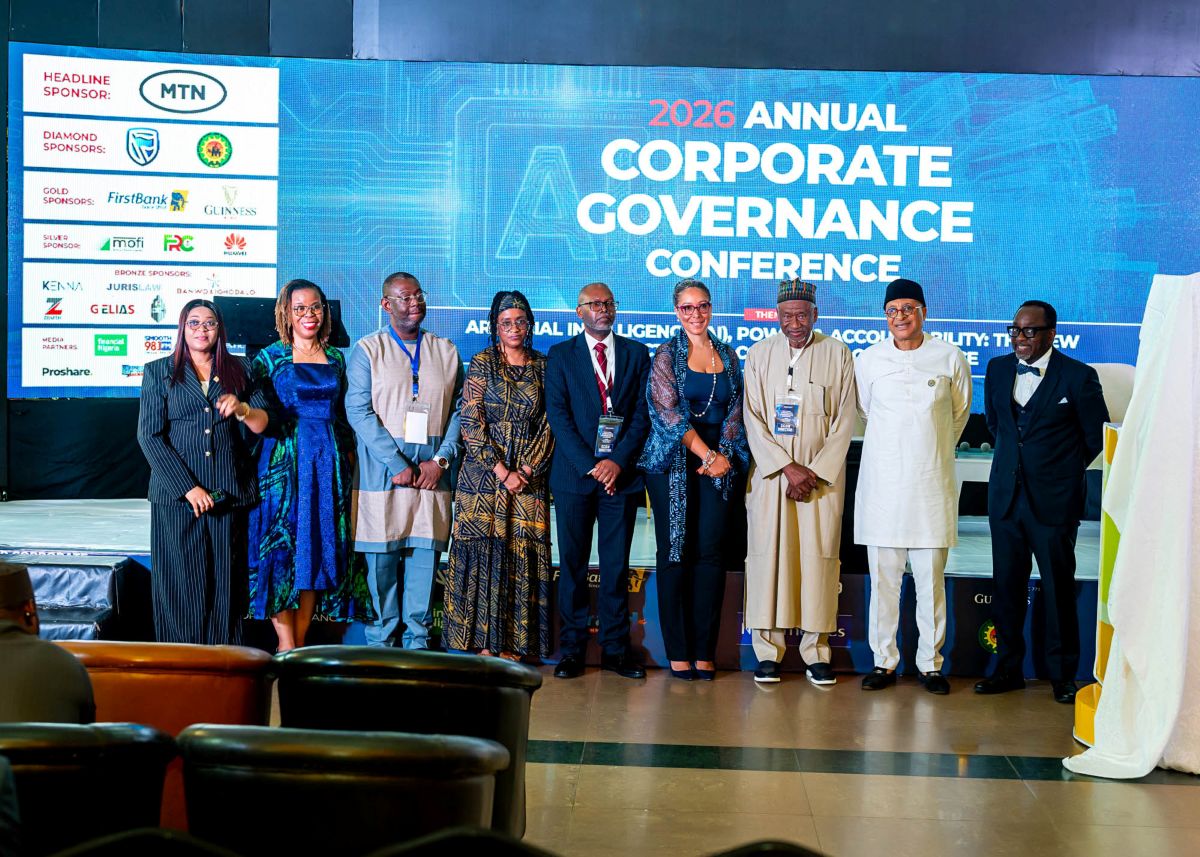
The Society for Corporate Governance Nigeria (SCGN) has reinforced its drive to advance governance knowledge and responsible leadership with the launch of two corporate governance publications at its 2026 Annual Corporate Governance Conference, where discussions also highlighted the need for stronger African participation in the development and control of artificial intelligence (AI).
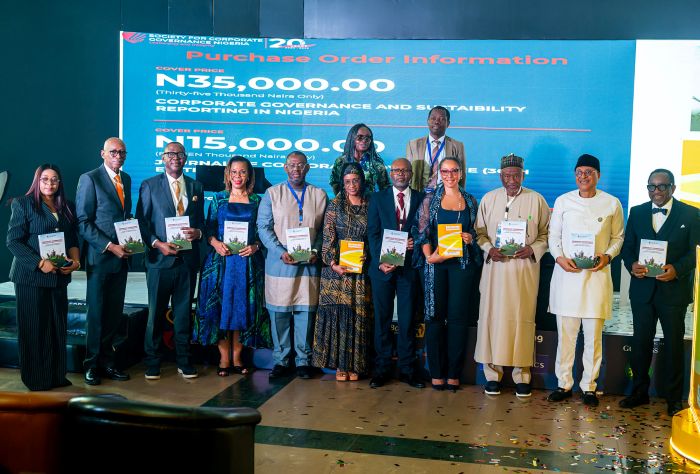
The publications, Corporate Governance and Sustainability Reporting in Nigeria and the 30th edition of the Journal of Corporate Governance, were unveiled at the conference held at the Oriental Hotel, Victoria Island, Lagos, on October 8, 2026. The event, themed “Artificial Intelligence, Power and Accountability: The New Architecture of Corporate Governance,” brought corporate governance considerations surrounding emerging technologies into focus.
The publications represent an important contribution to the ongoing discourse on effective board leadership, sustainability reporting, ethical conduct and the evolving risks confronting organisations. Their subject areas include board oversight, cybersecurity, sustainability disclosures and emerging technology governance, offering research and practical perspectives to support improved governance practices.

Also Read
Delivering the keynote address, Dr Evans Woherem, Founder and Chairman of Digital Africa Global Consult Ltd, drew attention to Africa’s position in the rapidly evolving AI landscape. He called for greater African participation in developing and controlling AI infrastructure, warning that inadequate governance and limited technological ownership could deepen existing vulnerabilities.
His remarks placed the question of AI adoption within a broader conversation about technological independence, institutional preparedness and the responsibility of African organisations to shape the systems increasingly influencing business and society. He also advocated multidisciplinary board-level oversight, responsible data management and ethical safeguards throughout the AI lifecycle.
SCGN President and Board Chairman, Mr Muhammad K. Ahmad, OON, emphasised that organisations must retain clear lines of accountability as AI becomes more involved in decision-making. He noted that directors do not need to become software engineers but must understand enough about the technology to challenge management, evaluate risks and determine whether governance frameworks adequately address its implications.
In her welcome address, SCGN Chief Executive Officer, Mrs Chioma Mordi, reflected on the importance of ethical judgement, transparency and clearly assigned responsibilities in ensuring that technological innovation strengthens institutional credibility and public trust.
The conference also examined the practical demands of integrating AI into organisational strategy. A panel session featuring senior executives and AI governance experts explored how boards could move beyond experimentation to achieve measurable business value, with emphasis on responsible AI policies, investment performance and the identification of executives accountable for business outcomes.
A fireside chat titled “From Digital to Intelligence Enterprise: What AI Governance Really Demands of Boards” further examined the leadership capabilities and oversight structures organisations need to manage the transition towards AI-enabled enterprises.
The discussions also featured contributions from Mrs Omolola Oloworaran, Director-General of the National Pension Commission, who reinforced the importance of accountability, transparency and human responsibility in governing AI-driven decisions.
By combining the launch of governance-focused publications with discussions on AI, African technological participation and board effectiveness, SCGN highlighted the importance of equipping leaders with the knowledge and institutional frameworks required to navigate a changing business environment.
The Society reiterated its commitment to promoting sound corporate governance practices across Nigeria’s public and private sectors, supporting ethical leadership, sustainable growth and stronger institutions.