Follow Us on Google Discover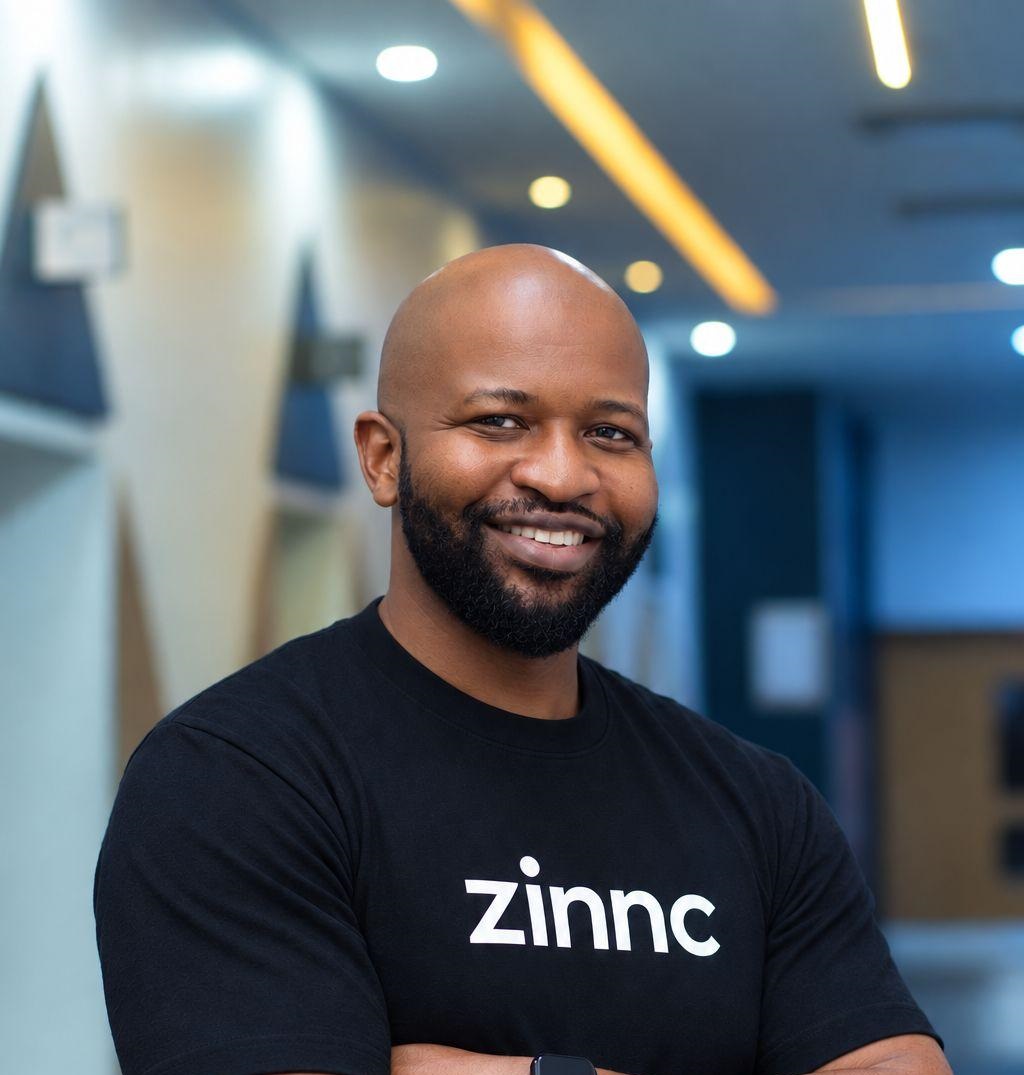
Dangote Refinery’s N2.15 trillion offering, Africa’s largest ever, has attracted heavy retail demand, straining some digital investment platforms.
But with the offer due to close on 13 October, some Nigerians living abroad now face additional hurdles participating in the offer, according to Chidozie David Okonkwo, Founder and CEO of Zinnc, a platform that connects diaspora investors to Nigeria’s regulated capital market.
Zinnc recently partnered with CardinalStone to facilitate diaspora participation in the offer.
Okonkwo told Nairametrics that investors in the UK, US and Canada have shown strong interest, but that a meaningful share of those who have come to Zinnc have stalled at identity and address verification, which he says is built around documents many second-generation Nigerians do not hold.
In this exclusive interview, Okonkwo discusses the barriers diaspora investors face in the Dangote offer, why he believes trust is a deeper issue, and what would be required to make diaspora capital a more consistent source of investment for Nigeria’s markets.
Nairametrics: What challenges have investors living abroad encountered while trying to participate in the Dangote Refinery IPO, and where have you seen the process break down most often?
Chidozie David Okonkwo: The breakdown point is almost always identity and address verification. The process was built around a BVN and a Nigerian address, and a large share of the diaspora, especially second-generation Nigerians, simply doesn’t have either. They have a foreign passport, a foreign address, a foreign bank account, all verifiable to a high standard. But none of it fits the current form.
We hosted a room of young diaspora professionals in London last month and asked them directly about their relationship with their countries of heritage and why they had or hadn’t invested there. The verification barrier came up. But underneath almost every answer sat the same word, trust. Not lack of interest, not lack of money, trust.
That confirmed something we’d only been seeing anecdotally through our own users. A meaningful share of the people who’ve come to us have stalled at the exact same step, verification built around documents they don’t hold.
The documentation problem is real, but it’s sitting on top of a much older, deeper hesitation.
Nairametrics: What have you observed about demand for the Dangote Refinery IPO from investors living outside Nigeria since the offer opened? What figures can you share on the scale of that demand?
Chidozie David Okonkwo: As you can imagine, we’re a new platform, a handful of weeks old, so any number we hand you from our own book wouldn’t tell you much about the real size of this. What it’s told us is that the interest is real and consistent: Nigerians in the UK, the US and Canada, people with money ready to deploy, genuinely excited about this IPO.
But you don’t need our numbers to see the scale here. Nigerians abroad sent an estimated $22.8 billion into the country in 2025 alone. That money shows up every year, regardless of political headwinds, macro instability, currency devaluation and everything else in between. It shows you the willingness to move serious capital toward Nigeria already exists.
The question isn’t whether that appetite is there. It’s why so little of it has ever been offered a route into ownership rather than remittance.
Nairametrics: What evidence are you seeing that Nigerians abroad who remit money to Nigeria are also interested in investing in Nigerian companies?
Chidozie David Okonkwo: We’re one company. What we’re seeing firsthand is naturally a smaller slice of the picture, but it lines up with a much bigger pattern other markets have already proven out.
I spent years on the buy side too, having worked at a Lagos-based VC investing growth capital into African companies, and the diaspora came up constantly as a source of capital nobody had properly organised access to.
India is the clearest example. Its diaspora had been sending remittances for decades before anyone built a serious pathway for that same group to invest rather than simply remit. Once the private sector built that pathway, foreign passports accepted, verification completed remotely, participation followed.
When we sat down with a group of young Nigerians and Ghanaians in London last month and asked about their own countries of heritage, the willingness to invest was palpable, almost every person in that room already sends money consistently.
What was missing wasn’t appetite. It was trust that the system on the other end would actually protect what they put in. Nigeria’s diaspora already behaves as India’s did before that shift. It has just never been offered ownership instead of a transfer.
Nairametrics: Who sets the identity and address requirements that diaspora investors face, and how much of the difficulty comes from regulation versus the way those requirements are implemented?
Chidozie David Okonkwo: That sits with the regulators and the exchange, the SEC and the NGX. And I want to be fair to them here, because I don’t think they’ve done anything wrong. What they’ve built is a sensible, well-optimised process that mirrors how banks and local asset managers already verify domestic customers.
If you’re a Nigerian based in Nigeria, none of these requirements is difficult to fulfil. The issue only shows up once you’re in the diaspora, because the process assumes a Nigerian document and a Nigerian address as the starting point.
That’s why I think this needs a first principles approach rather than a defensive one. What are we actually trying to solve for? Identity and address. Both of those can be established through a foreign passport and equivalent documentation, the same way it already happens when someone applies for an e-visa to a foreign country.
I saw the same pattern from the other side of this exact problem years ago, on the Equity Capital Markets desk at Barclays Investment Bank in London, where identity and residency checks on cross-border capital were routine, not exceptional. The infrastructure to verify a foreign passport holder properly already exists. It’s just never been pointed at this specific customer.
Most of our diaspora are holding UK, US or Canadian passports, among the most trusted travel documents in the world. There’s no real risk question there. The system simply wasn’t designed with them in mind.
Nairametrics: How does the Zinnc-CardinalStone arrangement currently allow a diaspora investor to participate in the Dangote Refinery IPO, and what requirements does the investor still need to meet?
Chidozie David Okonkwo: CardinalStone is one of Nigeria’s largest brokers by volume and a fully SEC-regulated issuing house, and our role is to connect diaspora investors to that regulated process rather than operate outside it.
An investor still has to go through the same underlying verification any subscriber does. It’s not a shortcut.
What we’ve focused on is reducing the friction around that process for someone applying from abroad, and being upfront with people about exactly what documentation they’ll be asked for before they start, rather than letting them discover it three steps in.
Nairametrics: Once a diaspora investor successfully buys Nigerian shares, what challenges can they face when receiving dividends, selling their holdings or repatriating their investment proceeds?
Chidozie David Okonkwo: Getting in is the first problem, but staying in comfortably is the second. Dividend payments typically need a Nigerian bank account, which loops an investor straight back into the same documentation challenge we started with.
Repatriating proceeds in foreign currency involves CBN processes that weren’t built with a small retail diaspora investor in mind. They were built for larger, more institutional capital movements.
None of it is impossible, but at every one of these steps, a diaspora investor is navigating infrastructure designed around a different kind of customer than them.
Nairametrics: What role can fintech companies play in making it easier for diaspora investors to access Nigeria’s capital markets?
Chidozie David Okonkwo: Having built and scaled businesses in Nigeria myself, I can tell you the constraint is rarely the technology. It’s almost always the operational plumbing underneath it.
A lot can be solved without needing a single regulation to change first. Remote video verification, digital document capture, clearer upfront guidance on exactly what’s required before someone starts an application, all of that is technology solving friction inside the existing rules, not around them.
Where fintechs can’t solve it alone is the repatriation and dividend side we just discussed, because that runs through the banking and foreign exchange system, not through any platform’s own product. So there’s real, immediate work technology can do today, and there’s a second layer that genuinely needs the industry and regulators moving together.
Nairametrics: Have you engaged with the SEC, NGX, brokers or other market participants about the difficulties diaspora investors face? What feedback have you received?
Chidozie David Okonkwo: Conversations with people close to the exchange suggest there’s real appetite for this kind of thinking, more than I expected honestly.
Nobody I’ve spoken to disagrees with the underlying principle. The harder part, as it usually is, is the practical follow-through: who owns solving it and how quickly.
That’s part of why I think it’s worth putting this conversation into the open now, while the Dangote IPO has just demonstrated exactly how much latent demand exists.
Nairametrics: Beyond the Dangote Refinery IPO, what does the opportunity look like for diaspora capital across Nigeria’s wider capital market, and what would need to happen for that capital to become a more consistent source of investment?
Chidozie David Okonkwo: This was never really about one IPO. Dangote just made the appetite impossible to ignore. The opportunity is $22.8 billion a year in remittances, most of it currently one-directional, arriving and going straight into consumption rather than anything productive, with the capital markets left completely untouched.
What would need to happen mirrors what India’s private sector did, brokers and fintechs building onboarding around the documents diaspora investors actually hold, and issuers treating diaspora investors as part of the distribution plan from the start rather than an afterthought once the institutional book is already full.
None of that requires anyone to lower the bar. It just requires planning for this important investor group from the beginning, building a door they can actually walk through instead of retrofitting one after the fact.
And I don’t think this is what the private sector should do instead of the regulator, or around the regulator. The private sector should lead, working closely with the SEC and the NGX, because a rising tide raises all boats. If we get this right, it isn’t just Zinnc or a few fintechs and brokers who benefit. It’s the entire market.