Follow Us on Google Discover
By headcount, Nigeria is Africa’s largest country, with about 243 million people. By market size, it remains one of the continent’s three big economies, with the IMF projecting 2026 output at about $377 billion.
But when measured by the only number that truly counts—growth per person—Nigeria is no giant.
GDP per capita is about $1,556, ranking it around 30th in Africa, below the continental average.
South Africa and Egypt are both smaller, but richer. Nigeria is a whale in a pond, still untested in the open sea.
That is Nigeria’s whole story over the last six decades. Nigeria did a few hard things well, but then spent fifty years organising the state and the economy around the easiest thing it had ever found, crude oil.
Nigeria built this
Yet Nigeria’s true achievements are easy to overlook because none shine like oil. The country built Africa’s largest domestic market, holding it together through civil war, serial coups, and a currency that’s been redesigned more often than the federal constitution. It nurtured a services economy that now drives more than half of real output. Telecoms leapt from long waiting lists to a platform powering payments, film, music, and logistics. Nollywood and Afrobeats have become global soft power exports.
These successes show Nigerians can build world-class industries without official blessing. Agriculture still feeds most households and employs the largest share of labour. In the past two years, macroeconomic fundamentals have finally begun to improve: the petrol subsidy, as booked by NNPC, is zero in the 2025 accounts; the exchange rate is stable; FX reserves are rebuilding; real growth is running a little above 4 per cent.
Nigeria localised Dutch Disease
The Nigerian economic failure has a name, and economists call it Dutch disease. Nigeria caught a more stubborn version of it, because the disease was never only about the exchange rate. It was about the political-economic structure it created.
Classic Dutch disease works like this. A resource boom floods the country with foreign currency. The currency strengthens. Imports get cheap. Farms and factories cannot compete. Talent and capital drift toward the boom and toward whatever the boom finances, usually the government. When the boom fades, the other sectors are gone, and the currency is still wrong.
Nigeria ran that playbook from the early 1970s, then added a local mutation. Oil became a small slice of GDP, about 4 per cent in early 2026, but a huge slice of foreign exchange and public revenue. The disease survived the shrinking of the oil sector because state spending had already been rebuilt around it. Oil revenues gave Nigeria’s leadership the ability to spend at will, without representation or permission from the Nigerian people.
The Nigerian Version
The local mutation has three symptoms. First, the exchange rate was used as a welfare policy. A cheap dollar subsidised anyone close enough to collect it and taxed anyone trying to export cocoa, textiles, or banking. Second, the budget was run as a residual. Consolidated revenue is still only about 10 per cent of GDP. Interest on the federal books alone eats more than half of federal revenue.
A state that cannot efficiently tax a broad base cannot build the roads, power and thre courts that non-oil firms need to grow the economy. Third, the boom trained a generation of firms to seek licences rather than customers. Refineries that did not refine, power plants that did not power, and import quotas that were more valuable than the goods they covered. The private sector that works in Nigeria mostly works around the state, not through it.
That is why Nigeria’s vast population never became an engine for prosperity. From the 2014 peak of GDP per capita near $3,200, dollar incomes collapsed alongside the naira. Real income per person has barely moved over the past decade. A giant among dwarfs is still a dwarf if measured by “income per capita.”
Can Nigeria double GDP per capita?
The target today is to grow Nigeria’s GDP to $1t; let’s ask a more realistic question: Can GDP per capita double in four years?
Doubling $1,556 to about $3,100 in four years needs roughly 19 per cent a year, compounded. Real output per person is growing at about 2 per cent. Even a heroic 8 per cent real GDP growth, with population still rising near 2.5 per cent, gets you about 5 to 6 per cent a year in real income per head.
That doubles income in twelve to fifteen years, not four. The only way the dollar figure doubles by 2030 is a large naira appreciation on top of fast real growth. Appreciation can happen if exports surge and the policy rate stays low. Growth cannot be decreed.
What Moves the Needle
What would actually move the GDP per capita number is dull, and it is the opposite of another resource boom.
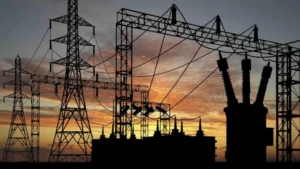
Power first, priced so that manufacturers can afford it and pay for it. A factory that generates its own electricity is not an ideal model. Then ports and roads that cut the tax of delay, which in Nigeria is often larger than the import duty itself.
Then a tax base that doesn’t depend on oil prices: a wider VAT net, simpler income tax, and states that collect from the economies they already have. Then a labour market that can absorb the 4 to 5 million people reaching working age each year, which means factories and commercial farms, not more ministries.
Oil and gas still matter, but as feedstock and as foreign exchange, not as the organising principle of the budget.
The creative bit is to stop calling this economic plan “the diversification of the economy”. Nigeria already diversified. The services sector did it without anyone’s permission. The bottleneck is that the non-oil economy cannot scale because power, freight, courts and the exchange rate still behave as if crude oil is the customer. Fix those four, and 6 to 7 per cent growth starts to look achievable.
At 66, Nigeria is not a failed giant. It is a giant that confused a windfall with a strategy. The oil royalty has shrunk, but the market remains. The coming four years may not double GDP per capita, but they will determine whether the next fifteen years can.