Follow Us on Google Discover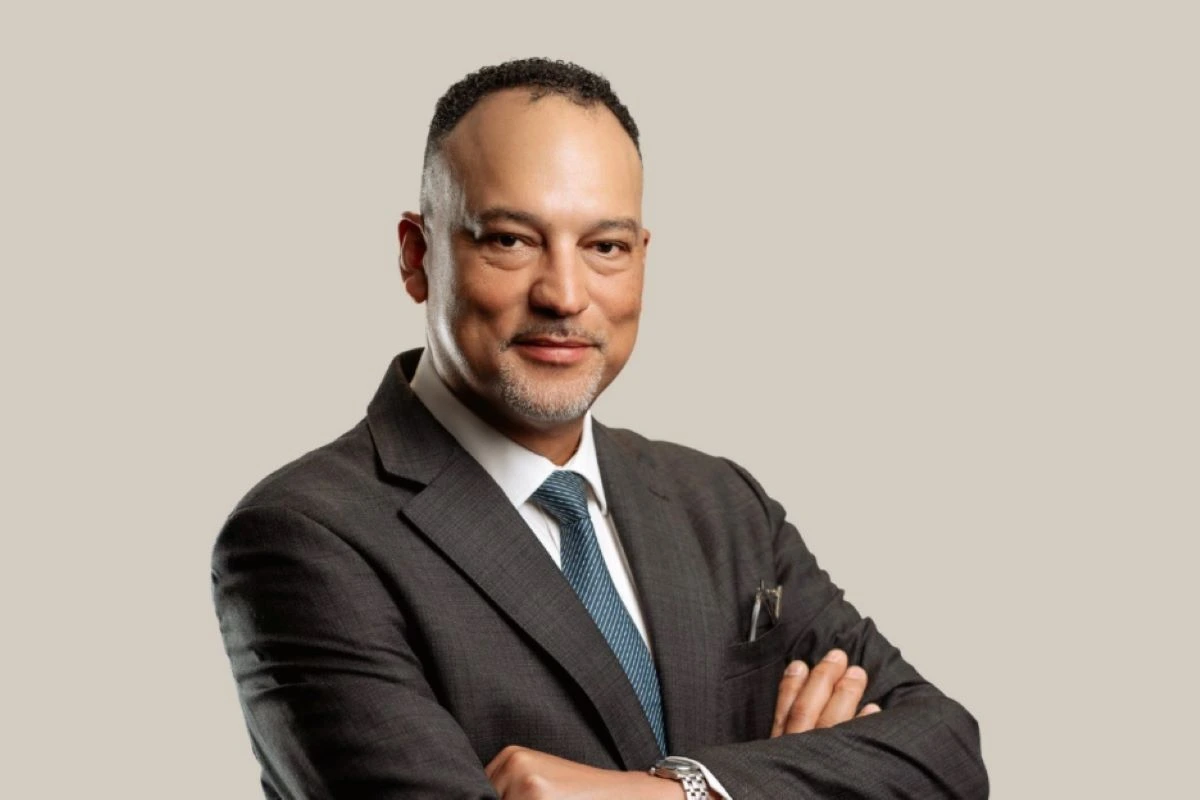
The Central Bank of Nigeria’s directive requiring banks and fintechs to host their data in Nigeria by January 2027 is creating fresh demand for local data centre and cloud infrastructure, while raising questions about capacity, resilience and power.
For Ayotunde Coker, CEO of Open Access Data Centres (OADC), the policy could do more than bring financial institutions’ data back home.
He believes Nigeria has the infrastructure, connectivity and gas resources to scale its data centre capacity significantly and position the country as a hub capable of exporting computing services.
In this interview with Nairametrics, Coker discusses the impact of the CBN directive on demand for data hosting, the readiness of local data centres to handle banks’ workloads, power and redundancy challenges, the growing concentration of data centres in Lagos, and why banks need to move quickly as the 2027 deadline approaches.
Also Read
Nairametrics: What impact do you expect the CBN’s directive for banks and fintechs to host their data in Nigeria by January 2027 to have on the economy? Also, since the directive was issued, what impact has it had on OADC in terms of customer growth and demand for data hosting?
Ayotunde Coker: One impact on the economy will be much greater efficiency from leveraging the platforms we have here. That growth is going to be significant because of the support chain that we have.
There will be increased employment and growth in data centre capacity. We will be building more capacity as demand increases, and that represents significant investment in terms of build out.
I would not be able to say that this will result in, for example, a 1% increase in GDP or GDP growth from one point to another, because it is quite difficult to pinpoint. But there are specific opportunities for growth and expanding capacity.
It is not just data centre companies. Local cloud companies will also have to expand their capacity and bring in more functionality. They will need more resources to provide these capabilities, along with the support that comes with them.
So, there is an economic impact in terms of direct employment and indirect and induced activity. It could leverage our colocation capacity. As we grow, we build out more and leverage a lot of local resources.
In terms of what we have sensed at OADC, we have seen increased discussions in our pipeline for more growth, particularly with fintech platforms and other core banking platforms.
There are two sides to it. Cloud companies are looking at growing their capabilities, but that is somewhat of a lagging response because they will grow based on the demand and contacts they have from fintech companies. A lot of those companies are fintechs themselves.
We have multiple discussions ongoing. I cannot be more specific, but I can be clear that we have seen a step change in the interest in taking more colocation capacity or using more cloud services.
We have also seen growth in demand for cloud services, with our partners looking at taking on more functionality to support that demand.
Nairametrics: There are concerns that moving data to Nigeria could expose it to risks, including security incidents or network failures. What is OADC doing to protect consumer data and other data in its custody?
Ayotunde Coker: I am really quite surprised that you would get an assertion like that. Wouldn’t you feel rather that your data is safe in the country where you operate?
The data centres in the country comply with the strongest and most stringent international standards for physical security, as well as the relevant construction certifications.
We have certifications for ISO 27001 and uptime certification. We also have PCI DSS certification for financial institutions. It is a world class environment.
You might as well assert that the same thing would happen elsewhere. It is a very weak argument, in my view. Data centre standards are global standards. They are not just backroom server rooms. In fact, organisations should put in place the systems that protect their own data.
Whether you are hosted in Lagos or hosted in Frankfurt, you have to ensure that you have the right data and application architectures that protect your data.
Performance also improves significantly because you are actually hosted closer to your user base.
Nairametrics: If a bank localises its data in Nigeria, what resilience and backup options are available in case of a network failure or other disruption?
Ayotunde Coker: We have a track record of 100% uptime. We have an interconnect ecosystem with more than 45 carriers and growing. We have multiple connectivity options to all the subsea cable systems. WIOCC has a point of presence in all the key data centres.
We directly have capacity that connects into many subsea cable systems. What more resilience would anybody want by world class standards?
We carry both local and international capacity. In fact, it is even more resilient than some of the international data centres where people are hosted. I am proud to be able to say that, and it is in Nigeria.
Nairametrics: There are concerns about whether domestic data centres have sufficient computing power and redundancy to meet the requirements of banks. What is OADC’s current available capacity, and how far along is the company with its expansion plans?
Ayotunde Coker: Right now, we have available capacity. We have the capability and framework of the data centre to support hyperscaler requirements. As I have said, it is world class.
We have significant capacity available that we are fitting out. It is elastic capacity that we are progressively fitting out to create more available capacity, driving towards 2 megawatts of power right now.
One of the key things is that we are building at our location in Lekki is in stages, with standard cloud capacity of 6 megawatts each, taking it to 24 megawatts in four stages.
However, it is also engineered for AI. Our estimate is that the capacity required for AI will probably be around 40 megawatts rather than 24 megawatts.
The next question is where the power will come from. We have invested in very direct connectivity to the utility provider in Lekki.
As we build up power, we also have plans to link into the gas pipelines. There are pipelines running in different directions that will provide resilience as we build out our capacity. We also have plans for on site capacity driven by gas of up to 50 megawatts.
This is part of our expansion plans. We will continue to build out capacity to meet local and international cloud requirements, as well as colocation requirements. The aim is to build what will become the largest data centre campus in West Africa.
Nairametrics: There is a growing concentration of data centres in Lagos, particularly around the Lekki corridor. Given the CBN directive, should data centre operators expand to other cities, and what should be done about decentralising data infrastructure from Lagos?
Ayotunde Coker: It is not unusual to have data centre clusters. One example that is talked about quite a lot is Ashburn in Virginia, which is a data centre cluster. Lekki and Victoria Island are becoming a data centre cluster as well.
Clusters help drive the growth of gas delivery and ensure that power providers can provide the required power. You also have facilities on the mainland, such as Rack Centre and NTT, while Eko Atlantic is also developing additional data centre capacity.
Although you have the Lekki axis becoming something of an Ashburn type cluster, there is also some distribution across Victoria Island, Eko Atlantic and the mainland. It is not unusual for other clusters to emerge.
If you look at the UK, for example, you have Slough as a data centre cluster, alongside other parts of East London.
We are also seriously looking at having other locations, including Port Harcourt and Abuja. Some data centre providers have already moved into these locations. For instance, Galaxy Backbone has a data centre there.
You will see some distribution because it gives us a more efficient architecture. With WIOCC, we have national long-distance networks and high availability going to locations such as Port Harcourt, Abuja and Ibadan.
It is therefore natural to optimise the way we create access to compute. There is also the government’s Project BRIDGE, which is intended to drive 90,000 kilometres of fibre. That will bring more access to compute to people.
We will naturally see data centres growing and expanding to other locations. You will probably see more facilities coming up. Although we now have an Ashburn type cluster around Lagos, developments will also start emerging elsewhere.
Lagos will remain the hub because of its abundance of subsea connectivity. You also have gas pipelines coming through Lagos.
Lagos is also one of the first states to have a state level regulatory framework with clear plans for expanding power generation capability and an intention to scale significantly to provide compute to the region.
Nairametrics: Core banking systems are highly sensitive to downtime. From an infrastructure perspective, what bottlenecks could banks face when migrating workloads, and how can data centres help minimise downtime?
Ayotunde Coker: I think 100% uptime is really a given. Tier III standards are already going beyond the minimum requirements of Tier III standards.
The most efficient banks right now in terms of uptime are those that colocate rather than build their own data centres.
Some of the least reliable facilities are those where banks have their own data centres because they are distracted by issues around power, mechanical systems, electrical systems and all of those things.
The most agile banks will colocate and run their core banking more reliably than those that have their own data centres.
I remember that we had discussions about this 10 years ago and it was about convincing people to move. Now, it has gone completely in the other direction. It is now normal to host your most critical systems in the most reliable colocation centres, with the right operating track record, certifications and design. So that is no longer an issue.
The other thing to think about is that data localisation sends a signal across the board that you can now provide the kind of cloud services that banks will require for their other systems.
A few years ago, I said that in about four years, we would start to see the first bank running its core banking system not on its own platforms in a colocation centre, but on a locally hosted cloud platform.
This is now moving in that direction. We now have strong cloud service capabilities that will enable banks to run their core banking in the cloud. That will be a shift, and it is now trending quite quickly in that direction.
I have spoken to a couple of large banks that have said that if we have that local infrastructure, they will be looking to test whether they can run core banking efficiently in the cloud.
Nairametrics: Power remains a major challenge in Nigeria. What is OADC doing to ensure that power challenges do not result in downtime, particularly as the January 2027 deadline approaches?
Ayotunde Coker: That is not a problem for us. This is what we deal with every day, making sure that power is available and uptime is maintained at 100%. We have a track record that demonstrates that.
It is a very sophisticated architecture in terms of the primary power available and the levels of backup that we have. That is how you achieve 100% uptime, and it is proven.
However, something is happening globally. People used to say that in Africa you cannot simply plug into the utility and get a lot of power. The whole world now has a power problem.
So, it is a good level playing field. In other countries, they are now looking at how to build their own captive power or independent power plants to deliver power for data centres.
Alternatively, you must have a specific arrangement with the utility provider that is designed to meet data centre requirements.
Gas is what a lot of people are looking for. Even nuclear power plants are reaching capacity. You cannot simply build a nuclear power plant in no time.
The typical primary power source now is gas. In the United States, they are looking for where the gas is and building data centres close to those locations. The UK is also looking at unlocking some of its own gas fields.
But look at what is happening in Nigeria. We have plenty of gas, so that gives us a good advantage.
At recent discussions involving the Nigerian oil and gas industry and regulators, there was discussion about export gas and LNG, but there is also a shift towards ensuring domestic gas availability. I have already talked about our direct connection to the utility, but we also have a connection to the gas pipeline to build our own high generation capability.
There are many different IPP providers and gas providers available in Nigeria. Nigeria is therefore well positioned to become a data centre hub capable of exporting compute. We are going beyond simply bringing data localisation and global scale quality to the country. We are now looking at scaling up significantly to provide compute exports.
It is a great development for the country that we have domestic gas capability. You will start to see more data centre capacity developing where gas is available, or where there are adjacent power plants near connectivity infrastructure.
Nairametrics: Having previously served as a CTO at Access Bank, what advice would you give banks as they prepare for the migration, particularly in terms of urgency, planning and risk mitigation?
Ayotunde Coker: My viewpoint, having been there, is that you respond very quickly. You should assess the data you have locally and internationally, quickly look at the capacity and capability of where you can migrate to and how you can do it, and then come up with your plan and implementation plan.
Do not start by saying that it is not possible. Start by architecting the solution and the roadmap to achieve it quickly.
If there are any challenges in that process, you can present them and demonstrate how you will manage the delivery risk, but do not be passive. You have to be very active.
The other thing is that you should not put all your eggs in one basket. We now have multiple providers. You can have a primary provider, a disaster recovery provider and multiple cloud providers that you can investigate to determine how they can support your migration plans.
Another aspect is that international cloud providers are now looking at the situation and seeing a very intentional signal.
The Director General for NITDA was speaking at the ITW conference in Nairobi about the cloud first policy and giving a signal to international cloud providers that government workloads will also go to the cloud, but they have to be localised.
There is a good chain of developments happening here that is sending the right signal to international cloud providers.
My advice to CIOs and CTOs is to get into your architecture and planning, make sure that you have a roadmap, make sure that you have a resilient solution that you can put in place quickly, and have a migration path for whatever you have internationally to bring it back to hosting in the country.