Follow Us on Google Discover
Nigeria’s push to expand compressed natural gas (CNG) as an alternative transport fuel is entering a crucial stage, with the success of the transition increasingly dependent on the country’s ability to ensure reliable supply, efficient distribution and proper safety oversight.
President Bola Tinubu has said more Nigerians should begin to see measurable reductions in transportation costs from October 1 under the National Affordable CNG Transit Programme, as the government continues efforts to expand CNG adoption across the country.
In an exclusive interview with Nairametrics, alternative fuels development consultant Omid Hamidkhani outlined what Nigeria needs to build a sustainable CNG market, from expanding gas and refuelling infrastructure and improving distribution to establishing stronger vehicle inspection, certification and safety systems.
Nairametrics: From your experience in alternative fuels, what are the key conditions Nigeria needs to have in place for CNG adoption to become a sustainable, commercially driven market?
Omid Hamidkhani: In my view, Nigeria already has one of the most important foundations for a successful CNG market: abundant natural gas resources and a large transportation sector that is looking for more economical fuel options. However, having gas resources is not enough. For CNG to become a sustainable, commercially driven market, the entire value chain has to work together.
Also Read
This includes maintaining a balance between gas supply and demand, having government financial incentive plans, ensuring the availability of qualified suppliers and manufacturers for both station equipment and conversion kits, and having properly trained conversion centres. Nigeria also needs a clear regulatory framework and an integrated monitoring system across the entire value chain.
Nairametrics: CNG vehicle owners in Nigeria continue to report limited availability, long queues and difficulty finding stations with adequate supply. What do you see as the main causes of this problem, and what needs to change to ensure more reliable access?
Omid Hamidkhani: I see this primarily as a value-chain problem rather than simply a shortage of filling stations. Nigeria has been expanding its CNG infrastructure, but demand is also increasing. Recent government plans include additional Mother and Daughter Stations and Mobile Refuelling Units, which shows that availability remains a central issue.
At the current stage of the market, I believe government support is necessary, particularly for the development of CNG refuelling infrastructure. Building a CNG station requires significant upfront investment. This creates a classic first-mover problem: investors need sufficient vehicle demand to justify a station, but vehicle owners need sufficient stations before they are willing to convert their vehicles.
This is where targeted government incentives can make a major difference. Incentives for the construction and expansion of CNG stations can reduce the initial investment risk and help create the infrastructure density needed for the market to grow. These incentives could include tax benefits, import-duty relief on relevant equipment, access to low-cost financing, land support, or other mechanisms that reduce the cost and risk of investment.
In Iran, for instance, during the early stage of CNG adoption, the government provided CNG filling-station equipment at no cost to investors who provided suitable and well-located land for establishing filling stations across the country. By seeing such a big incentive from the government, drivers also started to believe that CNG stations were going to be well spread, so they showed interest in converting their vehicles.
On the other side, people who had well-located land started thinking that, with the growing rate of vehicle conversion, it could be a good business opportunity to apply for free station equipment and run a station in their cities. That’s how this engine ignited.
However, I believe government support should be designed to accelerate the market in these early stages, not permanently replace commercial viability.
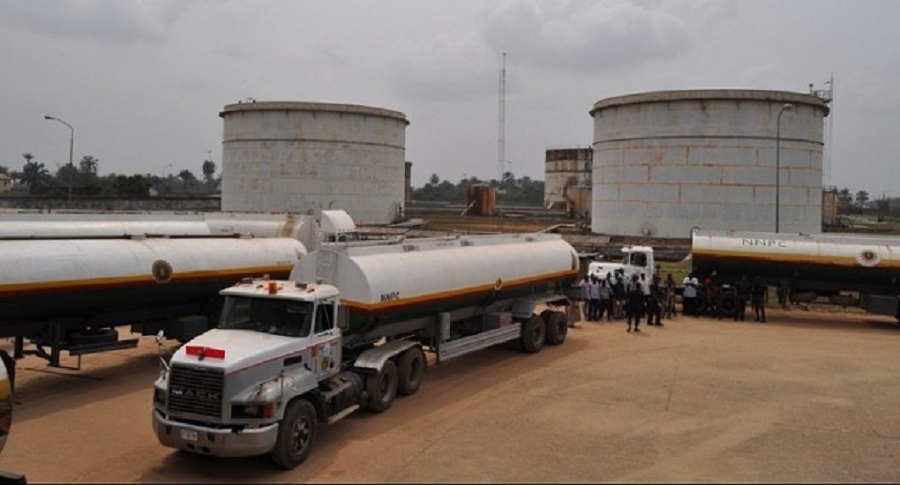
Nairametrics: Nigeria currently relies heavily on trucks to move CNG from mother stations to daughter stations. How sustainable is this model as the number of CNG vehicles grows, and what can Nigeria do to make the distribution system more efficient and reliable?
Omid Hamidkhani: I believe Nigeria needs to look at this issue from a geographical and long-term infrastructure perspective.
Nigeria is a very large country, and it is not realistic to assume that road-based CNG transportation can efficiently and reliably supply the entire country as the CNG vehicle population grows significantly.
The virtual pipeline model, transporting compressed gas by truck from Mother Stations to Daughter Stations, is useful and, in many locations, it can be an effective way to start developing the market. But it has inherent limitations. Nigeria has a very large geographical area, road infrastructure is not always in good condition, and long-distance transportation of CNG by road adds significant logistics costs and operational risks.
There is also an important geographical issue. Much of Nigeria’s existing gas pipeline infrastructure is concentrated in the southern part of the country, with the network extending toward some central areas. Therefore, connecting the major gas-consuming regions to reliable pipeline infrastructure should become a strategic priority.
Projects such as the Ajaokuta-Kaduna-Kano (AKK) pipeline are important in this context because they can help extend the reach of Nigeria’s natural gas infrastructure toward the north and create a stronger foundation for industrial and transportation gas demand.
In my opinion, Nigeria should therefore pursue a mixed distribution strategy rather than trying to make one model fit the entire country.
Where pipeline gas is economically and technically feasible, pipeline development should be prioritised. In regions that are relatively close to existing gas infrastructure, CNG trucking can continue to serve as an intermediate or complementary solution.
For more remote areas, particularly where building a pipeline is not economically justified in the short term, L-CNG could also be considered. LNG can transport significantly more energy per unit of transported volume than CNG and can therefore make longer-distance supply to remote demand centres more practical.
And we should also be realistic about market development. If certain very remote regions cannot be supplied with gas at a reasonable cost, Nigeria may need to consider whether it makes economic sense to include those areas in the initial nationwide CNG rollout at all.
The objective should not be to put a CNG station in every part of Nigeria at any cost. The objective should be to develop a reliable, economically sustainable national gas distribution network, using pipelines, CNG trucking and L-CNG where each technology makes the most technical and commercial sense.
Nairametrics: What combination of infrastructure, distribution networks and investment would Nigeria need to close the CNG availability gap while keeping the market commercially viable for private investors?
Omid Hamidkhani: I would divide the requirement into four layers.
First is gas supply and processing. There must be sufficient and reliable gas available at predictable commercial terms.
Second is midstream infrastructure. Natural gas pipeline development such as AKK is the key factor in the long-term view. Meanwhile, the CNG virtual pipeline can play an important bridging and complementary role in the medium term, particularly in areas where pipeline infrastructure is not yet available.
Third is the retail and mobility network, including CNG filling stations and, where necessary, mobile refuelling units, which can help reduce or close the gap before sufficient pipeline development.
Fourth is finance and market development. Nigeria has a high rate of inflation and the financial cost of investment is high. In such economies, subsidised finance plans through low-interest facilities can be an important form of government support for the CNG sector and can also serve as a signal to society to trust the CNG rollout plan. All potential players, including filling-station investors, conversion businesses and vehicle owners, need access to financing because the initial conversion cost can still be a barrier.
The key point is that these investments should not be made randomly. Nigeria should identify major transportation corridors, cities, industrial clusters and fleet concentrations and build infrastructure around them. Private investors need to see predictable utilisation and a reasonable return on investment. Therefore, government has an important role in creating the regulatory and infrastructure framework.
Nairametrics: Once a conventional vehicle has been converted to CNG, what are the most important safety considerations that need to be managed throughout the vehicle’s service life?
Omid Hamidkhani: The most important point is that CNG safety does not end when the conversion is completed.
The cylinder is obviously one of the most critical components because it stores high-pressure gas. Its physical condition, mounting, protection against damage, cylinder valve and pressure relief devices all need to be monitored periodically.
But we should not focus only on the cylinder. The entire fuel system needs attention, including high-pressure piping and connections, shut-off valves, regulator, injectors, sensors, pressure relief devices, filling valve and electrical components associated with the gas system.
The quality of the original conversion service is also extremely important. A high-quality component installed incorrectly can still create a safety problem.
The vehicle’s operating environment should also be considered. Especially in Nigeria, vehicles can be exposed to high temperatures, rough roads, humidity and overloading. These conditions can affect components over time.
This is why I always look at CNG vehicle safety from a lifecycle perspective.
The correct question is not simply, “Was this vehicle converted safely?” The question should be, “Is this vehicle still safe today, after years of operation?”
That requires proper installation standards, good maintenance, periodic inspection and certification.
Nairametrics: How can Nigeria ensure that a CNG conversion remains safe and compliant years after the initial installation, rather than treating safety as something that ends once the vehicle is converted?
Omid Hamidkhani: Nigeria needs to establish a proper lifecycle-management system for CNG vehicles.
At the time of conversion, the vehicle should be inspected and certified, and the installation should be traceable. The cylinder and major CNG components should have identifiable records linked to the vehicle.
After that, periodic inspections should be mandatory.
The inspection should not simply confirm that the engine starts and runs on CNG. It should assess the condition of the complete gas system, including the cylinder installation, cylinder condition, valves, pressure relief devices, high-pressure lines, connections, regulator and other safety-critical components. Cylinder age and service life also need to be managed.
There should also be clear procedures for what happens after an accident. A vehicle involved in a significant collision should not simply return to the road because the engine is still functioning. The CNG system should be inspected by an authorised facility before the vehicle returns to service.
Nigeria does not necessarily need to copy another country’s system word for word. But it should establish a system where responsibility continues throughout the vehicle’s life.
A CNG certificate that must be renewed at defined intervals should mean more than “this vehicle was converted safely.” It should mean that “this vehicle has been inspected and is currently fit for safe CNG operation.”
Nairametrics: What should a practical periodic inspection and certification system for CNG vehicles in Nigeria look like, including what should be inspected and how frequently vehicles should be assessed?
Omid Hamidkhani: I would propose a system based on several levels of inspection.
First, there should be initial certification after conversion. This should verify the quality and conformity of the installation before the vehicle enters normal operation.
Second, there should be a periodic vehicle-level inspection. For a starting point, I would consider annual inspection of the complete CNG installation practical, particularly while the national system is being established. Higher-utilisation commercial fleets could potentially require more frequent checks based on operating conditions and risks, such as every six months in some countries.
Third, there should be specific cylinder-focused inspections based on the cylinder manufacturer’s requirements and the applicable technical standard. ISO 19078 provides an established international reference for inspection of cylinder installations and requalification. Stricter test plans, such as conducting hydrostatic and ultrasonic tests on cylinders, might also be needed considering the feedback from the market.
The inspection itself should cover the cylinder condition and identification, cylinder mounting and supports, signs of corrosion, damage or abnormal deformation, valves and pressure relief devices, high-pressure pipes, fittings and connections, leakage, regulator and other pressure-control components, fuel shut-off systems, installation clearances and protection, evidence of accident or heat damage, the general condition of the conversion system, and documentation and traceability.
There should also be a clear “fail and repair” procedure. A vehicle that fails an inspection should not simply receive another certificate without addressing the defect.
Most importantly, the system must be digital and traceable. Nigeria should know which cylinder is installed in which vehicle, who performed the conversion, when it was inspected and when its next inspection is due.
That database could eventually become one of the most valuable safety tools in the Nigerian CNG sector. Ultimately, the database should be integrated with CNG filling stations. A station should be able to verify electronically whether a vehicle has been converted at an authorised centre and whether its CNG periodic inspection certificate is still valid before dispensing gas. Such a nationally integrated system will decrease the incident rate to the minimum.
Nairametrics: Looking at Nigeria’s CNG value chain as a whole, what should government, regulators and private-sector players prioritise over the next few years to give drivers reliable access while maintaining commercial viability and strong safety standards?
Omid Hamidkhani: I would prioritise five things.
First, availability. Nigeria needs to continue expanding gas supply, gas pipelines, mother stations, daughter stations, mobile stations and so on. A driver who converts to CNG needs confidence that the fuel will be available where and when it is needed.
Second, commercial sustainability. Government incentives can accelerate the market, but they should support the development of businesses that can eventually operate on sound commercial principles. Private investment will be essential because the scale of infrastructure required is too large for government alone.
Third, quality and safety. Nigeria should strengthen standards for conversion systems, cylinders and components, while establishing a nationwide system for periodic inspection and certification. Safety should be treated as a continuous responsibility, not a one-time conversion requirement.
Fourth, local capacity. Nigeria should develop local capabilities in conversion, maintenance, inspection, cylinder-related services, equipment assembly and eventually manufacturing. This will reduce dependence on imports and create skilled employment and even capacities for export.
Fifth, coordination. Gas producers, transporters, station operators, conversion companies, regulators, vehicle owners and financial institutions need to operate as parts of one ecosystem.
Nigeria has already demonstrated that there is significant interest in CNG. The next stage is to turn that interest into a reliable and professionally managed market.
If CNG is reliably available, professionally delivered and demonstrably safe, consumers will have a reason to continue using it, investors will have a reason to invest, and the market can gradually become commercially self-sustaining. Nigeria does not need to choose between affordability, availability and safety. The objective should be to build a CNG ecosystem in which all three reinforce each other.