Follow Us on Google Discover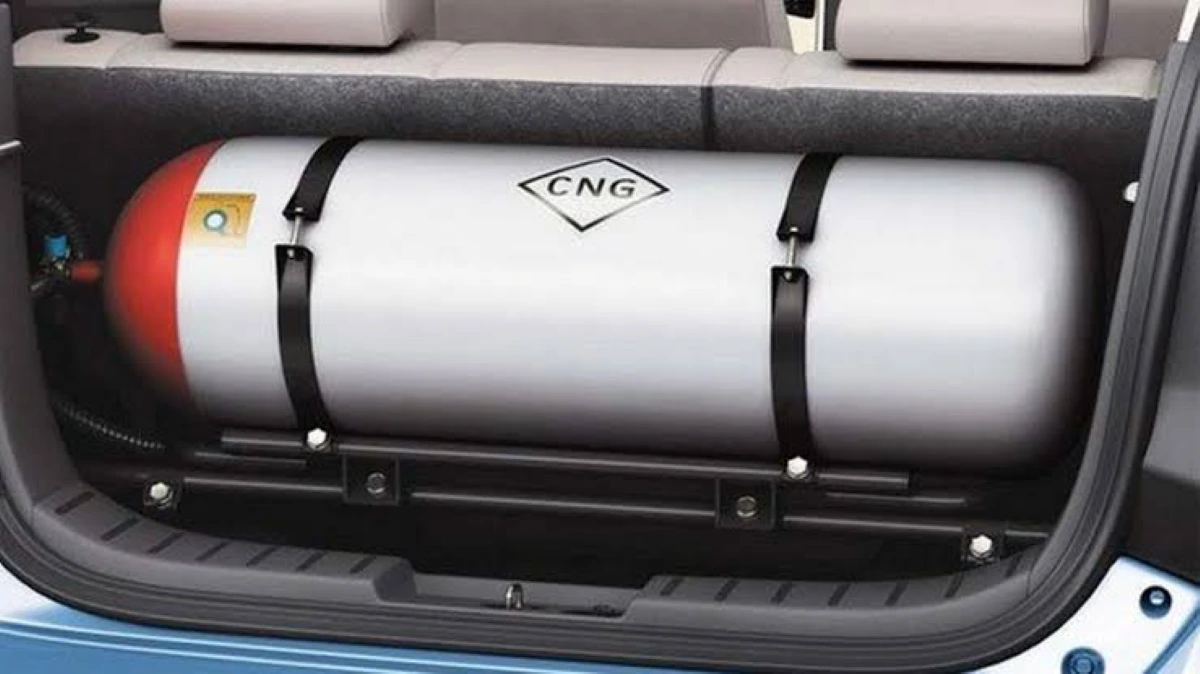
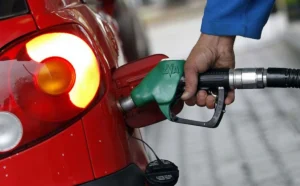
Nigeria’s push to expand the adoption of compressed natural gas (CNG) as an alternative to petrol and diesel is facing a combination of financing, infrastructure, safety and operational challenges, with vehicle owners saying that the potential savings from cheaper fuel are often undermined by the difficulty of accessing CNG.
While CNG can significantly reduce fuel costs, motorists must contend with the upfront cost of conversion, limited refuelling infrastructure, long queues at stations and concerns about the quality and safety of installations.
Recent experiences of commercial drivers also show that the economics of CNG can vary depending on access to refuelling stations and the amount of time operators spend waiting to obtain gas.
The challenges come as the Presidential Initiative on Compressed Natural Gas and Electric Vehicles (Pi-CNG & EV) continues to expand conversion and refuelling infrastructure across the country.
Also Read
What vehicle owners are facing
For many motorists, the initial cost of converting a petrol-powered vehicle to CNG remains one of the biggest barriers.
The cost of conversion can run into hundreds of thousands of naira, making the transition difficult for motorists who depend on their vehicles for their daily income.
For some vehicle owners, however, even subsidised conversion remains significant.
An Abuja commercial driver, Paul Ngila told Nairametrics that he spent N650,000 converting his vehicle and CNG had proved more profitable than petrol but that access to the fuel remained a major challenge.
- He said: “I regret converting my tricycle because the suffering is too much.”
A private vehicle owner, Michael John said the major problem was the time spent waiting for CNG at filling stations.
- “When CNG came, we were happy because gas was cheap and those who converted were making good money. But today, before you can buy gas, you must spend hours in a queue. While we are stranded at filling stations, drivers using petrol are already carrying passengers and making money.”
The experience highlights an important consideration for commercial operators: the cost of fuel is only one component of profitability. Time spent waiting to refuel represents lost trips and lost income.
Cheap fuel, but expensive time
The potential savings from CNG remain one of the strongest arguments for conversion.
A vehicle owner cited by the Pi-CNG initiative reportedly reduced weekly fuel expenditure from about N300,000 on petrol to approximately N22,000 on CNG after converting his vehicle.
Other operators have reported similar savings.
An Abuja SME owner George Bukus, previously said he spent only N1,200 on gas for several trips that would have cost him more than N22,000 in petrol.
However, he also identified maintenance as a challenge, saying:
- “The plugs need to be changed every two months to avoid breakdowns.”
This suggests that the economic calculation for CNG owners goes beyond the pump price. Conversion costs, maintenance, downtime, availability of gas and the distance to refuelling stations all affect the overall return on investment.
Operational bottlenecks could slow adoption
The expansion of CNG-powered vehicles requires a coordinated network of conversion centres, trained technicians, gas supply infrastructure and refuelling stations.
Where stations are inadequate, vehicle owners can spend several hours waiting for gas or travel considerable distances to find an operational station.
An Abuja commercial driver, Bade Shitu, described the situation as a major operational burden.
- “There is an NNPC filling station around Jabi in Abuja, but you have to spend at least six hours before you can get gas. Car owners even sleep at the station to buy gas. It’s not worth the trouble.”
Another driver Usman Maji questioned whether the infrastructure was sufficiently developed to support widespread conversion.
- “Again, where can I find it when I want to refuel? I am even hearing about the conversion centre for the first time now.”
- “They should make the refuelling centres to be available everywhere first before we do any conversion. We don’t have the patience to travel extra kilometres away from the city to buy any fuel for any purpose,” he added.
The comments underline the infrastructure challenge facing the programme: converting more vehicles does not automatically create a functional CNG market unless motorists can conveniently refuel those vehicles.
Some owners have returned to petrol
The difficulties have already prompted some converted vehicle owners to return temporarily to petrol.
Kingsley Orji, a businessman and commercial tricycle operator in Lugbe, said CNG had helped reduce his fuel expenses but that inadequate access to stations forced him back to petrol.
- “Refilling my Keke with CNG is really cheap compared to fuel and I can tell you that I have saved some amount since I started using it. But getting it to buy is not as convenient as fuel. We have just this station here serving the whole of these areas.”
Similarly, Abuja public servant Buchi said CNG reduced his weekly commuting fuel expenditure from between N50,000 and N60,000 to about N15,000.
However, he said the availability problem eventually pushed him back towards petrol.
- “The 10 CNG stations servicing Abuja is grossly inadequate to meet the huge demand of CNG users.”
He added:
- “Due to the stress of getting gas, I have not been buying gas for a while now because I honestly do not have the patience to spend 4 hours every two days to buy gas.”
These experiences illustrate why the availability of CNG is as important as its price.
A source close to NIPCO refill stations acknowledged that supply interruptions had affected some stations, explaining that delays could occur at different stages of the supply chain.
- “Yes, I can confirm the challenges in the availability of the product, which sometimes happens in every product supply or delivery. There are so many reasons for such, it could be a delay at the port of clearing or shipment of this product.”
Are banks ready to finance CNG conversions?
Financing is another important issue, particularly for commercial drivers, small transport businesses and fleet operators.
For many operators, paying hundreds of thousands of naira upfront for conversion is difficult even when the expected fuel savings are substantial.
- The government has recognised this challenge, with the CNG programme partnering with financial institutions and credit agencies to expand access to financing for vehicle conversions.
- The objective is to reduce the upfront capital barrier facing motorists and allow them to spread the cost of conversion over time.
- The financing question is particularly important for commercial drivers because their vehicles are income-generating assets. Taking a vehicle off the road for conversion, or committing a large proportion of daily earnings to loan repayment, can create additional financial pressure.
A financing model that spreads the conversion cost over time could therefore make adoption easier, but repayment terms would need to reflect the irregular income patterns of many transport operators.
Israel Ndanusa, an analyst at Kwik Securities Limited, previously said the cost of converting a vehicle to CNG was beyond what many transport operators could raise upfront.
- “Financing conversion is a challenge because the operators do not have the initial capital.”
He said conversion, which at the time cost about N325,000 on average, was particularly difficult for the people most likely to benefit from cheaper fuel.
- “Most transporters would not be able to pull out” the conversion cost at a go.
The concern is particularly relevant for commercial drivers operating tricycles, taxis and buses, who depend on daily earnings to meet household expenses and maintain their vehicles.
For operators who borrow money to finance conversion, the availability of CNG becomes particularly important.
A CNG vehicle operator in Mararaba area of Abuja, Andrew Obima said some motorists had taken loans on the expectation that lower fuel costs would provide sufficient savings to service the debt. However, unreliable supply could undermine that calculation.
- “Some people take loans to do the conversion, but they can’t pay back because there is no certainty they will get gas.”
He said operators need predictable access to CNG to be able to calculate their daily savings and plan loan repayments.
- “If there was a stable supply, they could calculate their savings from using gas every day, plan their finances, and pay back the loan.”
He also identified inadequate refuelling infrastructure as a major constraint.
- “The main issue, apart from safety concerns, is the infrastructure. We need gas, but there is no gas available, and the few stations that exist are nowhere near enough to support the number of converted vehicles.”
Quality of conversion and safety concerns
Safety has become another major issue for vehicle owners considering CNG.
A recent incident in Abuja has heightened concerns after a CNG cylinder installed in a vehicle reportedly exploded during refuelling.
The incident prompted warnings against the use of unauthorised cylinders and components and reinforced calls for motorists to use accredited conversion centres and certified CNG kits.
Vehicle owners have previously expressed concerns about the safety of gas-powered vehicles.
A commercial driver, Mr Sunday said:
- “First, I don’t have money to do such a conversion but even if I have, I will not do it because I can’t risk an explosion.”
Another driver, Mr Udo said:
- “I don’t plan to convert my taxi because I am aware of the risk. They said it is not like normal gas but my brother, gas is gas. I cannot risk my life.”
These concerns contrast with the position of CNG technicians and programme officials who maintain that properly installed and maintained automotive CNG systems are designed with safety features to manage high-pressure gas.
The issue, therefore, is not simply whether CNG technology can be operated safely, but whether vehicle owners can reliably identify qualified conversion centres and obtain certified components.
CNG adoption will depend on the entire ecosystem
Nigeria’s CNG transition is therefore not simply a question of replacing petrol with a cheaper fuel.
It requires a functioning ecosystem covering affordable conversion, accessible financing, reliable gas supply, sufficient refuelling stations, qualified technicians, certified equipment, maintenance services and effective safety oversight.
- The experiences of motorists show that CNG can deliver significant savings where the infrastructure works. At the same time, long queues, inadequate stations and high conversion costs can undermine those savings.
- This explains the mixed experiences among vehicle owners. Some operators report dramatically lower fuel expenses, while others have returned to petrol because of the difficulty of obtaining CNG.
- The challenge for policymakers is consequently to ensure that conversion capacity grows alongside refuelling infrastructure and safety oversight.
- For motorists, the key consideration remains whether the lifetime savings from CNG are sufficient to compensate for the conversion cost and the practical realities of operating a gas-powered vehicle.
As one Abuja driver put it:
- “Let’s have it available and affordable then we can consider whether to key in or not.”
In May 2025, PCNGi launched a N2.5 billion credit scheme aimed at encouraging vehicle conversion and the local manufacturing of CNG conversion kits. The programme was intended to address both the financing barrier and the availability of conversion equipment.
As Nigeria moves deeper into the CNG transition, the experiences of existing users suggest that affordability alone will not determine adoption. Convenience, safety and reliability will be equally important.
What you should know
President Tinubu has said more Nigerians should begin to see measurable reductions in transportation costs from October 1, citing the more than N3.5 billion in transport costs he said CNG-powered buses saved commuters in Kaduna in their first year of operation.
In late August, the Federal Government announced plans to expand CNG infrastructure as part of the National Affordable CNG Transit Programme.
The Federal Government introduced the CNG initiative in 2023 following the removal of the petrol subsidy, positioning compressed natural gas as a cheaper and cleaner alternative aimed at reducing transportation costs.