Follow Us on Google Discover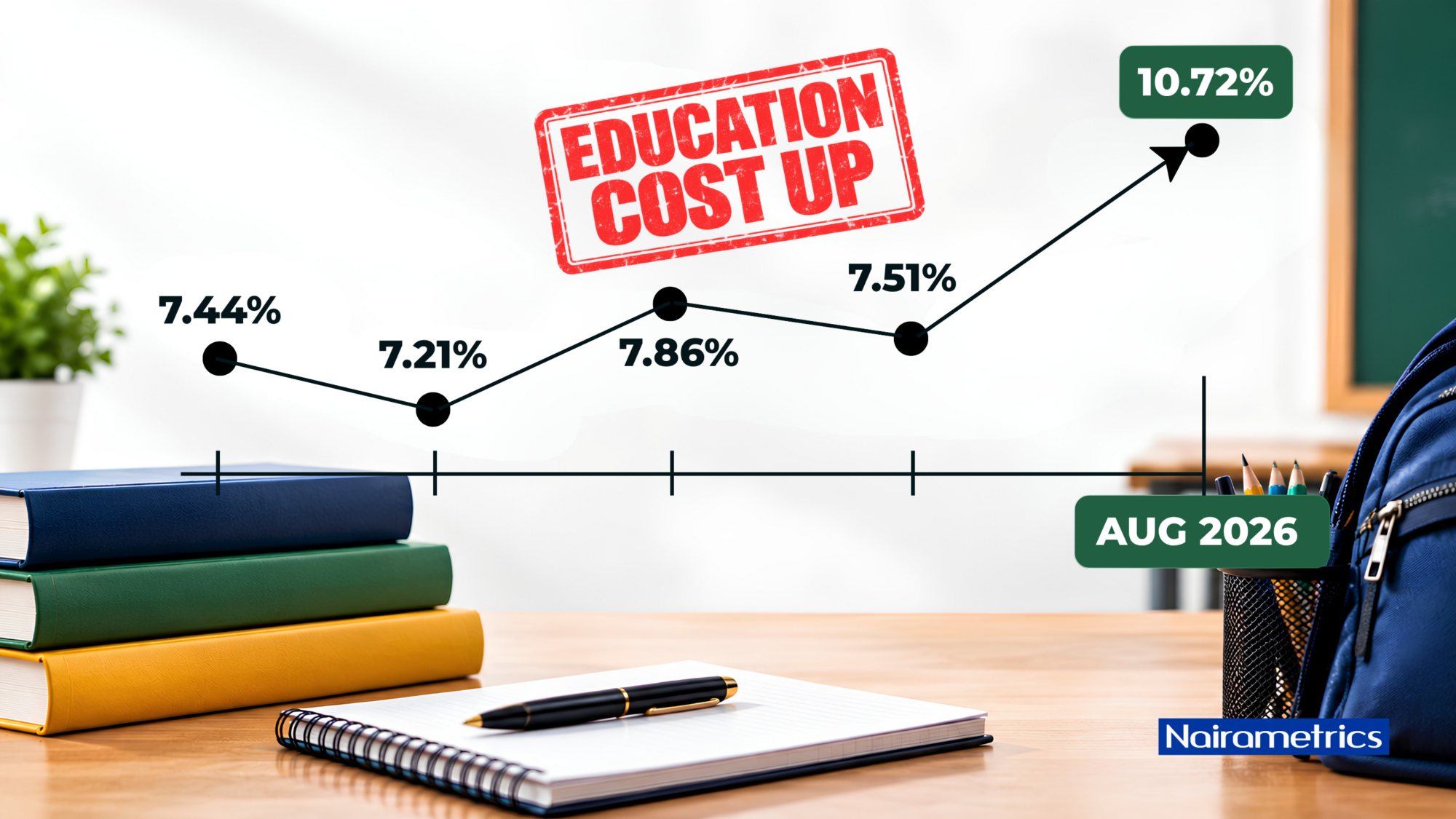
Nigeria’s education services inflation rose sharply to 10.72%year-on-year (YoY) in August 2026 from 7.51% in July, as households prepared for the new 2026/2027 academic session.
Nairametrics Research analysis of the inflation data from the National Bureau of Statistics (NBS) showed that education services inflation increased by 3.21 percentage points in August.
The increase came even as Nigeria’s headline inflation rate eased marginally to 15.39% in August from 15.43% in July, indicating that education costs moved in the opposite direction to the broader inflation trend.
The increase also comes as the 2026/2027 academic session begins, with Lagos State setting September 14, 2026 as the resumption date for public and private primary and secondary schools.
Also Read
What the data is saying
The NBS data show that education services inflation accelerated sharply in August, rising by 3.21 percentage points from 7.51% in July to 10.72%.
- Education services inflation stood at 22.48% in January 2026, based on the CPI figures provided by the NBS.
- The rate declined steadily to 18.59%, 13.74%, 7.44% and 7.21% in February, March, April and May, respectively.
- Education inflation then increased to 7.86% in June, eased slightly to 7.51% in July, before jumping to 10.72% in August.
- The August increase marks a notable reversal from the moderation recorded earlier in the year, therefore representing the highest education services inflation rate recorded since March 2026.
The increase was recorded despite the broader moderation in inflation during the month, with headline inflation easing by 0.04 percentage points to 15.39%.
Nairametrics also reported that food inflation declined in August, falling to 19.57% from 20.31% in July, while headline inflation continued to moderate.
Get up to speed
The increase in education services inflation comes as Nigerian households face another round of school-related expenses for the new academic session.
- Nairametrics reported earlier in September that school fees were due again, highlighting the recurring financial pressure faced by Nigerian parents as they fund tuition, books, uniforms and other education-related expenses.
- A Comercio Partners report cited by Nairametrics showed that mid-range private school fees in Lagos range from N600,000 to N1.8 million per child annually, excluding uniforms and books.
The timing is significant because Lagos began its 2026/2027 academic session on September 14, meaning parents have entered the period when tuition and other school-related payments are typically due.
What this means
The sharp increase in education services inflation contrasts with the broader moderation in Nigeria’s headline inflation rate.
- While headline inflation slowed to 15.39% in August, education services inflation accelerated by 3.21 percentage points, highlighting the different pace at which individual components of household spending are changing.
- The August increase also means households entering the new academic session are facing higher education-related costs even as overall inflation moderates. For families already allocating a significant share of their income to essential expenses, higher tuition and other school-related charges can add to financial pressure.
This means that the moderation in headline inflation does not necessarily translate into lower education expenses for households entering a new school year.
What you should know
Education costs have also been affected by proposed increases in examination fees.
- The Federal Government had proposed raising the registration fee for the 2027 WASSCE and NECO examinations from N27,500 to N50,000, representing an 82% increase. However, the proposal was suspended in July to allow for broader consultations with stakeholders.
- The proposed fee increase highlights the additional education-related costs households could face, even as the August inflation data show that education services inflation accelerated.
Education services inflation accelerated even as overall inflation continued to moderate.