Follow Us on Google Discover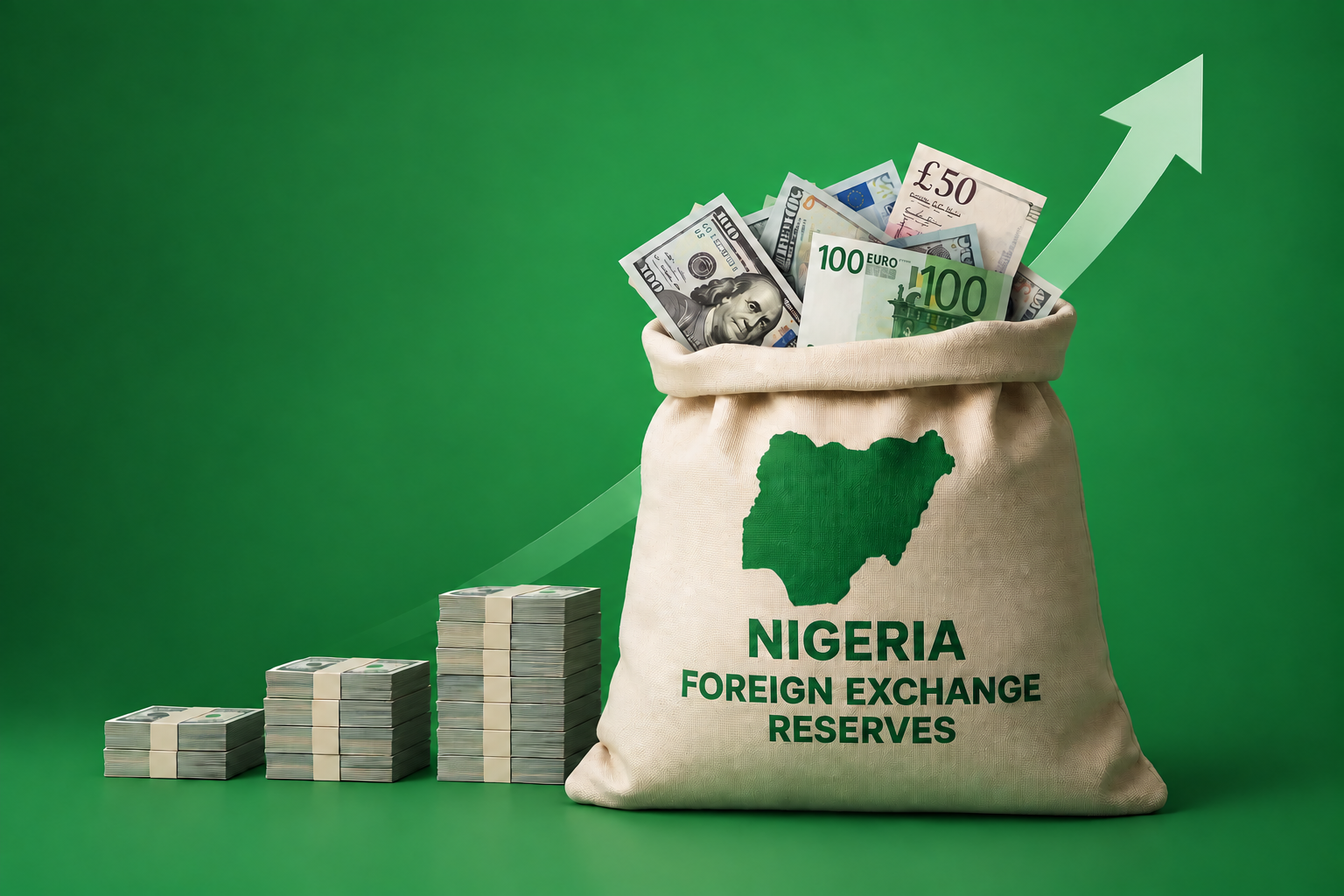
Nigeria’s foreign exchange reserves have climbed above the $54 billion mark, strengthening the country’s external position and providing additional buffers for the Central Bank of Nigeria (CBN) to manage pressure in the foreign exchange market.
The increase has also coincided with a period of relative stability in the naira, with the currency gaining ground in the official market over recent months.
But as reserves continue to rise, questions are emerging over the quality, composition and sustainability of the funds being accumulated.
The key issue is whether the increase is being driven predominantly by durable sources of foreign exchange, such as crude oil receipts, diaspora remittances and non-oil exports, or by portfolio inflows that can reverse quickly when global financial conditions or investor sentiment change.
Also Read
What the experts are saying
President of the Association of Bureaux De Change Operators of Nigeria (ABCON), Aminu Gwambe, said the rise in reserves is a positive development and reflects several improvements in Nigeria’s external accounts.
- “It is indeed good news as the naira gains over 7.94% within the past nine months in the year,” Gwambe told Nairametrics.
He identified higher crude oil prices, improved oil production, stronger diaspora remittances, non-oil export proceeds and changes in monetary and foreign exchange management as some of the factors supporting the accumulation.
- “First, the Middle East crisis has triggered increased crude oil prices, which is the major revenue receipt for Nigeria and helps in no small measures to increase our buffers,” he said.
Gwambe also pointed to reduced volatility in the Niger Delta and lower crude oil theft as factors that have helped improve production and, consequently, foreign exchange receipts.
- “Secondly, the less volatile Niger Delta agitation and lower crude oil theft have increased our production output, which enhances the receipts of our foreign inflows,” he said.
He added that rising diaspora remittances through the official market have also supported the reserves, following reforms in the foreign exchange market.
- “Thirdly, the increasing diaspora remittances through the official market as a result of foreign exchange reforms have helped in boosting our levels of buffers,” he said.
- He added, “We have also witnessed increasing out of licensed spaces helping to provide dollars liquidity through fintechs.”
Gwambe further cited higher non-oil export proceeds and improvements in fiscal and monetary management, including measures aimed at reducing foreign exchange hoarding, rent-seeking and arbitrage.
Are portfolio investors also behind the increase?
While oil receipts remain fundamental to Nigeria’s external position, market participants say portfolio investment has become an increasingly important source of foreign exchange.
Chief Executive Officer of the Centre for the Promotion of Private Enterprise (CPPE), Dr Muda Yusuf, said the rise in reserves reflects stronger confidence among foreign investors and the international business community.
- “It takes a lot of confidence in an economy for foreign inflows to come in, and of course, we have seen significant improvement in portfolio flows especially,” Yusuf said.
He added that improved export performance was another important contributor.
- “In addition to that, our export performance has been improving. If you look at our trade data, you will see that increasingly, we have been in surplus for some time now,” he said.
According to Yusuf, economic reforms have improved foreign exchange liquidity while making Nigerian financial assets more attractive to international investors.
- “Generally, I think it’s a reflection of the improving level of confidence in the economy. It’s also a reflection of the fact that we have very good returns in our financial instruments,” he said.
A CBN source, who requested anonymity, told Nairametrics that interest from foreign investors in Nigerian government securities has increased.
- “I have received several emails from some foreign investors seeking information on our long-term bonds. To me, this means we can have more portfolio investors stay longer in Nigeria,” the source said.
A former Access Bank Treasury official, who also asked not to be named, said it may be difficult to identify a single source responsible for the reserve accumulation.
- “You might not really know the sources directly. There are several sources. But I think most of it is from FPIs. Some of them will do bilateral OMO while some of them will give CBN funds directly,” he said.
What the data says
Nigeria’s capital importation data provides some evidence of the renewed foreign investor interest.
The country attracted $10.37 billion in foreign capital in the first quarter of 2026, an 83.8% increase from $5.64 billion recorded in the corresponding period of 2025.
The banking industry attracted $7.55 billion, representing 72.8% of total capital imported during the quarter, while the financing sector received another $2.43 billion.
The concentration of inflows in financial services is significant because it suggests that a substantial portion of foreign capital entering Nigeria is financial rather than investment in productive capacity.
Nigeria also recorded a sharp increase in portfolio-related inflows in January, when foreign portfolio investment, or “hot money”, rose to $3.37 billion and accounted for 95.72% of total capital importation during the month.
This contrasts sharply with foreign direct investment, which remained below 4% of total capital imported into Nigeria in 2025.
The sustainability question
The rise in reserves is undoubtedly positive, but the composition of the inflows matters.
Experts warned that portfolio investments can strengthen reserves and improve foreign exchange liquidity, but they are generally more sensitive to interest rates, exchange-rate expectations and global investor sentiment than longer-term foreign direct investment.
- “This means that reserves supported substantially by portfolio flows may be more vulnerable to sudden reversals,” the former Access Bank official noted.
- “Higher crude prices and improved production can generate substantial foreign exchange earnings, but oil revenue remains exposed to fluctuations in international prices, production disruptions and Nigeria’s ability to maintain output,” Olu Olajemgbese of the University of Abuja said.
- “For this reason, the most sustainable improvement would come from a broader mix of foreign exchange earnings, including stronger non-oil exports, remittances and productive foreign direct investment,” he added.
He noted that Nigeria’s improving trade position is therefore important. Sustained export growth would provide a more durable source of foreign exchange than short-term financial flows.
Gwambe said the major concern remains the gap between the official and parallel foreign exchange markets.
- “My worry is on the inherent gaps between the official market and the parallel market rates. It still appears an albatross and needs more tactical, operational and strategic framework of the CBN to tackle the menace and the big elephant in the house,” he said.
He called for greater integration of Bureaux De Change operators into the formal foreign exchange ecosystem and increased participation in the market.
- “I therefore advise the CBN to accelerate the integration of the BDCs and bring in more participants in the FX ecosystem to achieve their ultimate objectives of narrowing the spread between the official and the parallel market rate, to sustain stability and confidence of both local and foreign investors,” he said.
The rise in reserves gives the CBN a stronger buffer and potentially greater capacity to respond to foreign exchange shocks. But reserves alone cannot guarantee long-term naira stability.
The bigger test is whether Nigeria can convert the current improvement in foreign exchange liquidity into stable, diversified and recurring foreign exchange earnings.
The experts noted that if the buildup is increasingly supported by crude receipts, remittances, exports and long-term investment, the reserves could represent a meaningful strengthening of Nigeria’s external position.