Follow Us on Google Discover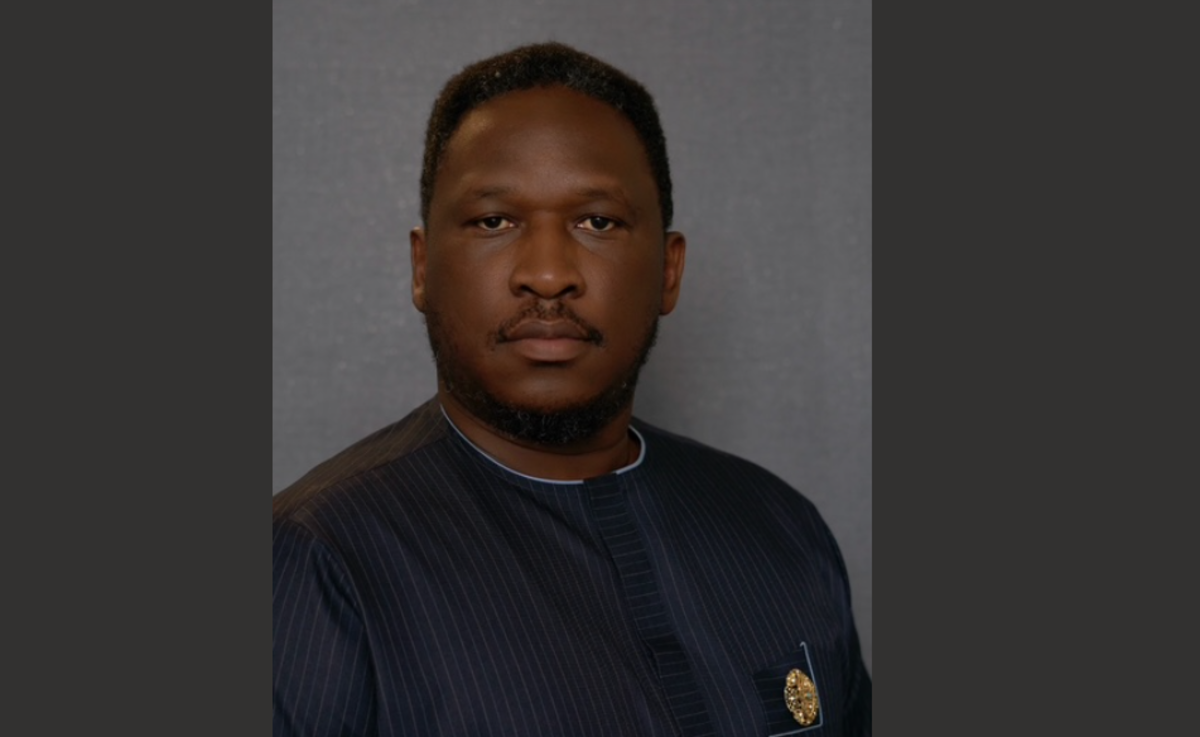
In 1776, a simple political slogan helped ignite a revolution:
“No taxation without representation.”
The American colonists were not merely protesting taxes.
They were challenging a system in which decisions about their future were being made without their voice, consent or meaningful participation.
Nearly 250 years later, Africa faces another defining moment. This time, the empire is not political – it is technological.
Artificial Intelligence is emerging as the defining General Purpose Technology (GPT) of the twenty-first century, following the steam engine, electricity and the internet as technologies capable of transforming virtually every sector of society.
AI will reshape how nations compete, governments govern and businesses innovate-and ultimately, how wealth and power are distributed.
The question for Africa is no longer whether AI will transform the continent.
The question is whether Africa will help shape AI – or simply be shaped by it.
The New Taxation
In the digital economy, taxation is no longer only about money. It is about technology, data, talent, languages, culture, markets and ideas.
Africa contributes all of these-yet owns relatively little of the technology infrastructure that converts them into scalable economic value.
Every African using a smartphone, digital payment platform, search engine or AI application contributes to a vast digital ecosystem generating commercial and strategic value.
Africa’s youthful population and expanding digital economy represent one of the world’s most significant future markets.
Yet much of the infrastructure, intellectual property, capital and frontier AI capability powering this economy remains concentrated elsewhere – that creates a fundamental imbalance.
Africa supplies the market, data, talent and increasingly the cultural context, while others disproportionately own the platforms, define the standards and capture the value.
This is the new taxation – and it raises an uncomfortable question: Where is Africa’s representation?
Uber Is a Warning We Should Not Ignore
The recent decision by Uber to discontinue its ride-hailing operations in Nigeria and Uganda, offers a timely reminder of how this imbalance can play out in the digital economy.
Uber spent 12 years in Nigeria and about a decade in Uganda. The company attributed its decision to a review of its evolving business priorities and investment focus across Africa, stressing that the move did not represent a withdrawal from the continent as a whole.
But the lesson is bigger than Uber.
Millions of Africans can adopt a global technology platform, create value around it, depend on it and transform their daily lives through it-yet the ultimate decision about whether that platform remains in their market can still be made elsewhere.
That is why representation matters.
Africa cannot build its digital future on the assumption that foreign platforms will remain simply because the market is large.
Markets are not ownership. Usage is not control. Access is not influence. Adoption is not sovereignty.
If this is the reality of today’s digital economy, imagine the implications when AI becomes deeply embedded in finance, healthcare, education, agriculture, defence, public administration and economic decision-making.
Representation Begins With Who Builds AI
Representation in the AI age is about much more than African governments attending international summits.
It means helping write the rules. Influencing global AI governance. Shaping international standards. Owning intellectual property. Investing in frontier research. Building African foundation models.
Critically, it means having Africans inside the labs where the world’s most consequential AI systems are being created.
Across leading AI organisations – including Google Research, OpenAI, Anthropic, DeepSeek, xAI, Meta, Microsoft and other frontier research institutions – African researchers, engineers and scientists remain significantly underrepresented relative to Africa’s population, talent and strategic importance.
This is not simply a diversity problem – it is an innovation and geopolitical problem.
The people who build AI influence which problems receive attention, which datasets are prioritised, which risks are recognised and which cultures are understood.
If African voices are largely absent from the rooms where frontier AI is designed, Africa risks becoming an afterthought in systems that will increasingly influence our economies and societies.
The Cost of Being a Consumer
History teaches us that every General Purpose Technology creates winners and losers.
The nations that mastered steam powered the Industrial Revolution. Those that electrified rapidly accelerated industrialisation. Those that built the internet created some of the world’s most valuable companies.
AI will create another generation of economic powers.
If Africa waits until AI matures before investing seriously in research, compute, talent, infrastructure and intellectual property, the continent could spend decades buying intelligence rather than building it.
That would not simply be an economic disadvantage – it would be strategic dependency.
Africa’s Opportunity
Africa is not without advantages. It has the world’s youngest population, extraordinary entrepreneurial energy, rapidly expanding digital markets and some of humanity’s most complex development challenges.
Those challenges can become labs for innovation. Africa does not need to copy Silicon Valley.
It needs to build AI for African realities – and solutions capable of scaling globally.
Imagine AI systems that genuinely understand African languages. AI transforming agricultural productivity.
AI improving healthcare access.
AI strengthening financial inclusion. AI modernising public services.
AI helping governments make better economic decisions. AI preserving indigenous knowledge and culture.
The opportunity is immense!
But opportunity without ownership can become dependency.
From Consumers to Contributors
Africa therefore needs a deliberate strategy to move from consumer to contributor.
Governments must treat AI as strategic national infrastructure.
Universities must produce world-class AI researchers alongside experts in ethics, law, science, economics and public policy.
Businesses must move beyond buying AI solutions to developing intellectual property. Investors must provide patient capital for African AI companies and research.
African institutions must collaborate on compute infrastructure, trusted data ecosystems, cybersecurity and common governance frameworks.
Most importantly, Africa must create pathways for its brightest researchers, engineers and entrepreneurs to occupy influential positions in the world’s leading AI organisations – while simultaneously building world-class research institutions at home.
Africa should not merely consume frontier AI. It must help invent it.
A New Independence Movement
The independence movements of the twentieth century fought for political sovereignty. The defining challenge of the twenty-first century may be technological sovereignty – this does not mean isolation!
Africa needs global partnerships, foreign investment and international collaboration. But partnership must not become permanent dependency.
The continent must move from being the market others enter to being a partner others must engage.
From recipient to co-creator. From user to owner. From observer to architect.
No AI Without Representation
The slogan that challenged imperial power in the eighteenth century has striking relevance to the AI age:
“No taxation without representation.”
Today, we need a new principle:
“No AI without representation.”
If Africa contributes its people, data, talent, creativity and markets to the AI economy, it deserves more than access to someone else’s technology.
It deserves influence over how that technology is designed. It deserves a stake in the intellectual property it helps inspire. It deserves representation in the institutions that govern AI. It deserves ownership of the economic value AI creates.
The Uber story should therefore not simply be viewed through the lens of one
company’s exit from two markets. It should prompt a much bigger question about Africa’s position in the global digital economy: Are we building economies that merely attract technology – or economies capable of owning it?
Because the AI revolution will not only determine who has the best algorithms.
It will determine who owns the future.
Africa still has time to choose. But the window will not remain open forever. History remembers those who built the future-not merely those who consumed it.
The time has come for Africa to claim its seat at the table. Not tomorrow, but now! No AI Without Representation.
About the Author
Abel Aboh is a Data and AI Leader and governance board member of The Data Lab Scotland. He serves on the Nominations Committee and the Technology Law and Practice Committee of the Law Society of Scotland. With over two decades of experience across data management, AI, technology, human resources, and governance, Abel advises UK critical institutions and organisations on data, AI, innovation, technology and transformation.
He was a finalist for British Data Leader of the Year 2021 and was inducted into the UK Data Leader Hall of Fame 2024. A proud Nigerian from the Niger Delta, Abel is passionate about inclusive leadership, data, AI, education, finance, technology, trade, and empowering the next generation of African innovators and change-makers. He regularly contributes and writes for Nairametrics.