Follow Us on Google Discover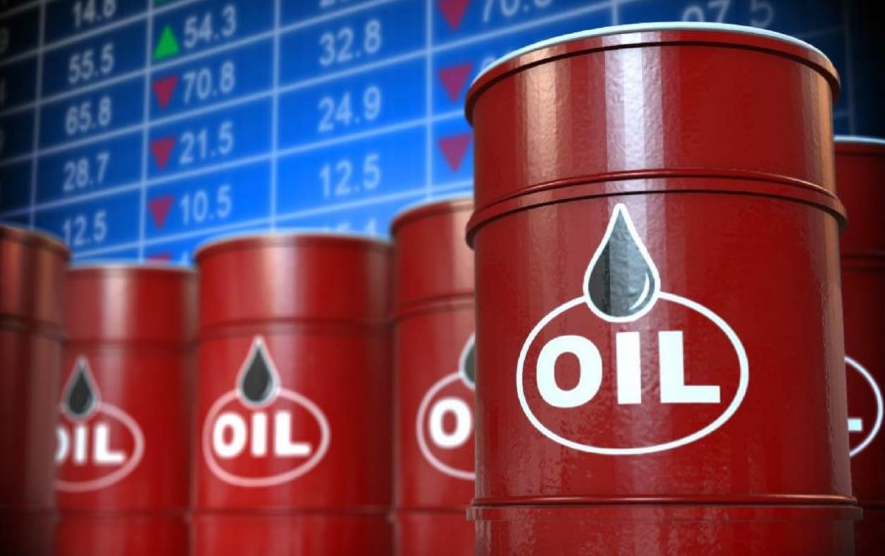
Crude oil prices have risen above $90 per barrel after the United States and Iran resumed military strikes over the Strait of Hormuz, reviving concerns about disruptions to global oil supplies through the strategic waterway.
The renewed hostilities came on Monday, August 31, after the US struck Iranian rocket launchers on Larak Island in the Strait of Hormuz on Sunday, prompting Iran to retaliate with missile and drone attacks on US bases in Jordan.
Checks by Nairametrics showed that Brent crude futures climbed $2.21, or 2.51%, to $90.31 a barrel as of 0436 GMT, while US West Texas Intermediate (WTI) crude rose $1.83, or 2.19%, to $85.23.
What they are saying
The latest escalation followed warnings from the US military that Iranian forces were preparing to deploy sea mines into the Strait of Hormuz.
Also Read
Captain Tim Hawkins, a spokesperson for US Central Command, said Iranian Revolutionary Guard Corps forces had been observed preparing to launch rockets carrying sea mines into the waterway. He said US forces remained on alert to protect shipping through the strategic route.
- “US forces are monitoring the area closely and remain prepared to protect the free flow of commerce through this essential waterway,” Hawkins said.
The US military said it had struck two Iranian launchers on Larak Island on Sunday, marking its first known attack on Iran since late July. The strike was carried out after the launchers were allegedly identified as preparations for placing mines in the Strait of Hormuz.
Iran’s Islamic Revolutionary Guard Corps subsequently launched a missile-and-drone attack against US bases in Jordan early Monday, according to state-run IRNA.
Get up to speed
The latest escalation comes days after Iran and Oman made progress towards an arrangement aimed at restoring shipping through the Strait of Hormuz, a development that had helped push oil prices lower.
- On August 25, the two countries announced a proposed phased framework that included a temporary joint navigational corridor through the waterway and a joint project to clear mines. They also said technical negotiations would continue towards a permanent navigation corridor, including arrangements for traffic management, information sharing and security services.
- The optimism surrounding the proposed corridor helped ease fears of a prolonged supply disruption. Brent crude futures fell to $86.28 a barrel on Wednesday, August 26, down $2.30, or 2.6%, while WTI declined by $2.08, or 2.53%, to about $80.29 at the time of reporting.
- The attack also comes after weeks in which the Trump administration had increasingly shifted its strategy towards economic pressure rather than sustained military confrontation.
On August 20, US President Donald Trump announced what he described as “economic warfare” against Iran, warning countries, businesses and financial institutions providing Tehran with an economic lifeline that they would face severe economic consequences.
What you should know
For Nigeria, a sustained rise in crude prices could provide some support for government revenue and foreign exchange earnings, given the country’s dependence on oil exports. However, higher global oil prices could also keep pressure on domestic fuel and transportation costs.
- During the recent period of elevated oil prices, petrol prices in Nigeria moved above N1,200 per litre in some markets, increasing the cost of commuting and transporting goods.
- The latest National Bureau of Statistics data show that Nigeria’s headline inflation rate eased to 15.43% in July 2026 from 15.91% in June. However, food inflation moved in the opposite direction, rising to 20.31% year-on-year in July from 17.52% in June, while monthly food inflation accelerated to 5.56% from 3.75%. Food inflation hits 20.31% in July, highest in 10 months
Nigeria’s 2026 budget is also based on a benchmark crude oil price of $64.85 per barrel, meaning Brent crude trading above $90 would place the market price significantly above the government’s fiscal benchmark. Higher prices could therefore improve government oil revenues, provided Nigeria can sustain crude production and sales.