Follow Us on Google Discover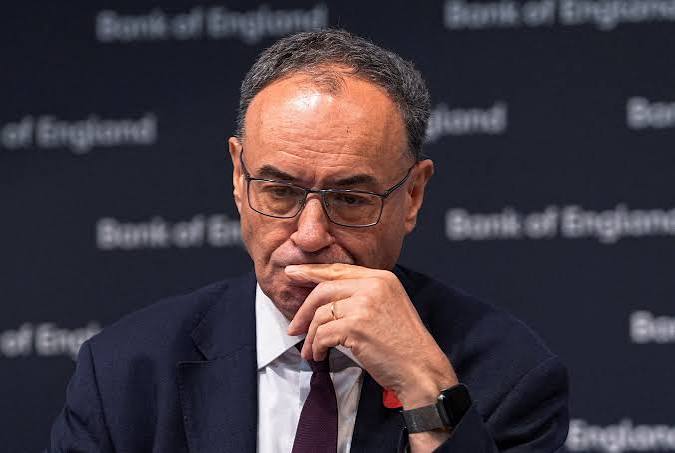
The Financial Stability Board (FSB) has warned that the impact of advanced artificial intelligence (AI) on cyber risk is the most immediate concern for the global financial system, saying the technology could materially change the speed, scale and economics of cyberattacks.
FSB Chair Andrew Bailey, who is also Governor of the Bank of England, raised the concern in a letter to G20 finance ministers and central bank governors ahead of meetings on August 31 and September 1, 2026.
Bailey warned that many jurisdictions do not yet have adequate protocols to manage advanced frontier AI models, while the financial sector’s dependence on a small number of technology providers could increase the risk of widespread disruption and undermine confidence across markets.
What the FSB is saying
Bailey said the emergence of frontier AI models, which are becoming increasingly sophisticated in autonomy, problem-solving and threat capabilities, has complicated the global financial risk environment.
According to him, the technology could allow cyber vulnerabilities to be identified and exploited more rapidly, potentially outpacing the ability of financial institutions to respond.
- “Recent developments highlight the importance of ensuring that advances in capability are matched by resilience and preparedness,” Bailey said in the letter.
- “For the financial system, the most immediate concern is the potential impact of frontier AI on cyber risk,” he added.
The FSB also urged financial institutions to strengthen their vulnerability management, response and recovery capabilities and ensure that critical third-party technology providers and other common service providers are sufficiently resilient.
Bailey said institutions should be prepared for severe scenarios involving simultaneous disruption across multiple firms or shared technology dependencies.
This is particularly important because financial institutions increasingly rely on common technology providers and shared infrastructure.
The FSB warned that cyber disruption can spread across jurisdictions through these dependencies and cross-border financial activity.
Get up to speed
Concerns over AI’s growing role in cyberattacks have intensified in recent months, with global financial authorities and cybersecurity experts warning that the technology could make existing threats faster, more sophisticated and harder to contain.
- In April 2026, Nairametrics reported that AI-driven cybercrime caused more than $893 million in losses in 2025, according to the FBI’s Internet Crime Report.
The report highlighted the growing use of AI by criminals to conduct sophisticated fraud and cyberattacks, underscoring how the technology is increasing the scale and potential impact of cyber threats.
- Weeks later, in June 2026, the IMF published an analysis warning that AI was reshaping cyber risk in the financial sector by accelerating the speed, frequency and breadth of vulnerability discovery and potential exploitation.
- In August 2026, Nairametrics reported that AI was enabling 55% of reported cybercrimes across Africa, according to INTERPOL’s African Cyberthreat Assessment Report 2026.
The report also found that financial losses linked to cybercrime more than doubled from $192 million in 2024 to $484 million in 2025. AI now drives most cybercrime in Africa as losses hit $484 million
What you should know
The FSB’s warning comes as Nigeria is also strengthening its cybersecurity framework to address the growing risks posed by AI-driven attacks.
- In February 2026, the Federal Government announced plans to introduce a new cybersecurity framework aimed at tackling rising AI-driven attacks on banks, businesses and government agencies.
NITDA said the framework would introduce minimum cybersecurity spending thresholds, mandatory timelines for reporting data breaches, threat-intelligence sharing and coordinated responses to major cyber incidents.