Follow Us on Google Discover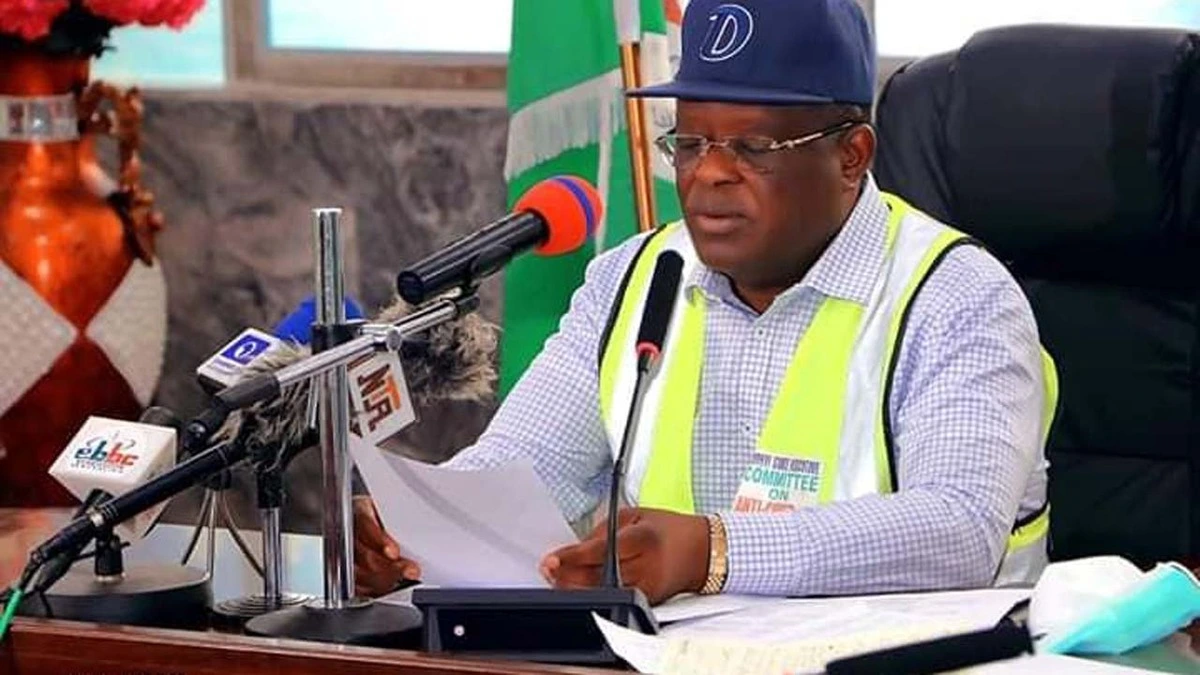
The Federal Government is targeting 2031 for the completion of the Trans-Sahara Superhighway, which is expected to improve connectivity, security, agriculture and commerce across its corridor.
The Minister of Works, David Umahi, disclosed this on Saturday after inspecting ongoing work on Section Two of the highway in Ado Local Government Area of Benue State, according to the News Agency of Nigeria (NAN).
The Trans-Sahara Superhighway comprises multiple sections, with Section One covering about 123 kilometres from Ebonyi to the Ebonyi-Benue boundary, while Section Two spans approximately 173.4 kilometres through Benue, Enugu and adjoining states.
What Umahi is saying
Umahi said the Federal Government expects the ongoing highway projects to be completed by 2031, subject to continuity in their implementation.
- “Minister of Works, Chief David Umahi, says the Trans-Sahara Superhighway will significantly improve security, agriculture and commerce across its corridor,” the NAN report stated.
Umahi said the projects could be completed by 2031, subject to continuity in the administration.
He said the combined length of Sections One and Two would be nearly 300 kilometres and would bring communities closer while improving access between states along the corridor.
He said improved road connectivity would have significant economic implications, particularly for security, agriculture and commerce.
Umahi said the highway would support the movement of agricultural produce from major farming areas in Benue, Ebonyi and Enugu to markets, reducing the difficulties associated with transporting goods across the states.
He also noted that the Federal Government was undertaking additional infrastructure works around the corridor, including the 8.9-kilometre Afikpo bypass in Ebonyi State, which is being dualised.
Funding remains a challenge
Umahi acknowledged that funding remains a major challenge, noting that the government does not have sufficient resources to execute all projects simultaneously.
He said the pace of implementation would therefore depend partly on the resources available to the government.
The minister also appealed to host communities to cooperate with contractors by providing access to borrow pits and facilitating the valuation of crops and properties affected by construction.
He assured affected property owners that compensation would be paid where necessary and commended the contractor handling the project for continuing construction despite the rainy season.
Umahi said the intervention would improve access to communities that previously lacked federal road infrastructure.
Flashback
The Trans-Sahara highway has undergone changes in scope and funding as the Federal Government advanced plans for its construction.
- In August 2025, Umahi said the Ebonyi-Benue section had been revised from 118 kilometres to 221.64 kilometres because of poor soil conditions.
- The revision included two additional bridges, while the contract sum increased from N361 billion to N445.851 billion.
- In June 2025, Umahi asked state governors to provide a 500-metre-wide corridor along four major legacy highways to support tolling infrastructure and improve returns on investment.
The Trans-Sahara Highway was among the four projects listed alongside the Lagos-Calabar Coastal Highway, Abuja-Kano Road and Akwanga-Jos-Bauchi-Gombe Road.
The latest update, however, puts Section One at about 123 kilometres from Ebonyi to the Ebonyi-Benue boundary.
What you should know
The Federal Government has previously sought external financing to support the development of major highway projects, including the Trans-Sahara corridor.
- In 2024, the Works Ministry began negotiations with the African Development Bank (AfDB) to secure funding for key sections of the coastal and Trans-Sahara highways.
- The funding discussions were part of broader efforts to mobilise resources for major transport infrastructure projects amid the government’s limited capacity to finance all projects simultaneously.
The Trans-Sahara Superhighway is expected to strengthen road connectivity between communities and states along its route while supporting the movement of agricultural produce and other goods.
The project therefore remains dependent not only on construction progress but also on sustained funding and continuity in implementation through the targeted 2031 completion date.