Follow Us on Google Discover
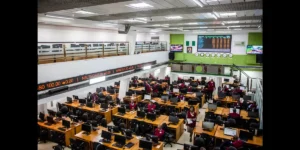
FTSE Russell’s nod that Nigeria will officially reclaim Frontier Market classification from September 21, 2026, is a game-changer for the Nigerian Exchange (NGX), with both Structural and market-based ramifications influencing the restored prognosis.
Here’s how: a step up came after the shift to a T+1 settlement regime from June 1, which caused FTSE to scrutinize possible de-facto pre-funding challenges to international portfolio investors following widespread forex scarcity and the blocking of capital repatriations, which relegated the Nigerian bourse to “Unclassified” in 2023.
Becoming a member of the FTSE Frontier Index Series will necessitate passive global asset managers, international exchange-traded funds (ETFs), and other global financial institutional asset management firms benchmarked on the index’s performance to re-weight their portfolios and invest more in Nigeria as large-cap, liquid stock indices (Tier 1 banks and major industries,) often feature in such benchmarks.
Nigerian Tier 1 Banks
Nigerian banks’ equities had traded at deep discounts to peers in emerging and frontier markets primarily because of a history of currency volatility.
Also Read
Access to international capital markets means that key banks can more readily raise equity capital to shore up balance sheets alongside existing bank recapitalization programs, strengthen capital positions, and scale financing of large corporates and infrastructure projects.
Guaranty Trust Holding Co (GTCO), Zenith Bank, Access Holdings, UBA, and Stanbic IBTC. These are your primary beta drivers for the foreign capital, so the announcement brought back the aggressive buying pressure with some intensity.
Technical analysts will watch for the: 20- and 50-day DMA price action has re-entered the previous support regions that had been acting as resistance during the mid-year consolidation, and the price action needs a high-volume break to test multi-month horizontal resistance ceilings.
Industrial and consumer goods
Industrial and consumer heavyweights targeted stocks include Dangote Cement, BUA Cement, and Nestle Nigeria.
- The stocks have high capitalization and are dominant weightings of the index tracking products, which means the largest segment of passive foreign portfolio investments, or foreign portfolio investments, finds its expression within these high market value stocks.
- They are showing bullish MACD Crossovers on the latest daily chart with increasing institutional build-up.
- MTN Nigeria, one of NGX’s highest market capitalization names, may also see considerable passive inflows as funds adjust portfolios to FTSE Frontier exposures.
The business, telecommunications, has enormous capital demands (needed for growth); however, any easing of broader macro pressures (stable exchange rate below N1,400/$, easing of inflationary pressures, better liquidity) should ease considerable balance sheet pressures (FC revaluation losses) that have impacted profits.
Nestle Nigeria, as an MNE subsidiary with enormous dependence on FX imports and offshore payment commitments, has been uniquely disadvantaged by both the core FX illiquidity issues and currency devaluations in that crucial episode.
FX backlogs formal settlement, and normal FX flow under T+1 now signal to foreign parents and foreign institutional investors that money does not move in unpredictable spurts, enabling a more coherent basis for planning operations, paying dividends, and foreign investors’ turnaround into consumer goods blue-chip.
It signals to international audiences that Nigeria’s capital markets infrastructure has gotten more credible. For the likes of Nestle Nigeria, MTN, and Nigeria’s biggest lenders, this means improved trading volumes, less friction for institutional funds, and a cleaner path to durable long-term growth.