Follow Us on Google Discover
The Economic Community of West African States (ECOWAS) says West Africa remains the most stable of Africa’s regional economic blocs despite the growing threat posed by terrorism and violent extremism.
ECOWAS Commissioner for Political Affairs, Peace and Security, Amb. Abdel-Fatau Musah, made this known in an interview with the News Agency of Nigeria (NAN).
He said the sub-region had faced an “existential threat” from terrorism but had avoided disintegration because of preventive mechanisms established by regional leaders.
Musah highlighted ECOWAS’ peace and security architecture, early-warning systems and counterterrorism initiatives as key factors behind the region’s resilience.
Also Read
What ECOWAS is saying
Musah argued that the absence of an active interstate war distinguishes West Africa from several other parts of the continent.
- “If you see the sub-region, in spite of terrorism, West Africa today is the most stable region among all the regions in Africa,” he said.
He stated that ECOWAS has leveraged the African Peace and Security Architecture (APSA IV) and the Africa Governance Architecture as the foundation for its conflict-prevention and peacebuilding efforts.
Musah said the framework supported the implementation of ECOWAS’ Protocol on the Mechanism for Conflict Prevention, Management, Resolution, Peacekeeping and Security, adopted in 1999.
- “In our collaboration with the African Union, these two fundamental documents are the base documents through which we implemented our sub-regional mechanisms, particularly the ECOWAS Protocol on the Mechanism for Conflict Prevention, Management, Resolution, Peacekeeping and Security, which was adopted in 1999,” he said.
Musah identified the ECOWAS early-warning system as one of the most significant beneficiaries of the framework, saying it has helped the bloc detect and defuse tensions before they escalate into violence.
- “This resource has been very important in trying to make sure that we sort of defuse tensions before they blow up into crisis in the region,” he said.
He added that the centres of excellence were also conducting research into emerging threats, including the impact of misinformation and disinformation on peace and security.
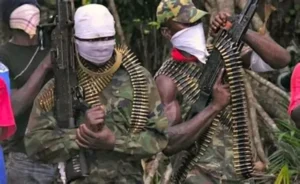
Musah said violent extremism and terrorism had emerged as the biggest security threat to West Africa, warning that prolonged instability could undermine the region’s integration agenda.
He attributed the spread of extremism partly to wider global fragmentation but stressed that the threat was not peculiar to West Africa.
According to him, ECOWAS recognised early that terrorism posed a direct threat to its regional integration ambitions.
- “If terrorism was allowed to fester, then we should forget about regional integration,” he said.
As part of its response, ECOWAS has moved to establish a Counterterrorism Brigade of about 1,500 personnel under the ECOWAS Standby Force framework.
He cited conflicts in Sudan, South Sudan, Libya and the Democratic Republic of Congo as examples of serious crises affecting other parts of Africa.
Get up to speed
Nigeria has been battling a 17-year Islamist insurgency led by Boko Haram and its splinter group, the Islamic State West Africa Province (ISWAP).
- In December, Nairametrics reported that ECOWAS declared a state of emergency across West Africa following a rise in military coups and attempted power seizures, underscoring the political pressures confronting the bloc.
- The security situation has also had direct consequences for education and civilian life. In Nigeria, armed men attacked three schools in the Ahoro Esiele/Esiele and Yawota communities of Oriire Local Government Area on May 15, 2026, abducting students and teachers.
Save the Children International has estimated that at least 1,683 learners were abducted across Nigeria between 2014 and 2022, while UNICEF reported that insecurity forced 11,536 schools to close during the 2020/2021 academic session, disrupting learning for about 1.3 million children.
What you should know
In February, the United States deployed a small team of troops to Nigeria following Christmas Day airstrikes, marking the first public confirmation of a U.S. military presence on Nigerian soil since the operation.
Nairametrics reports that prior to the Christmas Day airstrikes, the United States had increased intelligence activity around Nigeria.
U.S. surveillance flights were conducted over Nigeria from neighboring Ghana from at least late November.