
 Follow Us on Google Discover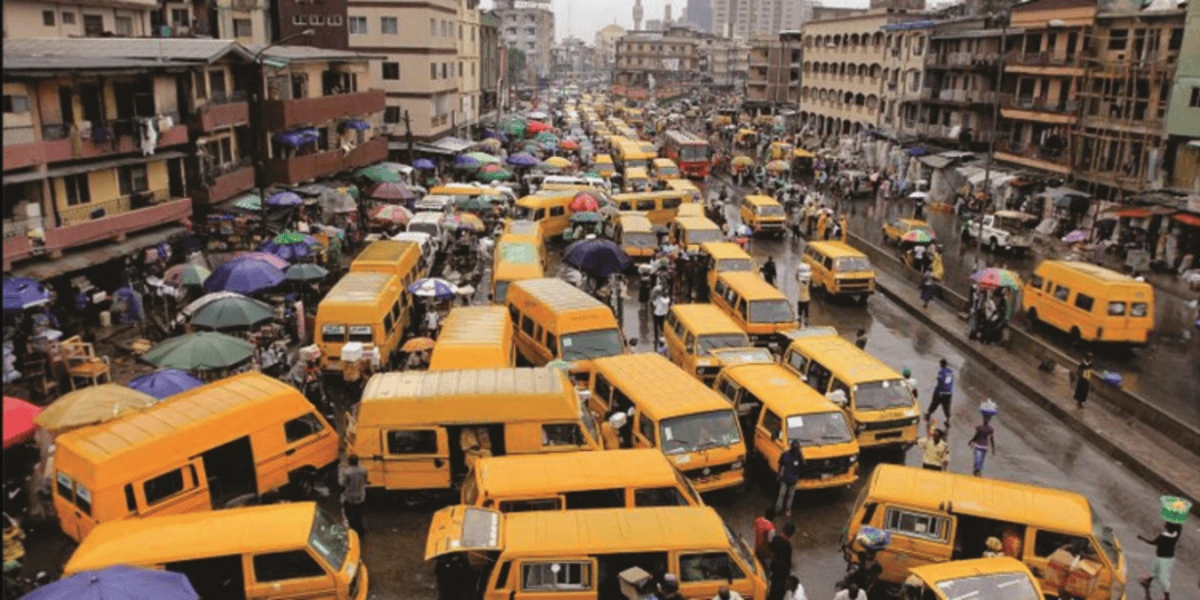
For many Lagos commuters, using an informal bus means standing by the roadside, negotiating fares with conductors and hoping to find a vehicle that is not overcrowded or poorly maintained.
The experience can vary from one trip to another, from waiting times and fares to safety and reliability.
Lagos now wants to change this through its Bus Industry Transition Programme (BITP), which seeks to move informal commercial bus operators, including danfo operators, into a regulated franchise system similar in some respects to the structured model used by BRT.
But beyond designated stops, regulated fares and digital payments, the bigger question is whether the reform can provide enough buses, improve service reliability, protect affordability and integrate with Lagos’ wider transport network.
Nairametrics sought insights from an independent transport researcher, a University of Lagos Associate Professor of Transport Planning and Logistics, and a geospatial technologist specialising in road and marine transport.
What they are saying
The experts shared their perspectives with Nairametrics on the proposed transition, highlighting the importance of regulation, planning and understanding commuter demand.
Tonami Playman, an independent transport researcher specialising in African transit systems, said moving informal operators into a franchise system does not by itself guarantee better service.
- “The biggest risks a city faces in converting informal buses to formal bus service is designing the right framework. Going to a franchise system does not guarantee better service,” Playman said.
Dr Olayinka Agunloye, Associate Professor of Transport Planning and Logistics in the Department of Urban and Regional Planning at the University of Lagos (UNILAG), said the reform could address longstanding problems around safety, security, payment systems and driver behaviour.
- “The reform will address the problems of safety and security; multiple payment points; disturbing driver’s attitude; limited operators income among others,” Agunloye said.
Tosin Adefeso, a geospatial technologist at Global Geospatial Services Ltd. specialising in road and marine transport in Lagos, said effective planning would also be critical, particularly as passenger demand continues to grow across the state.
- “Lagos really needs to understand that spatial distribution of passenger demands has really increased, as a result of population density issues as well as rural-urban migration,” Adefeso said.
He said updated land-use mapping across Lagos’ five divisions would help identify appropriate routing corridors and better match transport supply with commuter demand.
How Lagos plans to formalise danfo operations
The Lagos State Government is seeking to bring informal commercial bus operators, including danfo operators, into a regulated franchise system under the Bus Industry Transition Programme (BITP).
- The programme is being implemented by the Lagos Metropolitan Area Transport Authority (LAMATA), with the state government, the Nigeria Union of Road Transport Workers (NURTW) and the Road Transport Employers Association of Nigeria (RTEAN) signing an MoU to guide the transition.
- Under the proposed model, transport unions will adopt a cooperative structure to help transition their members into franchise operators, while LAMATA will retain regulatory oversight of bus operations.
- Fare collection is also expected to move to a fully digital system, replacing the cash-based transactions that characterise much of the informal bus sector.
LAMATA said the framework will initially cover the state’s eight Quality Bus Corridors, with four currently under construction: Iju Ishaga–Abule Egba, Ketu–Alapere–Akanimodo, Iyana Iba–Igando–Iyana Ipaja and Ojuelegba–Lawanson–Cele.
The rollout will begin on selected corridors before expanding across the state.
The agreement follows more than 30 months of engagement between the state government, LAMATA and the transport unions, according to the transport authority.
The approach marks a shift from earlier corridor-specific attempts to regulate informal transport, including reforms on the Lekki-Epe corridor, towards a broader model that seeks to bring existing operators into the formal public transport system rather than simply restrict their operations.
Why formalisation alone may not improve service
While the BITP is designed to bring greater structure to Lagos’ informal bus sector, experts say the success of the model will depend on how the new franchise arrangements are designed and enforced.
Playman said Lagos must avoid assuming that changing the operating structure will automatically improve the quality of public transport.
He pointed to the need for clear agreements between the government and franchise operators, with measurable service standards and consequences for operators that fail to meet them.
- “A concise and clear agreement between Lagos and the franchise operators on service quality with proper incentives for exceeding the targets and disincentives for not meeting them is necessary,” he said.
Playman also warned against a system in which operators can disrupt services without effective consequences, arguing that the framework must protect commuters from being held hostage by franchise operators.
For Agunloye, the reform presents an opportunity to address some of the weaknesses associated with informal transport, but its effectiveness will depend on proper planning before implementation.
He said Lagos should conduct detailed transport and traffic surveys covering issues such as vehicle shortages, maintenance and scheduling to determine what changes are required across the existing network.
The implication is that the transition cannot be measured simply by how many danfo operators are brought into the franchise system. Its real test will be whether commuters experience shorter waiting times, safer vehicles, more predictable fares and more reliable services.
Can Lagos get the numbers right?
Beyond regulation, the scale of the proposed system will determine whether commuters actually see an improvement in service. A franchise network may have defined routes and digital payments, but still leave passengers waiting if there are not enough buses to meet demand.
Playman said Lagos should focus on building a sufficiently large fleet and redesigning routes to improve frequency and fleet utilisation. He estimates that the state would need about 15,000 to 20,000 high-capacity buses, with individual buses capable of carrying roughly 80 to 150 passengers.
- “Route allocation and service frequency should be determined by diligently studying traffic demand corridors and figuring out the most efficient way to integrate the bus routes into the larger transport network of the metro area,” he said.
Adefeso also said the state needs better data on where people live, work and travel before determining the number of buses required on each corridor.
He said an integrated geographic information system covering Lagos’ five divisions could help map passenger movement and identify the transport assets required across different parts of the state.
This is particularly important during peak periods, when demand is concentrated on major commuter corridors and the number of buses required can increase significantly.
Adefeso said the state should also consider population density, accessibility and traffic congestion when deciding which corridors should receive priority under the programme.
For Agunloye, the starting point should be establishing the existing demand before the new system is deployed.
- He said the number and frequency of buses required on each corridor should be determined through “appropriate surveys of status quo before commencement.”
The challenge for Lagos, therefore, is not simply putting more buses on the road, but ensuring that the fleet, routes and service frequency correspond with where and when commuters actually need them.
What commuters expect from the reform
For commuters, the debate over formalising Lagos’ informal bus sector ultimately comes down to what changes they experience on their daily journeys.
Emmanuel Azubuike, a Lagos resident and regular commuter, said his experience with danfo buses has been largely negative, citing conductors, vehicle conditions and unpredictable fares among his biggest concerns.
- “I honestly dread entering danfos buses in Lagos,” Azubuike said, adding that safety and driver behaviour are his biggest concerns.
He said he has waited for more than an hour for buses on his regular route, while fares can also change depending on the weather.
For Ahmed Muhammed, who regularly uses both danfo and BRT services, the contrast is clearer. He said BRT offers greater comfort, safety and reliability, although waiting times can be longer during peak periods because of high passenger demand.
- “The waiting time is much more than the Danfos, BRT is more reliable because payment of fares is digitalized, comfortability and safety of BRT is unmatched,” Muhammed said.
He said the proposed reform would be welcome but identified the availability of buses as an area requiring attention.
- “More buses should be provided,” he said.
The two commuters also highlighted a key test for the BITP. While formalisation could address concerns around safety, vehicle condition, payment and driver behaviour, the new system will still need to provide enough buses to prevent longer queues and waiting times.
For Azubuike, affordability is equally important. He wants the reform to improve commuter safety and wellbeing without allowing fares to become unpredictable or unaffordable.
What could make or break the franchise system?
Experts say the success of the Bus Industry Transition Programme will ultimately depend on how well the new franchise network fits into Lagos’ wider transport system and how consistently its operators are monitored.
- Agunloye said the franchise buses should not operate as a separate network but be integrated with existing transport modes, including BRT, rail and waterways.
He recommended an intermodal transport master plan to guide the integration and ensure that different modes complement one another rather than compete for the same passengers.
- Adefeso also stressed the need for a coordinated transport system, supported by accurate population, land-use and movement data.
He said BRT could continue to serve major trunk routes, while smaller buses could provide connections along state and local roads and into communities that larger buses cannot easily reach.
Another challenge is ensuring that commercial considerations do not leave less profitable areas without adequate public transport.
Adefeso said government may need to provide incentives for operators serving areas where passenger demand is lower but transport coverage remains necessary.
- Playman, however, said the regulator must establish clear service obligations and enforce them consistently. He said operators should face penalties for failing to meet agreed service frequencies, while the system should also provide incentives for good performance.
Ultimately, the experts’ views suggest that the success of BITP will be determined not simply by how many informal operators are formalised, but by whether Lagos can build a system that is adequately planned, financially sustainable, properly integrated and accountable to commuters.
What you should know
Nairametrics had earlier reported that Lagos needs at least 15,000 regulated public transit buses to operate optimally, according to LAMATA Managing Director, Abimbola Akinajo.
- LAMATA said at the time that its operational fleet stood at just over 1,000 buses, with the shortage contributing to overcrowding and long waiting times at stations across the state.
- The transport authority also said it was working with private sector partners to expand the fleet, including plans for 500 CNG buses and 50 electric vehicles.
- The figure is broadly in line with the 15,000 to 20,000 high-capacity buses estimated by independent transport researcher Tonami Playman as the scale Lagos would need for an effective bus network.
Playman’s estimate, however, goes beyond simply increasing the number of buses. He argued that fleet expansion needs to be accompanied by route redesign and proper allocation of buses to improve service frequency and utilisation, particularly as buses would need to complement Lagos’ rail and other mass transit systems.



Presently transport in Lagos is chaotic and devoid of easy joining and disembarking moreover the attitude of drivers conductors is nothing to write home about this informal transporters have the wrong that they are doing the commuters certain favour resulting in a bad outward disposition to commuters and hiking of cost of transport at random especially during peak.period and festival period.lt is unideal for mega city like Lagos state. If all these hiccups could be tenaciously Lagos will be a better place to live in