Follow Us on Google Discover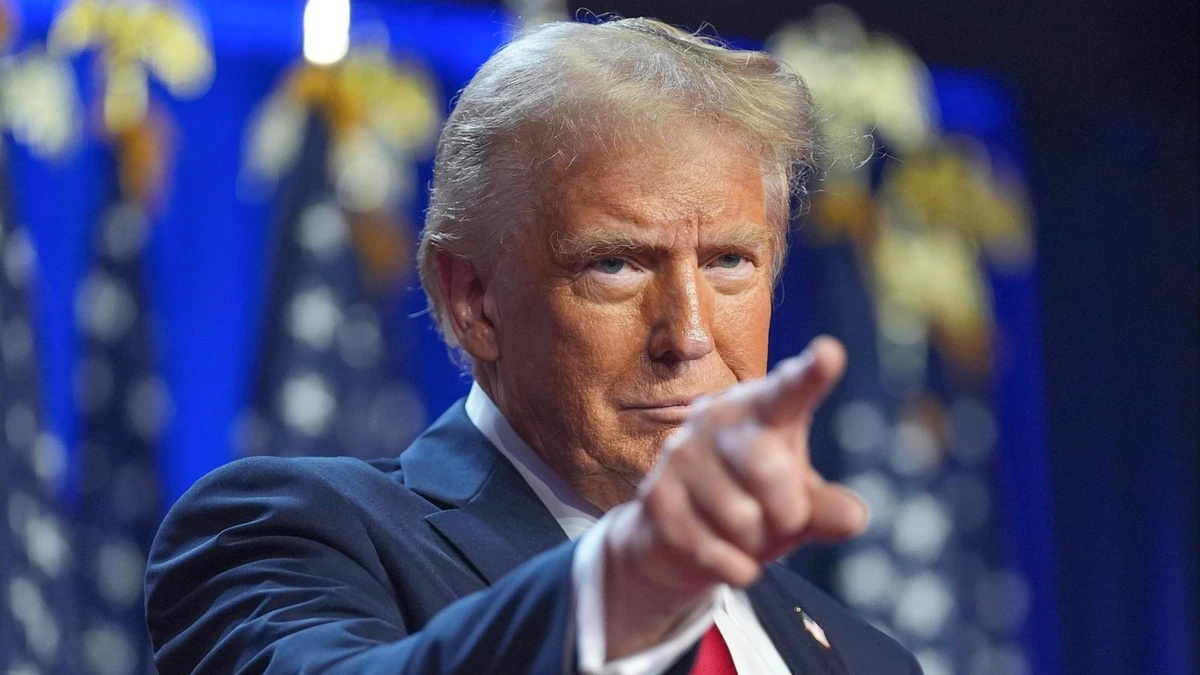
US President Donald Trump has declared what he described as “economic warfare” against Iran, warning countries, businesses and financial institutions that provide Tehran with an economic lifeline that they will face severe consequences from Washington.
Trump made the announcement on August 20, 2026, in a post on Truth Social, his social media platform, as the nearly seven-month-old war between the United States, Israel and Iran continues to disrupt energy markets and deepen economic pressure across the Middle East.
The latest escalation in Washington’s economic pressure comes after months of fighting in which Iran has continued to inflict damage on US military assets and bases and attack US allies across the Middle East.
What Trump is saying
Reiterating his usual claim that Iran’s military capabilities have been severely degraded, Trump said Iran’s “navy is gone,” its “air force is destroyed” and its “military factories are now rubble.”
- He then announced what he described as the “MOST CRUSHING ECONOMIC OPERATION EVER TAKEN AGAINST ANY COUNTRY”, saying the new campaign would amount to economic warfare and isolation of Iran “on an unprecedented scale.”
Trump warned that Washington would extend the pressure beyond Iran to countries and entities that continue to provide economic support to Tehran.
- “Today, I am also announcing that ANY country that allows its financial institutions, businesses, airports, or government entities to provide any type of lifeline to Iran will itself face TREMENDOUS Economic Consequences,” he said.
He specifically identified oil smuggling, financial swap arrangements, cash transfers, exchange houses, ship registries and front companies as activities that Washington wants stopped.
- “Oil smuggling, swap lines, cash transfers, exchange houses, ship registries, front companies — It all needs to stop NOW. You know who you are,” Trump said.
He also called on US allies to support the economic isolation of Iran, describing the campaign as an “ECONOMIC D-DAY”.
- “This will be an ECONOMIC D-DAY, and we need all of our Allies to stand with the United States of America to isolate, and defeat, the Iran threat,” Trump said.
Get up to speed
The current conflict began on February 28, when the United States and Israel launched a major military operation against Iran. The strikes killed Iran’s Supreme Leader, Ayatollah Ali Khamenei, along with several senior military and security officials.
- Iran responded with missile and drone attacks against Israel, US military facilities and several Gulf states, turning the conflict into a wider regional war and placing the Middle East’s energy infrastructure and shipping routes under pressure.
- One of the most significant economic consequences has been the disruption around the Strait of Hormuz, a critical oil shipping chokepoint between Iran and Oman.
- Iran has repeatedly used control over the strait as leverage during the conflict, while the United States has sought to keep the route open. The uncertainty has sharply affected global oil markets, with shipping volumes falling and traders pricing in the risk of prolonged supply disruptions.
There have been several attempts to halt the fighting. In June, Washington and Tehran reached an interim agreement aimed at ending military operations and creating a 60-day window for negotiations towards a broader deal, including commitments relating to Iran’s nuclear programme.
The agreement ultimately failed to produce a lasting settlement, with fighting resuming and the diplomatic window expiring without a final deal. Trump has continued to insist that Iran must not acquire a nuclear weapon.
What you should know
Trump’s announcement of the new economic offensive did not trigger an immediate dramatic jump in crude prices, as checks by Nairametrics showed.
- As of August 20, Brent crude was trading around $91.87 per barrel, while the more active October WTI contract was around $84.53 per barrel.
- However, the seven-month conflict has fed through to Nigeria’s domestic economy, particularly through fuel and transportation costs.
- Before the war began, petrol was selling at roughly N800–N900 per litre, but prices rose to N1,300 and above as the conflict pushed global crude prices higher.
The increase raised transportation costs and increased the cost of moving goods across the country, with food particularly exposed because a large share of agricultural produce is transported by road using petrol- and diesel-powered vehicles.
- The latest inflation data from the National Bureau of Statistics showed that Nigeria’s food inflation rate rose to 20.31% year-on-year in July 2026, while headline inflation declined to 15.43% from 15.91% in June.
While the July food inflation figure cannot be attributed solely to the Iran conflict, the prolonged disruption to global energy markets adds pressure to transportation, logistics and other costs that feed into food prices.