Follow Us on Google Discover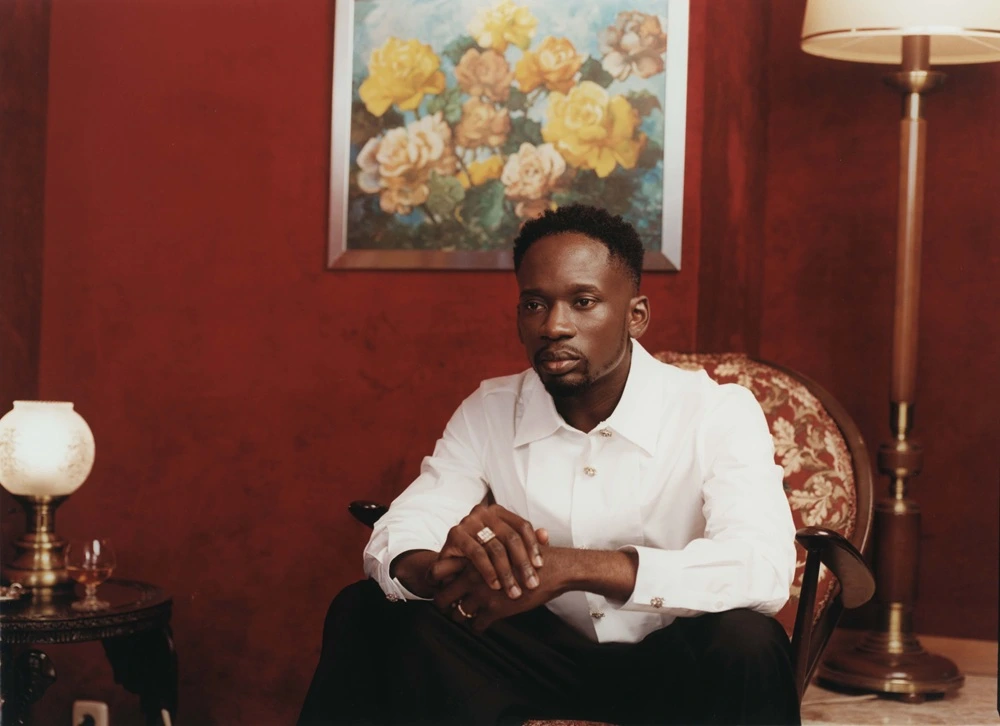
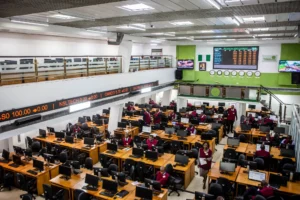
The Nigerian Exchange, NGX, is having a breakout year. In 2026, it has become one of the best-performing stock markets globally, thanks to strong capital gains and impressive year-to-date returns.
Both foreign and local investors are now piling into Nigerian equities. The numbers tell the story.
The total market capitalization of listed companies has surged by over 430% in the last three years — from about N30 trillion in 2023 to N160 trillion in 2026.
NGX projects it could hit N230 trillion before the year runs out.
A big driver of that growth is the wave of new listings expected before December.
The headline act is Dangote Petroleum Refinery & Petrochemicals, targeting a $5 billion IPO, with plans to complete it by October 2026.
Recently, the NGX called on President Bola Tinubu to introduce policies that would compel major fintech and e-commerce firms to list locally, so Nigerians can directly benefit from their growth.
One founder is already paying attention. That’s Mr Eazi — Oluwatosin Oluwole Ajibade — the musician turned entrepreneur and founder of emPawa Africa, a talent incubator backing emerging African artists.
In this interview with Nairametrics, Mr Eazi talks about his growing interest in Nigeria’s capital market. He cites business moguls like Abdul Samad Rabiu, Aliko Dangote, and Femi Otedola as inspiration, and shares his plans to “go big” on the NGX.
Nairametrics: Many of your companies solve infrastructure problems, which missing piece of African infrastructure do you think needs to be solved next?
Mr Eazi: That’s a very big question. I’m not sounding like a know-it-all. But if I bring it down to my sector, don’t forget I’m a musician; I think there’s still a lot to be built in the sense of like, if I look at when I started my career as an artist, building my career, it wasn’t the arenas.
It wasn’t the 10,000 arenas. I can count the number of times I’ve played 10,000 plus arenas. But the lifeblood and what brought me to global notoriety were these small venues.
These venues that range from 250, 350, 750, 1,000 capacity. And these venues are sort of like missing from the music industry. And that is the reason why a lot of artists might not be able to do proper shows until December.
And how many people can do Eko Hotel? And one thing about Nigeria is that we will always find solutions. And we’re seeing that with people having makeshift venues for raves and all of that.
But I think there’s still the opportunity to build smaller mid-sized venues across Nigeria, where artists can tour internally in Nigeria. And where artists that are from outside – say you have a big artist from Ivory Coast or Benin or Ghana or Tanzania – they can then come and do that 500-capacity music venue. We also have the opportunity to build proper sound stages where we can create our shows in. We can shoot our music videos in proper sound stages that have the simple things – changing room, lights, proper security, proper rigging. So there’s still the opportunity for that physical infrastructure in terms of spaces. And I’m hoping we see people invest in that, not just the big headline ones, but the smaller ones that are really the lifeblood of the industry.
Nairametrics: There has been a call for big tech companies, the unicorns, to list on the Nigerian Stock Exchange. Do you share the same sentiment? And are you looking forward to listing Choplife on the NGX anytime soon?
Mr Eazi: I mean, the answer would always be yes. Why not?
But there’s always a sequence. I do believe that some of our elders have shown us what it is to not just build in Nigeria, but build global companies in Nigeria and list them on the local exchange and invite Nigerians to invest, partake in the company they help build and get the benefits of the companies.
And I’ve already been investing in the Nigerian Stock Exchange. I’ve seen the benefits; I have been an investor, and as an investor I’ve also seen the level of organization behind those companies and regulation. And I think it will be beautiful to one day be like my egbons. The likes of Abdul Samad Rabiu, Alhaji Aliko Dangote, Mr Femi Otedola and the likes and list, not just your normal brick-and-mortar businesses, but also in this new world.
The new brick and mortar is also the rails we are building in technology and in IP. And it will be beautiful to be able to do that. And I think I’m just at the beginning of that process.
I’m back home. I’ve done business across Africa. So I sort of have an African view, first, which usually starts in Nigeria and then goes across Africa. But now we’ve done it the other way around. And we’re now back home. And it would be a pleasure to do that when the time is right. It will be a pleasure to list a technology company on the NGX.
Nairametrics: You are invested in the fintech firm, pawaPay. How has being an operator at pawaPay changed the way you evaluate and support founders, especially through Zagadat Capital?
Mr Eazi: I think I’ve always been an operator. I’ve always loved being in the trenches part. And it’s almost like every time I’m out of the trenches, I sort of like have FOMO, and I want to go back. And now I’m not just an investor in pawaPay; I also sit on the board of pawaPay.
So, I’m not as in the trenches as I was in the beginning. But it makes you believe in opportunities, in the Nigerian opportunity, in the Ghanaian opportunity, in the Malian opportunity, in the Ugandan opportunity. Because, you see, every day new businesses are being built, new problems are being identified, and there are founders that are solving those problems.
And it’s made me even appreciate more the founders that are not obsessed with vanity metrics, but are actually obsessed with building actual products, not just chasing top-line metrics to play that game. And whilst I appreciate that game, I think being on the operational side and interacting with businesses who want to use pawaPay, I’ve been more appreciative of these businesses and founders trying to actually build businesses because I’m actually meeting real founders and inspired by these real founders wanting to do business properly. And I wouldn’t have seen this if I wasn’t sort of like directly or indirectly interacting with them via some of the businesses we’ve invested in.
Nairametrics: You operate businesses across dozens of African countries, what are the biggest operational challenges to scaling a brand across different regulatory ecosystems?
Mr Eazi: We can’t overemphasize the fact that – I mean, some countries are doing this licensed passporting in sandbox stages. Some are doing this in advanced stages. But you’re having where there is really no single market, and then you need to do the same process over and again.
I can count how many times some of the businesses I’m involved in, we have to go through the process from scratch every time. In just going from Nigeria to Benin, which I can drive in just one hour from Lagos on a Sunday. Or if I go by boat from VI, in two hours, I have entered Porto-Novo. But if I want to do my tech business in both countries, it’s an entirely different process, and I have to do it every time.
And sometimes you’re not able to take advantage of an opportunity because the lead time may have passed. Maybe it takes two years to process your papers, and by that time the opportunity you saw is gone and vice versa for the entrepreneur who wants to do the same from the Republic of Benin to Nigeria.
And so that’s why I’m really passionate about this APN, African Prosperity Network and their move for one Africa, not in the sense of like no borders, but in the sense of jurisdictions speaking to each other. And I’m hopeful that that problem will be resolved. I don’t think people want it to happen. I understand when you’re building your house, you want to build your house before you start looking at your neighbours.
So it’s not like the leaders are not smart enough, but perhaps there needs to be more communication, the same way the entrepreneurs are beginning to communicate.
Back in the day, if we go as far as five years ago, the guy building in Benin was not talking to the guy building in Badagry. And the guy that was building in Accra was not talking to the guy building in Kampala. But we are only now starting to see that happen. And so it’s beautiful that we’re now seeing the government also start to do that. And I think that’s the future of Africa, where founders are speaking to each other across jurisdictions, governments are speaking to each other on licensing. And I think that would help everybody. It will save everybody time; it will save everybody effort. And we can connect; we can have our own Silk Road, technological infrastructural Silk Road, even if we just start from our neighbour, Benin.
Nairametrics: It’s mentioned that ChopLife sits at the intersection of entertainment, media, technology, gaming, and IP; I want to know how those pieces come together in the business.
Mr Eazi: Since 2021, we started as a music company via emPawa Africa. And then as that progressed to the broader line of entertainment, which has gone to events with Detty Rave. So, we not only started creating music IP, but also events IP.
Like Detty Rave, which is in its eighth year of operations and going into gaming in 2019, just about when it was time to be COVID. And growing that from buying, leasing IP for the first brand we operate, which is betPawa, to also creating our own brand with Chopwin, our own technology. And doing that across the broader line of entertainment. And now we’ve even gone to sports with 1v1 Africa.
So, it’s now sort of like the creation of entertainment. It kind of helps us to scale. Like if you’re selling things across the continent, you know, people need to be able to pay.
And that has affected our investment thesis. And the core of Choplife, from the name, is Choplife, as everybody will know. It means enjoying life.
And for us, it’s like enjoying life more intentionally. So, there’s an intentionality that comes with it. And if you look everywhere, we’re touching. If you want to enjoy life, if you think of things that make you enjoy life, you will think of, you know, music. You think of the film. You think of in-person events. And all of these are powered by technology.
You can’t do all of these without paying. So, I think that’s how everything sort of like connects. And the vision sort of came after going to Harvard Business School’s Business of Entertainment, Media, and Sports (BEMS) training somewhere, I think, in 2022 or 2023.
And having that vision to sort of like bring everything into one engine that meets the inspiration for what we’re doing. So that’s how everything connects. We’re not just creating tech IP. We’re creating digital gaming technology, media and in real life, IP.
Nairametrics: So, I want to know why moving into Itana was the next step for Choplife.
Mr Eazi: There’s been different phases of our operation.
First, like having sort of like all these different disconnected engines. And, you know, for me, starting as an entrepreneur, then falling into music, then, you know, having that sort of like five years of music and then having to have a crash course in setting up businesses. I think something I’ve gained is being very close to seasoned founders.
And, you know, you don’t have to necessarily make the mistakes everybody has made or go through the journey everybody has made. I have the opportunity to be able to leverage what has happened before me in this space. And, you know, you had people; you used to have people setting up in offshore jurisdictions, places like Delaware, London.
But for us, like, coming to Itana was a logical step, you know, in the sense that we then have this sort of like centralized, sovereign, you know, that’s digital-first operational hub that is very important to us directly on the continent. Because if you look at everything we do, we do maybe like 90%, 99% of everything we create is on the continent. And it is consumed not just across, you know, 54 African countries, but to the world.
A lot of people say, oh, you know, there’s the risk. You know, we keep on hearing this thing about the Africa risk or the Nigeria risk. And that’s why you have to go outside, far away.
But having had the advantage of having a global career. I do realize that there is also the global risk that nobody tells you about. And, you know, when I look at what Itana is building, I think it is building on everything.
And the founders that are part of Itana and the spirit behind it is, you know, building from everything. They’ve worked the work. Some of the founders, some of the partners have done things the old way and are bringing all those learnings here.
So it’s an opportunity for us to leverage and centralize our operations. And very important to us that it’s on the continent.
Nairametrics: So, I’m also sure Itana creates a business-friendly regulatory environment. I’m curious about the specific regulations or approvals or admin processes that make it easier for Choplife to operate while it’s moved into Itana.
Mr Eazi: In setting up businesses across the world, one of the things that always attracts you to a jurisdiction is like the amount of administrative friction it takes to even start your business. And then, you know, from administrative friction, I’m not just talking about, oh, go on a website and open a business. But, you know, when it goes to KYC, when it goes to not just KYC on you, KYC on your business, from the setup to banking.
But Itana is able to- and still building, I believe- it still keeps from the time we set up to now; there are updates, and it’s pointed to us as sort of like the ideal place to help us solve, you know, one of the issues around capital lockup, cross-border capital friction. We’re a business that, you know, we have to operate with our accounts; we have to move money from different jurisdictions, and we are very digital-based.
And after all the research we’ve done, it is available to us as the most ideal, you know; we don’t have to now start dealing with a lot of conflicting local banking or foreign exchange restrictions or different levels of taxes and corporate rules, changing corporate rules at different times, but we can do all of that through this single digital regulatory hub.
And it is important for us that it is backed by NEPZA. So there’s a predictable tax framework, digitized base from where we can license. There’s talk of license passporting in the future, and having, not just on the continent, but having a zone that is actually actively engaging with these local jurisdictions we’re working with. And I think there’s this move right now of different jurisdictions on the continent speaking to each other, and I think Itana is positioned well to take advantage of that.
Nairametrics: Now that you are at Itana, what do you see as your first project in Itana?
Mr Eazi: I mean, there are already projects that have already started, and that’s the beauty of working with the digital-first zone. I’m always proud to say, a lot of times I’ve sort of like invested in and worked with businesses. And you have the situation where the engineers are from the UK or Eastern Europe or India. But now it’s different, and you know, I’ve been so close to some of the founders like Iyin Aboyeji, Gbenga Agboola, Shola Akinlade. And actually seeing that there is this story that is not told enough of the amount of the quality of Nigerian engineers building technology, global-standard technology for Africa with the local sort of like nuances.
And that story is not told a lot. Perhaps if that story is told, dem go dey rush us like hot noodles. So we already have over 21 engineers working out of Nigeria and building locally. And to answer your question, operations already started; we already have local engineers working.
The last time I visited the town, I was speaking about having this campus where we can have everybody having access to our campus. I went to this Facebook campus a long time ago and just saw the energy where like-minded young people are working together, and I’m not talking about living there 24/7. Of course, you have the opportunity to do that, but being able to come in and out and feed into that energy is very big on energy. I think that is the next one.
Aside from that, we don’t just build technology IP; we also build the real media IP. So I think it will be fun for us to start investing in our space there, from where we can start creating content, both film content, media content from Itana and having this sort of like creative. And when I mean creative, creative is technology, it’s entrepreneurship, it’s media, it’s entertainment.
Nairametrics: Mr. Eazi is big today; your business is very big. However, you did not just jump to where you are today; you started from somewhere. And you must have faced some challenges. What are the biggest challenges fintech founders face today? And from your experience, what would you recommend to those startup founders?
Mr Eazi: I think a lot of it is you guys, I’m going to put it back on you guys in the sense that one of the challenges founders face is reputational challenge, because it almost seems like when you’re looking into Africa, you’re only hearing a lot of the bad news, but we cannot overemphasize speaking of our little wins, no matter how little.
And that is a responsibility for you guys. Because sometimes reputational risk is the issue. It’s like they’ve already labelled us. So, a guy who wants to raise money for his business in Nigeria, it’s so hard, but all of a sudden, if he sets up that business in Delaware, it’s a different conversation, because now it’s a Delaware company.
Nairametrics: So looking ahead 10 years from now, what do you want Choplife and your portfolio of companies to be remembered for, especially in Africa’s creative and tech economy?
Mr Eazi: To be honest, I’m not thinking about 10 years; I’m not thinking about the past.
I’m not thinking about the future; I’m thinking about now, because I feel like now is what we have; that’s what we’re sure of. And so in what I’m focused on now is, staying to the ethos of the company, and the ethos of the company is to build an African company, just like those who have gone before me have done, to build a Pan African company that in, in its operation, in its registration, in its composition, is truly African from top to bottom, but also world class, and doing it at the highest form of integrity, so that I can leverage on what others did before me, people that come after me will be able to leverage from it, because every other thing will pass away. But these values will remain.