Follow Us on Google Discover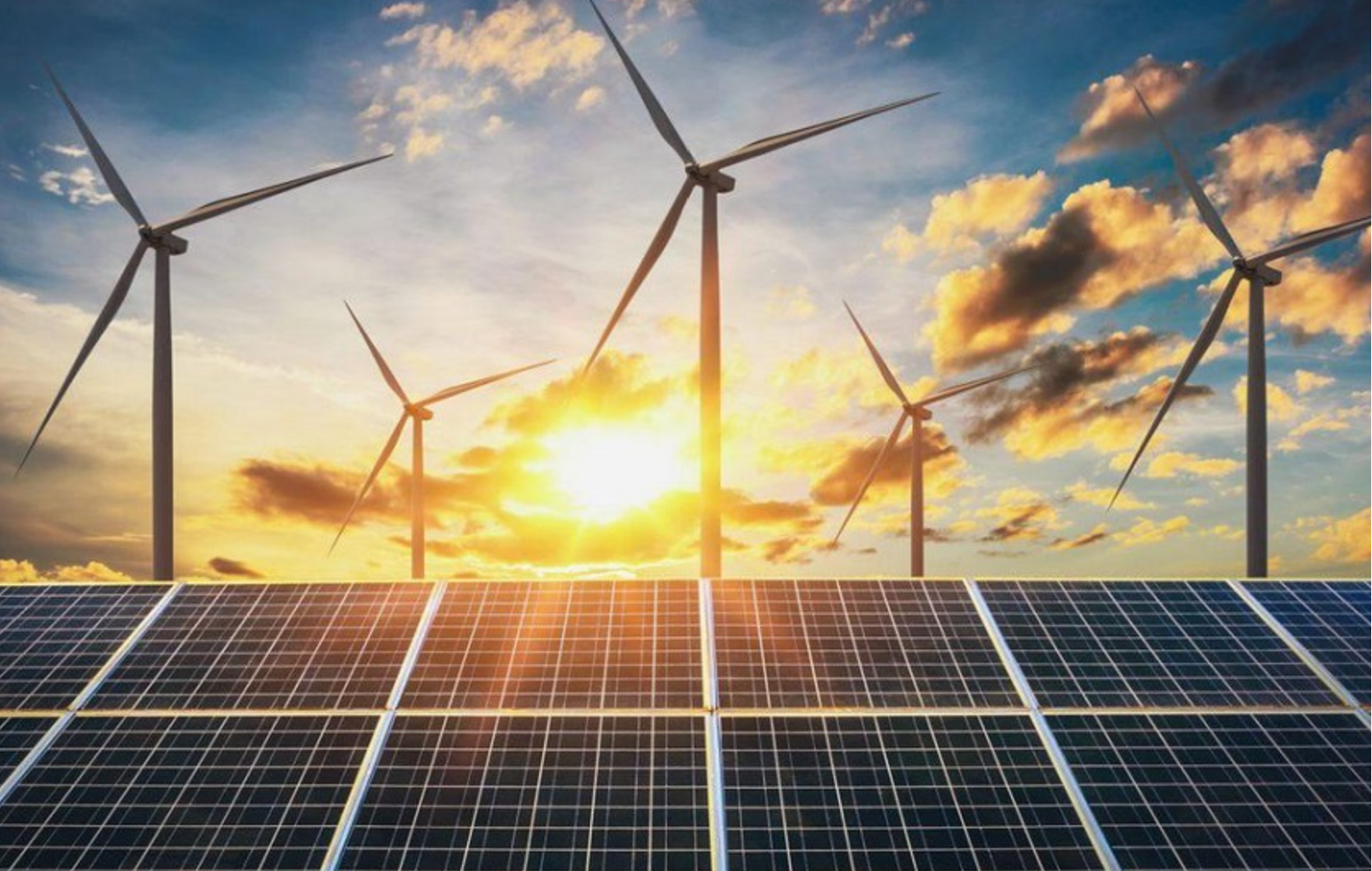
For more than a decade, Nigeria has been trying to change the way it produces and consumes energy, driven by two problems that have become increasingly difficult to separate — the country’s persistent electricity deficit and the growing pressure to reduce its dependence on fossil fuels.
The shift has been reflected in policies including the Electricity Act, the Energy Transition Plan (ETP) and the National Energy Master Plan (NEMP), as policymakers seek to attract private capital, expand decentralised mini-grids and tap into the country’s renewable-energy potential.
The ETP sets a pathway towards universal energy access by 2030 and net-zero emissions by 2060, covering power, cooking, transport, industry, and oil and gas, with renewable energy at the centre of the transition.
Nigeria’s transition pathway envisages deploying about 5.3GW of solar capacity annually until 2060, alongside other low-carbon technologies, while the government estimates that implementing the plan will require about $410 billion in additional investment.
Away from policy documents, the transition is already taking shape through projects designed to bring renewable power to communities outside the traditional grid. The World Bank-backed DARES programme is expected to provide new or improved electricity access to more than 17.5 million Nigerians through distributed renewable-energy solutions.
On paper, the direction is clear. Nigeria wants more electricity, less pollution, greater energy access and a larger role for renewable technologies in its economy.
But there is another question that becomes more important as the transition gathers pace: What happens to the people and communities who bear the costs of building this cleaner energy system?
The uncomfortable side of Nigeria’s clean energy ambition
For a country where 40% of the population lacks reliable electricity, renewable energy is often presented as one of the clearest answers to Nigeria’s energy problems
However, a study published in Cambridge University Press, titled ‘Energy justice in practice: Non-economic impacts of Nigeria’s renewable energy transition’—reveals that while Nigeria’s clean energy shift promises universal power access, its real-world implementation is plagued by systemic injustices that remain largely unaddressed by both policymakers and investors.
To unpack the structural risks underpinning this transition, Nairametrics spoke exclusively with lead researcher Excel Obumneme Amaefule, a researcher at SOAS University of London and founder of Eden Resilience Action Lab, a research center working to empower Africa’s next generation of researchers.
The researchers interviewed 10 experts drawn from government, private-sector energy companies, civil society, international organisations and other areas of the energy sector.
- “What we found in our research is that Nigeria’s energy transition is generating real benefits for some communities, improved lighting, extended business hours, reduced air pollution, but simultaneously producing serious and poorly documented harms for others. Land is being taken for solar installations without adequate compensation,” Amaefule told Nairametrics.
The legacy of injustice in Nigeria’s fossil-fuel economy
To understand why fairness in the clean energy transition matters, one must first look at the deep structural wounds inflicted by Nigeria’s fossil-fuel-dependent energy regime.
- For decades, the nation has operated a rentier, extractive economy where resource wealth has rarely translated into energy security for citizens. Over 85 million Nigerians still lack reliable electricity, leaving households and commercial enterprises to spend billions of dollars annually running expensive, polluting generating sets.
- At the same time, oil-producing regions like the Niger Delta have borne the ecological cost of this extraction through chronic oil spills, unresolved gas flaring, and degraded farmlands, resulting in the erosion of traditional livelihoods and persistent social unrest.
Nigeria’s National Oil Spill Detection and Response Agency (NOSDRA) recorded a combined total of 822 oil spills, resulting in 28,003 barrels spewing into the environment, between 2020 and 2021. In 2024, at least 589 oil spills were recorded, releasing about 19,000 barrels of crude oil into land and waterways.
Sometimes, these oil companies are forced to pay for the damage they cause.
- In 2021, a Federal High Court in Abuja ordered Mobil Producing Nigeria Unlimited and the Nigerian National Petroleum Corporation (NNPC) to pay N81.9 billion in cumulative damages to oil communities in Ibeno Local Government Area of Akwa Ibom State.
- Also in 2021, a Federal High Court in Abuja ordered Shell Petroleum Development Company (SPDC) to pay N45.9 billion to the people of Ogoni in Rivers State.
However, these compensation payments for environmental damage do not erase the scale of the harm that decades of energy extraction have caused in the region.
Despite its vast oil reserves, Bayelsa remains one of Nigeria’s poorest states. As companies drill for oil, livelihoods in the region, from fishing to farming, are increasingly disrupted by oil pollution.
- The same pattern of oil extraction from communities without little or no investment into those regions is being witnessed where “critical minerals are being extracted from states like Zamfara and Plateau, shipped out of the continent for processing, and sold back at many times the value, with none of that worth retained locally. These are not incidental problems. They are structural features of how the transition is currently designed,” he added.
How the clean energy drive could deepen the justice divide
Amaefule argues that Nigeria’s drive towards cleaner energy risks reproducing some of the inequalities and injustices of its fossil-fuel past, particularly in communities where renewable-energy projects are being developed.
The research found that reparative justice, the dimension most concerned with addressing past and present harm, scored just 26% of its possible maximum across Nigeria’s eight principal energy transition policy documents.
According to the study, Nigeria’s renewable-energy transition currently falters across four foundational dimensions of energy justice: procedural, distributional, recognitional, and restorative justice.
Procedural justice demands fair processes and inclusive decision-making. Instead, the research found that community participation is largely late, top-down, and superficial. Policies are frequently drafted in federal offices in Abuja without grassroots consultation. When developers do engage local communities, it is often treated as an instrumental “anti-vandalism” exercise to secure project assets rather than a collaborative planning process.
- “The transition to renewable energy in Nigeria is happening on top of unresolved injustices, not after them. The pattern is structurally identical to what happened with oil. Land is acquired, external actors capture the value, communities bear the environmental and social costs, and the regulatory bodies meant to protect them lack either the authority or the political backing to intervene,” he said.
While Distributional justice requires that both the benefits and burdens of energy projects be shared equitably, recognitional justice involves acknowledging the cultural values, land rights, and unique vulnerabilities of marginalised groups.
Restorative justice — the weakest dimension in Nigeria’s energy landscape — requires repairing past and present harms through genuine livelihood restoration rather than one-off, inadequate cash handouts.
The 10 energy experts interviewed in the study — spanning government regulators, private clean-tech developers, legal counsel, and civil society leaders — unanimously highlighted the growing chasm between policy intentions and on-the-ground reality.
While 70% of the experts agreed that justice principles are referenced in Nigeria’s policy documents on paper, all 10 reported observing energy injustices during actual project deployment.
- “The Katsina wind farm is perhaps the most visible example of what happens when sustainability is treated as someone else’s problem. $4 billion was invested in that project before it was abandoned. The communities around it were engaged during construction, employed during construction, and then left with nothing when the project failed.”
Bridging the gap between policy and practice
To prevent Nigeria’s clean energy drive from repeating the injustices of its extractive past, the study calls for earlier and more meaningful community participation in project planning, stronger rules for managing solar panels, batteries and other renewable-energy waste, and better systems for restoring livelihoods when communities are displaced.
It also recommends local-content requirements that promote domestic assembly, maintenance and skills transfer, alongside stronger regulatory enforcement, independent compliance audits and public data on land conversion, project longevity and community compensation.
For Nigeria, a successful energy transition will require more than deploying solar arrays and securing climate finance. Without reforms that prioritise community participation, local value creation and accountability, the country risks building its clean-energy future on the old foundations of inequality.