Follow Us on Google Discover
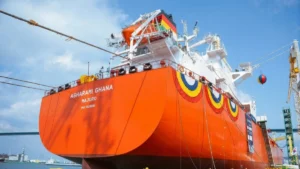
The popular Nigerian crude contract, Bonny Light, approached the $95 per barrel mark amidst heightened market uncertainty driven by persistent geopolitical tensions, particularly in the Middle East and crucial global trade chokepoints such as the Strait of Hormuz.
Brent crude prices increased by 6.5%, while European gas prices rose by just under 9%.
Instability and unrest in the Middle East continue to influence energy prices, although an agreement between Iran and Oman regarding transit regulations through the Strait of Hormuz may now be within reach; however, larger unresolved issues persist.
Nigerian crude oil is typically priced relative to dated Brent, with most varieties being light and sweet, including benchmarks such as Bonny Light, Forcados, and Escravos.
Recent trading has shown volatility, with prices fluctuating from the low of $80s up to the mid-
$90s per barrel. However, macroeconomic demand factors, primarily relating to China and the ongoing global stock adjustments, are expected to restrain overall price rallies despite potential supply disruptions due to geopolitical risks,
Nigeria maintains OPEC quota despite recent short fall
Furthermore, Nigerian crudes with lower sulfur content remain in high demand in both Asia and Europe. These crudes have been competitively outperforming other light sweet crude sources increasingly available from the Americas.
Nigerian crude production averaged between 1.505 million and 1.546 million barrels per day last month, representing a decrease of approximately 2.3% to 4% from the previous month and breaking a period of consecutive growth.
The decline was mainly attributed to technical and operational issues, notably severe production declines reported from ExxonMobil’s Erha and Akpo fields.
However, Nigeria maintained production levels close to its OPEC quota floor of 1.5 million barrels per day, indicating a relatively stable output history following years of underproduction. Including condensate production of about 170,000 barrels per day, total hydrocarbon output would approximate 1.67 million barrels per day.
Oil traders focus on Iran and Straits of Hormuz
Market focus is expected to remain heavily centered on developments in Iran, with energy markets likely to be increasingly attentive to geopolitical events. Latest market action shows oil prices could experience declines if and when the Strait of Hormuz is reopened sustainably.
However, the European gas market is anticipated to remain tight despite these developments.
The International Energy Agency (IEA) and OPEC have downgraded their demand forecasts for 2023 by 200,000 barrels per day. The IEA reports a decline of 1.6 mbpd in global demand, whereas OPEC continues to project a surge of 580,000 barrels per day. Outside of OPEC+, demand is expected to rise by 690,000 barrels per day, according to the IEA.
Total supply could decrease by 4.3 mbpd, suggesting a tightening market in the upcoming year. However, due to significant regional losses around the Gulf due to significant regional losses around the Gulf.
The deficit in external oil supply is projected at 1.8 mbpd in the third quarter, which is one million barrels per day lower than previously anticipated, according to the IEA.
Market attention is also likely to focus on China’s industrial production figures next Monday, which will provide insights into the country’s crude processing capacity in July. China recently contributed to easing global oil market tightness amid significantly reduced refinery demand.