Follow Us on Google Discover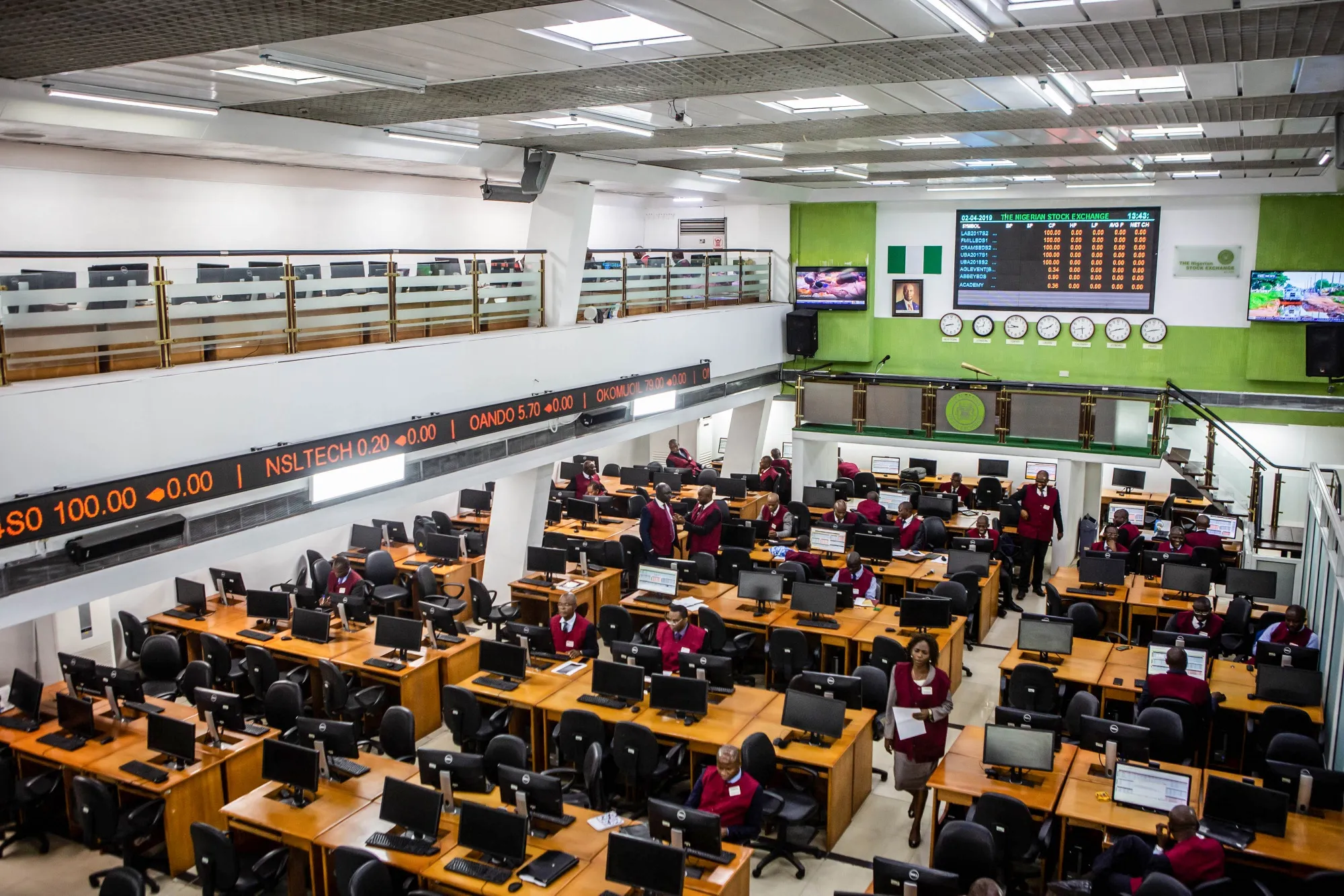
Last week in Abuja, NGX Group’s leadership walked into the Presidential Villa and handed President Tinubu a scorecard.
Market capitalization went up from roughly N30 trillion in 2023 to N160 trillion today. The All-Share Index went up from 52,000 points to over 244,000. NNPC is now on a path to listing. The President was pleased, and he had every right to be.
I’ve been sitting with that meeting for a few days, and I keep landing on the same thought: those numbers are real, and they still aren’t the point.
I’ve been thinking about the Nigerian Exchange differently lately — not as the place where Nigerians buy and sell shares, but as one of the institutions that will determine whether Nigeria can actually finance the economy it keeps saying it wants to build. That distinction matters. We talk about becoming a $1 trillion economy — industrialization, infrastructure, housing, manufacturing, and companies that compete globally. But we’ve missed a fundamental question.
Also Read
Who is going to finance all of this? Not government alone. Not banks alone. Not foreign investors alone. It has to include a deep, sophisticated, ambitious Nigerian capital market. Which brings me back to NGX leadership, fresh off a good week in Abuja.
Are we thinking big enough?
First, give NGX its credit
This isn’t an argument that NGX is failing. Quite the opposite — the numbers presented to the President were earned. In 2025, equity turnover more than doubled and the All-Share Index gained over 50%. NGX Group reported N22.98 billion in revenue. Settlement is faster, and retail participation is becoming a real conversation, not a talking point.
But momentum creates a new responsibility: asking what all this progress is supposed to make possible. Nigeria’s nominal GDP was about $291 billion in 2025, per the World Bank; the IMF projects roughly $377 billion for 2026. So “$200 billion economy” is already yesterday’s framing. Good — that makes the question more urgent. If Nigeria is heading toward $1 trillion, what should its capital market look like?
We’re still thinking about the exchange as a marketplace
That’s where our thinking needs to shift. An exchange isn’t just a place where shares change hands. It’s financial infrastructure, the same way a road moves goods or the grid powers a factory floor. A capital market moves money from people who have it to businesses that need it, and its quality shapes the pace of our development.
New factories, new homes, African tech companies reaching global scale without leaving the continent, infrastructure without piling onto government debt — someone has to finance all of it. Capital formation isn’t a side issue. It’s the engine room. NGX sits directly inside it, which is why last week’s meeting matters more than a courtesy call. NGX itself framed it that way: the presentation wasn’t a victory lap on turnover and index points, it was a pitch for a national capital formation programme. Right instinct. I want to push it further.
So why settle for incremental ambition?
We talk about increasing listings, turnover, retail participation, settlement speed. All good. But I want a bigger question than “how do we make NGX bigger.” I want: how much bigger can we make the Nigerian economy because NGX exists?
That’s a different scoreboard. How much capital was raised for productive businesses? How many companies scaled because they could access public capital? How much pension capital found its way into productive assets instead of sitting idle? How many Nigerian companies reached global scale without leaving Nigeria to get there? Harder questions. Also, the ones that matter.
Look at what others figured out
The New York Stock Exchange and Nasdaq became powerful because they grew into more than marketplaces — they became global pools of capital. A company doesn’t list in New York just for American investors; it goes for the ecosystem: liquidity, institutional capital, analysts, credibility. Closer to home, the Johannesburg Stock Exchange built an ecosystem around itself — pension funds, asset managers, investment banks, debt markets, research — giving South Africa’s capital market influence well beyond its own economy’s size.
Nigeria has most of the raw ingredients: entrepreneurs, banks, pension assets, private equity, venture capital, a massive diaspora, companies with continental ambition. What we haven’t built is the financial architecture connecting all of it at scale. That’s the real assignment, and exactly why Lagos should be asking, deliberately and now, whether it can become Africa’s financial center.
What happens to a Nigerian startup after venture capital?
This is personal for me, given how much time I spend around private capital and entrepreneurship. Nigeria has gotten much better at financing startups — angels, VCs, private equity all invest. Then what? Where’s the great Nigerian exit? When a company grows into a $500 million or $1 billion business, where does it go for public capital? Too often, somewhere outside Nigeria — and when that happens, we don’t just lose a listing. We lose the investors, the research, the liquidity, and the chance for ordinary Nigerians and pension funds to own a piece of something they helped build.
The pathway should look like this: Founder → Angel → VC → Growth Capital → Private Equity → NGX → Global Capital. That would be transformational.
Government has to wake up too
NGX can’t solve this alone. You can’t announce a $1 trillion ambition and leave capital formation to chance. Government, regulators, pension managers, banks, private capital, and NGX need to operate as one ecosystem, not separate institutions guarding separate mandates — one capital-formation strategy, close to the language NGX itself used in Abuja last week.
And Africa has an even bigger version of this problem
We talk endlessly about AfCFTA and African integration, but rarely ask: where’s the African capital market? Dozens of exchanges, multiple currencies, multiple regulators, all fragmented — while African companies keep looking outside the continent for the deepest capital.
You cannot build an integrated African economy on fragmented financial infrastructure. Trade, industrialization, and entrepreneurship all need financing, and eventually investors need exits. Nigeria, given its size, has a real shot at leading here.
So, here’s my challenge to NGX leadership
Don’t build the next version of the Nigerian Exchange. Build the institution Nigeria will need at $1 trillion — then build beyond that. Make Lagos the place African companies raise capital, a credible exit for African venture-backed companies, and a gateway into Africa for global investors, not a frontier-market curiosity. Make it possible for a company in Nairobi, Kigali, Accra, or Johannesburg to seriously consider Lagos for its next major raise or listing.
That’s a bigger ambition than trading volume, and closer to the economic role an institution like NGX should actually play.
We need bigger institutions for bigger ambitions
This isn’t really only about NGX. It’s about how we think about Africa. We celebrate entrepreneurs when they build billion-dollar companies, then hand them institutions that struggle to finance the next ten billion. Nigeria doesn’t need another institution that’s merely good enough for where we are. We need institutions designed for where we’re going.
So my question to NGX leadership is simple: if Nigeria is serious about becoming a $1 trillion economy, what does NGX need to become to help finance it? Not next year. Not in the next strategic plan. Now.
Because when Nigeria finally crosses that line, I don’t want us looking back and saying our economy became enormous, but our capital market wasn’t ready. I want to say something very different.
Wale Salami is a Nigerian-born American angel investor, venture capitalist, faith-driven entrepreneur, and private capital practitioner. He is the Founder of the Midlothian Angel Network; an investment community focused on backing entrepreneurs and expanding access to private capital across Africa and the diaspora.