Follow Us on Google Discover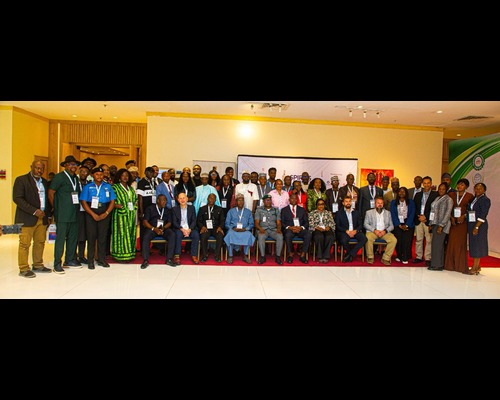
Nigeria’s spirits and wines industry represents one of the country’s most significant consumer goods markets, contributing to manufacturing, logistics, retail, hospitality and government tax revenues.
Yet a substantial share of the market continues to be undermined by illicit trade.
IN a recent report published by Euromonitor, smuggled and illegally produced alcoholic beverages account for roughly 40% of products in circulation, with potential annual economic losses estimated at ₦428 billion.
The figures underscore why industry stakeholders are calling for stronger collaboration between government agencies and the private sector.
Also Read
The market is bigger than most people think
Nigeria’s alcoholic beverages industry rarely gets discussed with the seriousness it deserves in economic circles, yet the numbers put it firmly in the big-ticket category.
The spirits segment alone is valued at close to $2 billion. Sweet wine, a category with a dedicated and growing consumer base, adds another $400–420 million annually. Add the beer layer, which still dominates the market at roughly 55% of total alcoholic beverage volumes, against spirits at 30% and wine at 15%, and you have one of the largest fast-moving consumer goods (FMCG) categories on the continent.
Riding on Nigeria’s youthful demographics, rapid urbanisation, and an expanding middle class with a growing appetite for premium drinks, it is a sector that, by any measure, should be a policy darling, especially due to the dynamics of being labour-intensive, tax-generating, and structurally tied to manufacturing, logistics, wholesale, retail, and hospitality.
The 40% problem
According to the Euromonitor report, counterfeit and smuggled products now make up around 40% of everything sold in the Nigerian spirits and wines market. This indicates a market where fake, and untaxed products directly compete, shelf-to-shelf, with compliant, quality-controlled brands.
The estimated cost is that N428 billion bleeds out annually through four distinct yet intertwined channels: smuggling, tax evasion, counterfeiting and illegal production.
Put simply: for every legitimate naira the industry generates in tax revenue, there’s a shadow economy that quietly shuts out a comparable amount that should be nestling in government’s coffers.
Why this matters more now than ever
One theme dominates discussions focusing on Nigeria’s fiscal priorities at the moment: the urgent need to diversify revenue away from oil, as non-oil revenue mobilisation through VAT reform, excise adjustments, and tax administration efficiency has become a central plank of government economic strategy.
Illicit trade actively undermines that agenda, as every counterfeit or smuggled bottle represents lost excise duty that should accrue directly to government coffers; lost customs revenue on legitimately imported premium products; and lost VAT that would otherwise flow through a formal, traceable supply chain.
At a time when the federal government is stretching every available lever to fund infrastructure, healthcare, and education, N428 billion does not represent a trivial leak; it’s the kind of number that could meaningfully move budgetary needles if recovered.
The market distortion nobody’s pricing in
Beyond the headline revenue loss, there’s a quieter but equally damaging story: market distortion.
Legitimate manufacturers in this space are not casual participants; they are some of the biggest investors in product development, staff training, quality assurance, packaging, distribution networks, and regulatory compliance. All these are cost centres that show up on a balance sheet and get priced into the final product.
Illicit operators carry none of that overhead; their entire “competitive advantage” is built on the deliberate avoidance of the very obligations that make a business legitimate. And that creates an uneven playing field where compliance becomes a liability rather than a strength, a dangerous incentive structure in any market, let alone the one which the Federal Government is trying to position as investment-friendly.
For institutional investors and multinationals evaluating Nigeria’s consumer goods sector, this matters enormously. Capital tends to flow toward markets where regulatory enforcement is predictable and consistent. When counterfeiters can operate with minimal consequence, it signals weak institutional capacity, a crucial red flag that raises the risk premium of doing business in Nigeria, and by extension, the cost of capital for everyone operating within the formal system.
Nigeria’s manufacturing ambitions cannot be reconciled with a market environment where criminal enterprises hold a structural cost advantage over compliant producers.
The health dimension cannot be an afterthought
As important as the economic side is, there’s also a public health angle that deserves more attention than it typically gets in economic commentary.
Unlike counterfeit fashion, pirated films or even adulterated fuels, illicit alcohol carries direct physical risk. Unregulated production frequently means unsafe ingredient substitution, most notoriously concerning methanol contamination, which has caused fatalities and permanent disabilities in illicit-alcohol incidents around the world.
It’s worth noting, in fairness to the legitimate industry, that these health incidents are overwhelmingly traced back to criminal operators rather than recognised, compliant brands. But that distinction is often lost on consumers once illicit products flood a market, trust erodes broadly, and legitimate brands absorb reputational damage they didn’t cause. This is precisely why messaging around the issue needs precision: educate consumers on how to buy safely, without triggering blanket fear of established, regulated brands operating within the rules.
Why SWAN needs utmost support and what happens next
Currently, SWAN is playing an increasingly visible role in bringing the issue of illicit alcohol into mainstream policy discussions. Through recent stakeholder engagements and an awareness workshop, the association has sought to position illicit trade not merely as an industry concern, but as an issue affecting government revenue, public health, consumer protection and investor confidence.
But raising awareness is the easy part. Nigeria has, frankly, held this kind of conversation before, on smuggled fuel, counterfeit medical supplies, pirated media and illegal mining.
Sustained enforcement, rather than a recognition of the problem, has always been the problem.
Through the Lens of the Caribbeans
If Nigeria wants a working template, the Dominican Republic offers a useful one. Following a spate of methanol poisoning deaths between 2019 and 2021, authorities there didn’t just launch another awareness campaign; they built a coordinated national task force spanning customs, police, health regulators, commerce officials, and industry representatives.
Today, there are measurable results, with the country having gone three consecutive years without a methanol-related death, seized more than 155 million illicit alcohol products, and secured dozens of successful prosecutions as of 2025.
The fragmented enforcement structure at play in Nigeria, in which Customs, NAFDAC, the Standards Organisation of Nigeria, tax authorities, and other agencies all hold a piece of the mandate without a shared operating framework, is exactly the kind of gap organised criminal networks know how to exploit.
If Nigeria is serious about closing this N428 billion gap, a few things need to move from “meeting agenda item” to “implemented policy“:
Intelligence-led enforcement above headline-grabbing seizures
Occasional high-profile raids make good press but rarely dismantle the networks behind them. Investigations need to trace the full chain: manufacturers, financiers, distributors, and retail outlets and convert that intelligence into prosecutions.
Modernisation of border mechanisms is important to put an end to the illicit alcohol trade, which often shares smuggling infrastructure with fuel, counterfeit medicine, and illegal tobacco. Investment in inspection technology, cross-agency intelligence sharing, and risk-based screening would yield returns across multiple contraband categories.
Also, a system that really penalises bad behaviour is needed. As long as offenders can reasonably bet that detection is unlikely and prosecution even less likely, illicit trade would remain a rational business decision for criminal operators.
The last lead, perhaps, is to bring consumers into the conversation. Buying from reputable retailers, treating suspiciously low prices as a red flag, and reporting questionable products would all help, but consumer awareness is a supplement to enforcement, instead of a substitute.
Key Takeaway
Illicit alcohol trade shouldn’t be filed away as a niche regulatory issue affecting one industry. It belongs in the same conversation as crude oil theft, counterfeit pharmaceuticals, illegal mining, and fuel smuggling, different symptoms of the same underlying problem: organised networks exploiting gaps in institutional enforcement capacity for commercial gain.
Nigeria doesn’t lack the evidence, the case studies, or even the political language to address this. What’s missing is the sustained follow-up that converts coordination memos into functioning task forces and eventually, valid data of convicted illicit traders.
Addressing illicit alcohol trade will require more than periodic enforcement exercises. Sustained coordination among Customs, NAFDAC, The Federal Competition and Consumer Protection Agency, the Standards Organisation of Nigeria, tax authorities, security agencies and industry stakeholders will be essential. SWAN’s continued advocacy has helped elevate the conversation, but translating awareness into measurable reductions in illicit trade will ultimately depend on consistent enforcement, improved border controls, consumer education and stronger prosecution of offenders. If successfully implemented, these efforts could strengthen investor confidence, improve public safety and unlock additional non-oil revenue for Nigeria’s economy.