Follow Us on Google Discover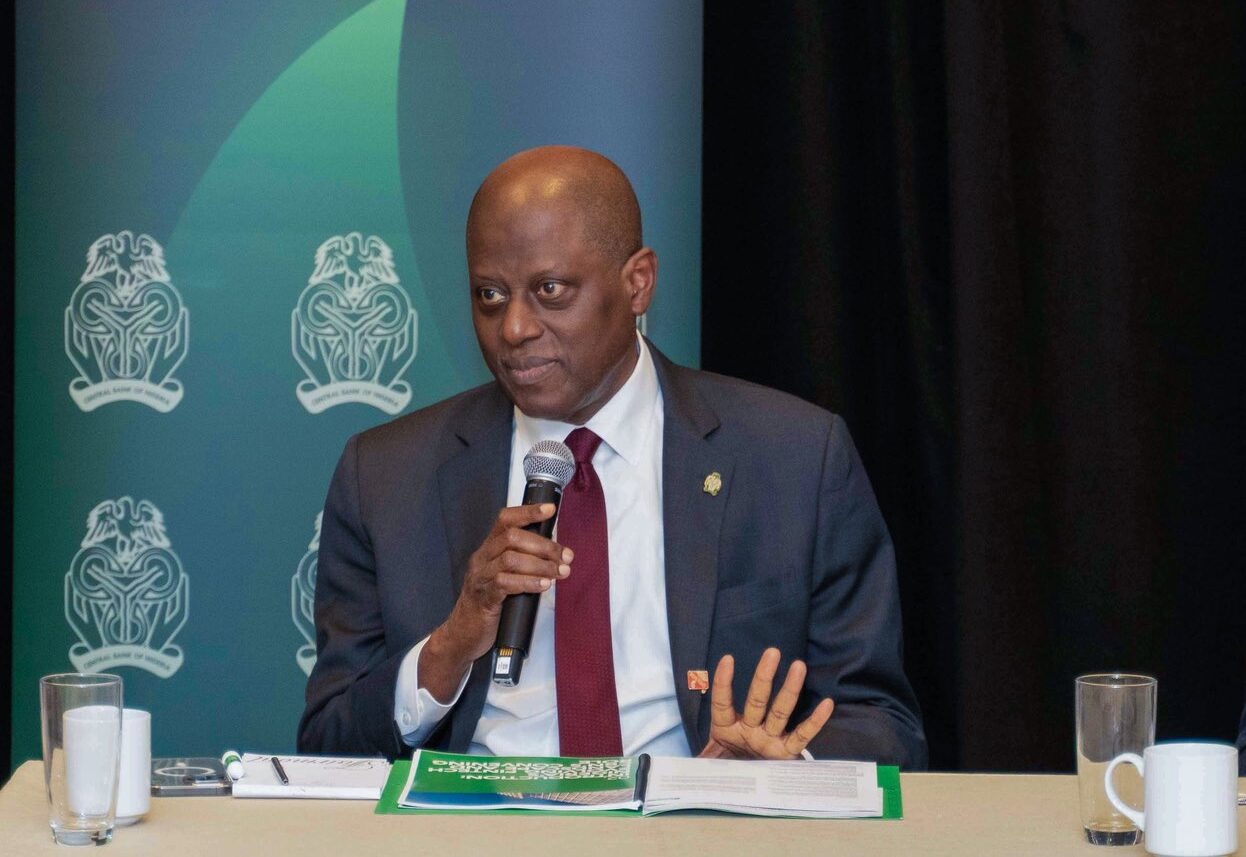
The Central Bank of Nigeria (CBN) is targeting $1 billion in monthly diaspora remittances by the end of 2026, representing a nearly 67% increase from the current level of over $600 million per month.
CBN Governor, Olayemi Cardoso, disclosed this on Thursday while speaking during the BusinessDay CEO Forum Nigeria in Lagos.
Cardoso said the apex bank’s strategy of engaging Nigerians in the diaspora and collaborating with commercial banks is already yielding positive results.
What the CBN Governor is saying
According to Cardoso, the initiative forms part of the CBN’s broader efforts to diversify Nigeria’s sources of foreign exchange inflows.
- “We are expecting that by the end of the year, we will hit about a billion dollars a month from diaspora remittances,” Cardoso said.
The governor explained that the central bank deliberately adopted a strategy of working with banks, engaging with Nigerians abroad, and addressing concerns that have historically discouraged the use of formal remittance channels.
According to him, the objective is to significantly increase diaspora inflows into the country.
- “We did exactly that. That is still work in progress. We’re not relenting on that. We’re continuing on that trajectory,” he said.
Nigeria has increasingly relied on diaspora remittances as a key source of foreign exchange, alongside oil exports and foreign portfolio investments, as the country seeks to improve external liquidity.
Get up to speed
Earlier this year, the CBN directed all International Money Transfer Operators (IMTOs) operating in the country to open and maintain naira settlement accounts with authorised dealer banks, in a move aimed at tightening oversight of diaspora remittances and improving transparency in the foreign exchange market.
According to the apex bank, the measure forms part of efforts to “enhance diaspora remittances, strengthen transparency, traceability, and effective monitoring of all transactions.”
This means that all inflows, disbursements to beneficiaries, and related settlements tied to international money transfers must now be processed exclusively through these accounts. IMTOs are also allowed to maintain multiple settlement accounts across different banks in line with their operational strategies.
The new framework further restricts how these settlement accounts can be funded, stating that they “shall only be credited with remittance flows and proceeds of foreign exchange conversions by licensed IMTOs (or their agents)” operating within the Nigerian Foreign Exchange Market.
More insights
Cardoso said the CBN’s reforms have also contributed to a significant improvement in Nigeria’s foreign reserves since he assumed office in September 2023.
- According to him, the country’s gross external reserves have risen by 63% to nearly $52 billion, while net external reserves have increased from about $3 billion to more than $40 billion over the same period.
- Nairametrics earlier reported that the country’s foreign reserves have climbed to $51.86 billion on July 14, 2026, marking their highest level in more than 17 years and surpassing the Central Bank of Nigeria’s (CBN) projection for the year.
- The improvement comes amid a series of foreign exchange market reforms introduced by the apex bank to improve transparency, attract capital inflows, and restore investor confidence.
Looking ahead to next week’s Monetary Policy Committee (MPC) meeting, Cardoso said policymakers would base their interest rate decision on recent economic data.
What you should know
Cardoso’s comments came a day after the National Bureau of Statistics (NBS) reported that Nigeria’s headline inflation rate remained broadly unchanged at 15.91% in June, compared with 15.93% in May, suggesting that price pressures may be easing.
Despite the moderation in inflation, some analysts expect the MPC to leave the benchmark Monetary Policy Rate (MPR) unchanged at 26.5% when it concludes its meeting on July 21, citing renewed inflationary risks linked to higher global energy prices following recent tensions around the Strait of Hormuz.