Follow Us on Google Discover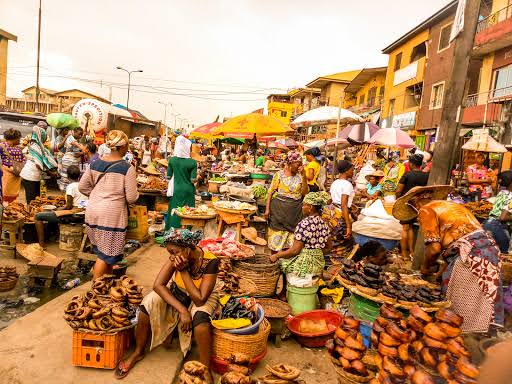
Data released on Wednesday by the National Bureau of Statistics (NBS) revealed that Nigeria’s headline inflation rate edged lower to 15.91% in June 2026, compared to 15.93% recorded in May and was significantly lower than the 25.29% recorded in June 2025.
On a month-on-month basis, inflation also slowed to 1.66% in June, down from 1.75% in May.
However, the relief was not evenly felt. Urban inflation climbed to 16.08% year-on-year with a MoM rate of 2.13%, up by 0.14% compared to 1.99% in May 2026.
Rural inflation cooled to 15.48% year-on-year and 0.52% month-on-month, down by 0.64% when compared to May 2026 (1.17%).
Also Read
The divergence highlights how food, transport and insecurity are driving sharper price pressures in specific states.
Niger State recorded the highest inflation in Nigeria in June 2026 at 42.2%, displacing other states as the most expensive place to live, according to the latest Consumer Price Index data from the NBS.
Below are the 10 most expensive states to live in Nigeria for June 2026, based on headline inflation.
10. Kebbi – 34.1%
Kebbi’s inflation more than doubled in one month, rising to 34.1% in June, up from 12.1% recorded in May 2026, reflecting a sharp increase in overall price pressures during the period.
Food inflation led the surge, climbing to 37.6% up from 14.2%, piling pressure on household budgets.
The state had earlier attracted major investment pledges. The Kebbi Investment Promotion Agency announced that the state has secured about $14 billion in investment commitments across agriculture, housing, energy, mining, and manufacturing.
Flagship projects include an electric auto manufacturing company producing cars, motorcycles, solar panels, and lithium batteries, a 4.9-billion-dollar iron ore exploration project, and a four-billion-dollar agricultural initiative in Yauri Emirate.
Despite the investment pipeline, residents have yet to feel the impact. The effect of that investment has not been felt by residents of the state as food and transport costs continue to outpace incomes.
9. Yobe – 34.4%
Yobe’s headline rate rose to 34.4% in June, up from 24.9% in May.
Food inflation jumped sharply to 36.7% in June, up from 19.4% in May 2026, reflecting mounting pressure on household food costs.
To cushion the impact, the administration of Governor Mai Mala Buni has adopted a combination of social support interventions and fiscal measures. These include targeted livelihood support programmes, early payment of salaries and pensions, and the implementation of the state’s 2026 ‘Budget of Economic Growth and Infrastructural Transformation.’
The government says the measures are designed to provide immediate relief while also strengthening long-term economic stability amid persistent insecurity and supply disruptions in the Northeast.
8. Osun – 34.5%
Osun inflation climbed to 34.5% in June 2026, up from 14.3% the previous month.
Food inflation was even steeper at 39.6% in June, up from 18.8% recorded in May 2026.
Governor Ademola Adeleke is betting on alternative growth drivers. He said the state is positioning itself to benefit from the estimated $2 trillion global creative industry, describing it as a key driver of youth empowerment and economic growth.
He added that the creative sector remained a ‘gold mine’ with huge potential for young people, adding that his administration was deliberately engaging the entertainment space to unlock opportunities as a way to offset rising living costs.
7. Benue – 35.1%
Benue saw one of the sharpest jumps, with inflation rising from 20.6% in May 2026 to 35.1% in June.
Food inflation nearly doubled to 40.8% in June from 22.7% in May 2026.
In response, the administration of Governor Hyacinth Alia has introduced measures aimed at reducing production costs. In June, the state government launched its farm input sales and distribution programme, under which fertilizer is being sold to farmers at a subsidised rate of N28,000 per bag, with the government absorbing an additional N28,000 per bag.
The programme covers all 23 LGAs and aims to lower agricultural production costs, boost food output, and improve food security. The state also raised its 2026 budget to N695.01 billion after the Assembly approved an additional N89.5 billion.
6. Sokoto – 35.2%
Sokoto’s rate rose to 35.2% in June 2026, up from 22.6% in May.
Food inflation skyrocketed from 12.2% in May 2026 to 37.0% in June 2026.
The state is responding with spending. Governor Ahmed Aliyu allocated approximately 72% of the state’s N758.7 billion 2026 budget to capital expenditure. The budget prioritises infrastructure development, agricultural expansion, and job creation as key drivers of economic stability and productivity.
Despite that, data from the NBS shows that Sokoto continues to experience relatively high headline inflation, underscoring the persistence of cost pressures even amid policy efforts aimed at easing economic hardship.
5. Plateau – 35.8%
Plateau posted one of the biggest monthly leaps, with inflation at 35.8% for the month of June 2026, a significant rise from 7.1% in the previous month.
Food inflation hit 36.8% in June, up from 24.8% in May.
Under the administration of Governor Caleb Mutfwang, the state government has adopted a targeted strategy to address inflationary pressures, focusing on transport reform, food affordability, and broader economic stimulation. A key move was the introduction of Metro Bus services within the Jos–Bukuru corridor, which has helped reduce transportation costs for commuters.
The government has also rolled out subsidised food distribution programmes aimed at improving access to essential commodities across the state to help vulnerable households.
4. Kwara – 36.5%
Kwara jumped from 11.7% in May 2026 to 36.5% in June 2026.
Food inflation rose to 39.0%, up from 28.5% in May.
The Kwara State Government has implemented a series of economic and agricultural interventions under its 2026 Action Plan to strengthen business activity, improve household incomes, and boost food supply. These include disbursement of additional monthly cash awards to support workers’ purchasing power, settlement of pension arrears, and expanded provision of agricultural inputs.
The Ministry of Agriculture has also deepened partnerships with private sector players such as Olam Group to strengthen soybean and rice value chains and distributed threshing machines, packaging materials, and revitalised state hatcheries to improve yields and stabilise local food supply.
3. FCT Abuja – 39.9%
The Federal Capital Territory recorded 39.9% in June, up from 12.6% the previous month.
Food inflation reached 40.2% in June, an increase from 15.8% recorded in May 2026, reflecting mounting pressure on household food costs in the nation’s capital.
The surge reflects higher housing, transport and food costs in Abuja, where demand remains strong but supply chains are stretched. No major new palliatives were announced in the June data period.
2. Kogi – 41.6%
Kogi’s inflation spiked to 41.6% in June 2026 after recording just 12.8% the previous month.
Food inflation was the worst nationally at 53.0% in June up from 14.5% in May.
Earlier in the year, the Kogi State Government announced plans to raise N50 billion through a sukuk issuance to fund the construction of an international airport and a modern international market to drive economic growth.
The government says the sukuk is designed as a transparent, infrastructure-focused instrument targeted at long-term economic growth, but the immediate effect on prices has been limited.
1. Niger – 42.2%
Niger recorded the highest rate and the biggest swing, rising from 3.1% in May 2026 to 42.2% in June 2026.
Food inflation hit 43.8% in June, up from 9.8% recorded in May 2026.
Inflation in Niger State is primarily driven by localized food supply chain disruptions, insecurity in farming communities, surging transportation costs, and the broader macroeconomic impacts of currency depreciation on imported goods.
Since April, the Niger State Government has focused its anti-inflation strategy on agricultural expansion, structural food supply interventions, and the implementation of its N1.7 trillion 2026 ‘Budget of Consolidation.’
A major pillar is prioritisation of agriculture through heavy subsidies on farming inputs and state-driven initiatives aimed at increasing domestic food production to strengthen local supply chains, reduce dependence on external food markets, and stabilise prices over time.